As costs jump, Sao Paulo Uber drivers set to launch rival app

 اليورو يستقر في البنوك المصرية وأعلى سعر للبيع 59.85 جنيه
 الأرصاد السعودية تتوقع سيولاً وأمطاراً رعدية في خمس مناطق

 Lights out in Laos as electricity exports surge

 Steven Strogatz weighs AI mathematics advances and their consequences for researchers

 Anthropic boss calls for AI slowdown, Altman and Musk agree

 French IT giant Capgemini sells subsidiary after row over ICE links

 Quebec Brokerage Qubit Insurance Announces New Data on Coverage Shortfalls as Rebuilding Costs Rise

 Lady Gaga welcomes first child with fiance: US media

 Bhutan business bets on hazelnuts for farming future

 'Widow's Bay' and 'The Pitt' are favorites for Emmys night

 Coastal erosion forces cancellation of California music festival

 Argentina's Dirty War rears its head in Venice film

 UK lawmakers throw out bill to legalise assisted dying

 US inflation steady in August, fueling Fed rate hike expectations

 New York marks 25th anniversary of 9/11 attacks

 Nepal flood reconstruction bill to be $4.78 bn: foreign ministry

 JUMO and Standard Bank launch Social Finance Framework to scale inclusive finance in Africa

 Doomsday tech: could AI really kill us all?

 French comedy show 'Call my agent' makes film comeback

 It's all coming back: Celine Dion fans gear up for Paris return

 Researchers eye AI revolution in natural disaster forecasts

 US braces for inflation report that may push Fed to hike rates

 Musk threatens legal action over documentary

 Latin America fact-check group asks Meta not to replace verification practice

 AI Risks to Enter 60–80% of Liability and Cyber Insurance Underwriting by 2028, ScienceSoft Predicts

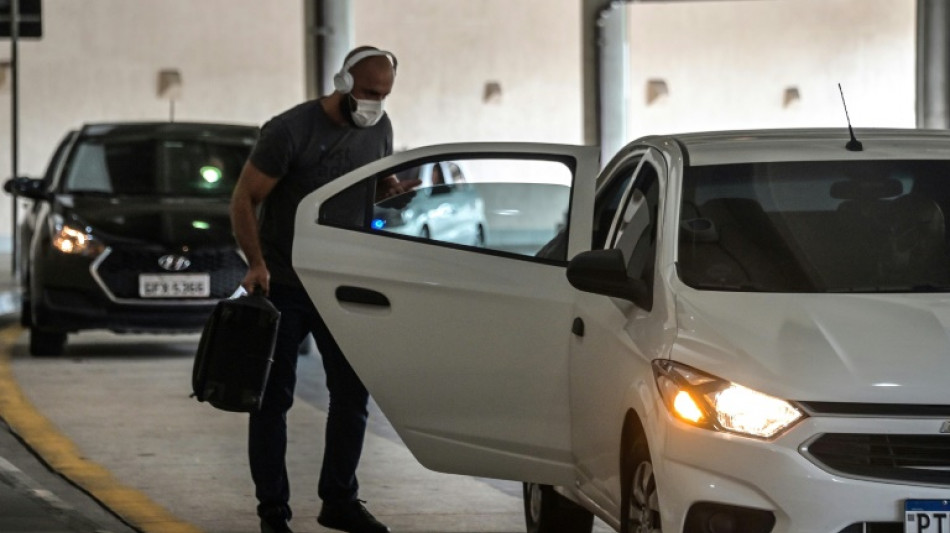
The Uber driver's phone bleeps out the signal to pick up a passenger, but he checks the distance and declines: with fuel prices soaring in Brazil, "I've become a mathematician at the wheel," he says.
Surging inflation has left many Brazilians struggling to make ends meet, and ride-hail drivers have been especially hard-hit.
Fuel prices increased nearly 50 percent last year, and the apps the drivers depend on claim a sizeable share of what's left.
But now, drivers in Sao Paulo, a sprawling city of 12 million people, are about to launch an app of their own, taking on the likes of industry giant Uber with a platform they say will give drivers a better deal.
"With gasoline so expensive, I have to do split-second math before every trip to make sure it's worth it, so I don't end up giving the passenger a free ride," says Sao Paulo Uber driver Valmir, 56, who asked that his last name not be used.
"I'm working 12-, 13-, sometimes 14-hour days to make the same money I used to" -- between 250 and 300 reais ($48-$57) a day before expenses, he says.
That problem has led a group of Sao Paulo's 150,000 app drivers to organize and develop a mobile app of their own, backed by the Sao Paulo Association of Application Drivers and Delivery Workers (AMMASP).
It is called Me Busca, which roughly translates as "pick me up."
"We want to offer drivers the conditions that the (ride-hailing) companies don't: better pay, more security and better-quality work," AMMASP president Eduardo Lima told AFP.
Its creators say Me Busca will offer prices similar to competitors like US-based Uber and 99, which is owned by China's Didi.
The app is due to launch in March, and thousands of drivers have already signed up.
- Ends not meeting -
Inflation came in at a painful 10 percent in Brazil last year, driven by the economic havoc of the coronavirus pandemic.
Price increases for some sectors were far higher, including 49 percent for fuel.
The pandemic has also swelled the ranks of the struggling and unemployed.
Raniel de Queiroz, a 42-year-old tech worker, has started supplementing his day job as a data backup analyst with eight-hour nights as a ride-hailing driver.
"My salary isn't going up, but prices are. Driving was a way to earn some extra money and keep up with the country's inflation situation," he says.
But his treatment by the app he drives for "has gotten more and more unfair," he adds.
- Re-slicing the pie -
The fares paid by app users rose 60.5 percent last year in Sao Paulo.
Drivers say they are barely seeing that money.
The apps "take advantage of high unemployment in Brazil" -- currently 11.6 percent -- to keep driver pay low, says Marlon Luz, a city councilor who represents the drivers.
He says the apps retain anywhere from 14 to 40 percent of each fare, sometimes even rising as high as 60 percent.
Me Busca will pay drivers "around 2,000 reais more per month than what they make now, for working the same number of hours," he says.
Uber, which arrived in Brazil in 2014, says drivers "always keep the majority of the fare users pay."
"In Sao Paulo, estimated weekly earnings rose to 1,500 reais last month, for a 40-hour work week," the company told AFP.
Surging fuel prices made many Uber drivers cut back on trips last year, leaving riders with long wait times or even stranded.
The company said it was trying to fix that with incentives such as dynamic pricing to lure drivers.
App 99 meanwhile said it increased driver pay by 10 to 25 percent last year, and is offering eight percent more per kilometer this year in Sao Paulo.
Drivers aren't convinced.
"We hope the new app works," says Queiroz. "If it does, they're going to wish they had listened to us."
M.Anderson--CPN