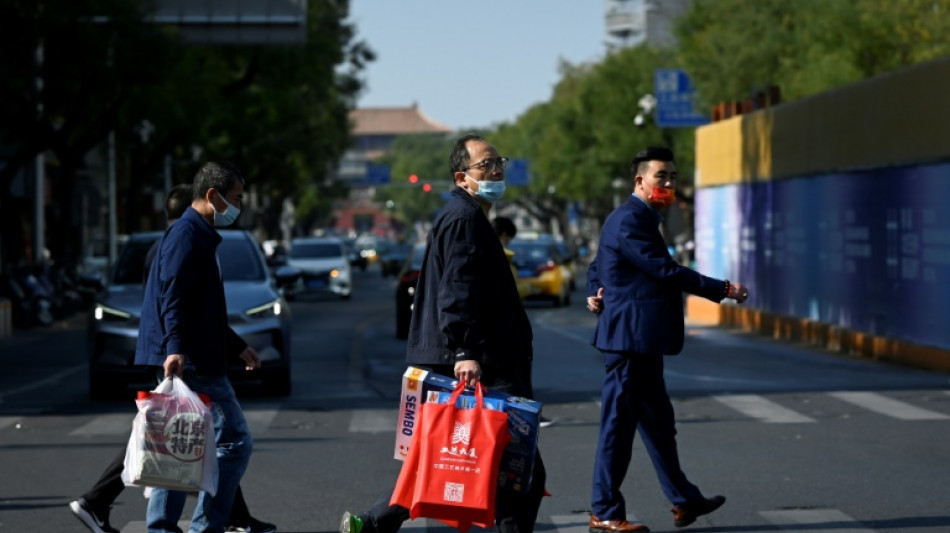
China's Singles Day shopping spree enters final stretch / Photo: WANG Zhao - AFP

 Jazeera Paints showcases housing solutions at Build Your House 2026 in Qatar

 Google drags down Wall Street stocks
 Does White House ask AI to shape policy? Democrats want the receipts
 ECB holds rates steady after Lagarde says to quit early
 ECB chief Lagarde to step down early, triggering succession race

 VW says 'no time to lose' to slash costs after 5.8 billion euro loss
 Oil majors reap bumper profits as Mideast war drives prices

 Taiwan says Pakistan briefly closed airspace to Taiwanese flights
 Samsung logs record quarterly profits despite investor AI jitters

 Shares in Google owner Alphabet plummet on profit miss, ad slowdown
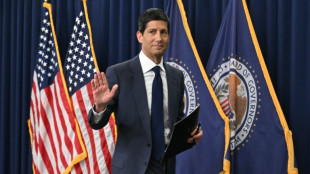 US Fed holds interest rates steady despite 'too high' inflation

China's Singles Day shopping bonanza entered its final stretch Friday, with all eyes on whether sales can top a record one trillion yuan ($140 billion) despite the country's struggling economy.
Conceived by technology giant Alibaba, the informal holiday's title riffs on a tongue-in-cheek celebration of singlehood inspired by the four ones -- "11/11" -- that denote its date of November 11.
It has grown to encompass much of China's retail sector -- including traditional brick-and-mortar stores, second-hand sales platforms and even rival shopping giant JD.com -- with merchants offering varying levels of discounts starting in late October.
The combined gross value of products sold by Alibaba and JD.com this year "may surpass a trillion yuan," Xiaofeng Wang, principal analyst at research firm Forrester, said in a note -- up from the total of 965 billion yuan raked in at last year's event.
Once a festival of frenzied consumption led by Alibaba's effervescent founder Jack Ma, Singles Day has been more muted in recent years as Beijing cracks down on online platforms.
Last year's holiday was virtually ignored by state-controlled news outlets with a host of other events competing for shoppers' wallets.
Beijing resident Liu Yingxue said the Single's Day atmosphere was "not as enthusiastic" as in previous years.
"Platforms like (Alibaba's) Taobao and JD.com used to have more ads and promotions," she told AFP.
"And they don't give so many discounts these days."
- Economic strain -
The mood has been dampened further this year as Beijing persists with a zero-Covid strategy that has hammered business confidence and chipped away at consumer demand.
The holiday, conceived in 2009, has previously lured throngs of Chinese influencers alongside Western celebrities including Kim Kardashian and Taylor Swift, drawing heavy coverage in both domestic and international media.
This time around, a series of scandals and a campaign against tax evasion have lowered expectations of celebrity endorsements, with influential Chinese live-streamer Viya disappearing from social media late last year in the wake of a tax probe.
Alibaba said last week the event could "make a big difference" for retailers struggling with supply-chain disruptions and inflation this year, including a slew of foreign brands.
Businesses and consumers alike have been laid low by China's stringent Covid prevention policies, which see officials wield snap lockdowns, mass testing and lengthy quarantines in response to a handful of cases.
Beijing resident Li Xiaofeng said the "state of the whole economy" was likely putting platforms and merchants under more pressure, "so they are offering fewer discounts".
"I think it's because of Covid," said Lin Xiangru, another denizen of China's capital.
"People have less guaranteed income than before, so they don't want to spend money on desired products at such a specific moment."
China is the last major economy wedded to a strategy of extinguishing new outbreaks as they occur.
State media reported Thursday that top leaders had again vowed to stick "unswervingly" to the policy.
A.Zimmermann--CPN