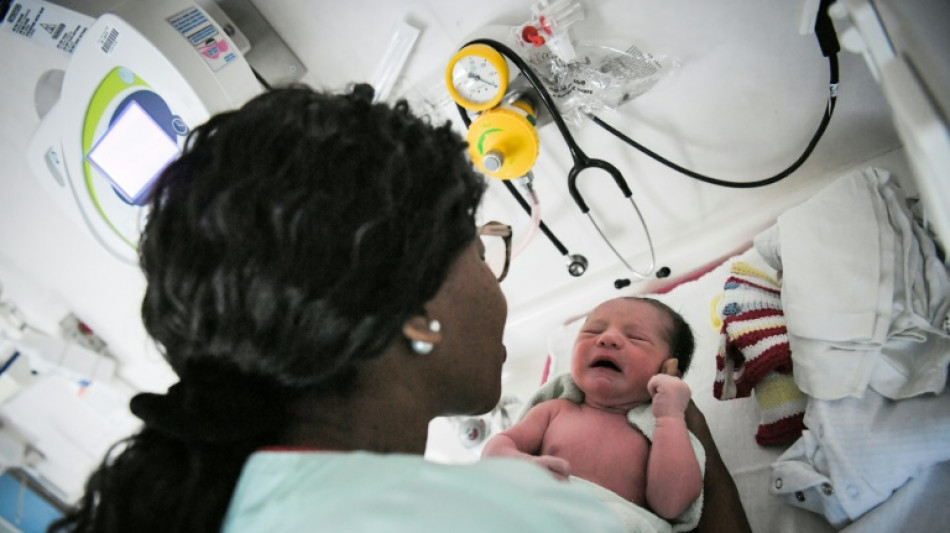
EU approves preventative treatment for common infant virus / Photo: LOIC VENANCE - AFP/File

 ECB says has tools to calm markets as French debt worries rise

 IMF says engaging with Iraq on preparing new bailout program

 US economy posts strong growth, inflation stubbornly high in challenge to Trump

 French businessman takes over 2030 Winter Olympics amid leadership turmoil

 Stock markets diverge on corporate earnings, tech jitters

 TotalEnergies profit hits record on high oil prices

 Afghanistan opium poppy cultivation surges despite Taliban govt ban: UN

 Microsoft beats expectations fueled by Azure cloud business

 Shares in Google owner Alphabet sink on profit miss, ad slowdown

 Pioneering US labor leader Dolores Huerta dies at 96

 US Fed holds interest rates steady despite surging inflation

 US labor leader Dolores Huerta dead: family

The European Union has approved a preventative treatment for the very common virus that causes the chest infection bronchiolitis in infants, the companies that developed the drug said Friday.
The greenlight from the European Commission comes as several countries have seen surging cases of bronchiolitis put pressure on hospitals.
British-Swedish pharmaceutical firm AstraZeneca and France's Sanofi said their approved drug nirsevimab, marketed as Beyfortus, was the first treatment to prevent severe illness from respiratory syncytial virus (RSV) in all infants.
RSV infects nearly all children by the age of two, the companies said. It is the most common cause of bronchiolitis, a respiratory infection that is normally mild but in some cases can make infants seriously ill.
While not a vaccine, nirsevimab has a similar aim: to give protection against RSV with a single injection.
It is a monoclonal antibody treatment, which directly arms the body to fight against the disease, rather than a vaccine which triggers the immune system's own antibodies.
"Today is a landmark day for RSV prevention, as decades of research and development come together in the world's first approval of a broadly protective option against RSV disease," Sanofi's vaccine executive vice president Thomas Triomphe said in a statement.
The drug will not be available to help fight this season of bronchiolitis in the Northern Hemisphere, which has spurred the highest rate of hospitalisations for the disease in years in France.
"Beyfortus will be available for the next season -- 2023 -- of bronchiolitis," Sanofi told AFP.
Another preventative treatment, also produced by AstraZeneca, already exists, though it is only advised for children born premature or who are considered at risk.
While there is no RSV vaccine currently available, several are in development.
Earlier this week US pharma giant Pfizer announced positive results for its RSV vaccine from a Phase 3 trial, paving the way for future approval.
Pfizer's vaccine was nearly 82 percent effective at preventing serious illness from RSV in the first three months of a baby's life, the trial found.
More than 30 preventative treatments -- either vaccines or monoclonal antibodies -- are undergoing clinical trials, according to a review published in the journal Lancet Infectious Disease in August.
"RSV prevention is within reach," the authors summarised, saying that the virus is the second leading cause of infant deaths worldwide, mostly in developing countries.
L.Peeters--CPN