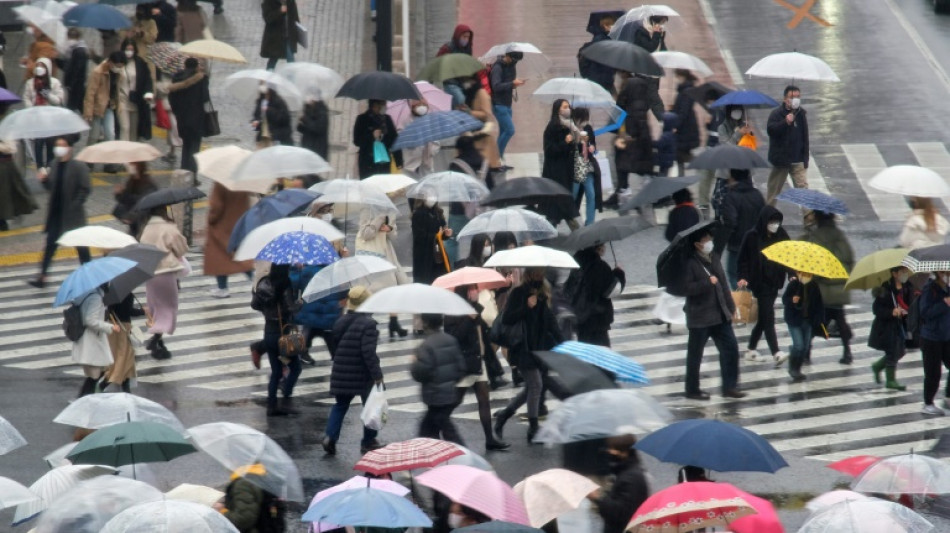
Japan's GDP rebounded before Omicron wave hit

 ستاندرد آند بورز تثبت تصنيف السعودية عند A+

 Lights out in Laos as electricity exports surge

 Steven Strogatz weighs AI mathematics advances and their consequences for researchers
 Anthropic boss calls for AI slowdown, Altman and Musk agree

 French IT giant Capgemini sells subsidiary after row over ICE links

 Quebec Brokerage Qubit Insurance Announces New Data on Coverage Shortfalls as Rebuilding Costs Rise

 Lady Gaga welcomes first child with fiance: US media

 Bhutan business bets on hazelnuts for farming future

 'Widow's Bay' and 'The Pitt' are favorites for Emmys night

 Coastal erosion forces cancellation of California music festival

 Argentina's Dirty War rears its head in Venice film

 UK lawmakers throw out bill to legalise assisted dying

 US inflation steady in August, fueling Fed rate hike expectations

 New York marks 25th anniversary of 9/11 attacks

 Nepal flood reconstruction bill to be $4.78 bn: foreign ministry

 JUMO and Standard Bank launch Social Finance Framework to scale inclusive finance in Africa

 Doomsday tech: could AI really kill us all?

 French comedy show 'Call my agent' makes film comeback

 It's all coming back: Celine Dion fans gear up for Paris return

 Researchers eye AI revolution in natural disaster forecasts

 US braces for inflation report that may push Fed to hike rates

 Musk threatens legal action over documentary

 Latin America fact-check group asks Meta not to replace verification practice

 AI Risks to Enter 60–80% of Liability and Cyber Insurance Underwriting by 2028, ScienceSoft Predicts

 Tribal Launches Campfire, Letting Business and Technical Teams Build on Salesforce Together

Japan's economy rebounded in the last part of 2021, as virus cases slowed and restrictions were eased, spurring demand before the Omicron wave hit the country, data showed Tuesday.
The world's third-largest economy grew 1.3 percent in the three months to December, rebounding from a revised contraction of 0.7 percent in the previous three months, as virus cases surged.
The quarter-on-quarter figure released by Japan's cabinet office Tuesday was slightly lower than market expectations of 1.5 percent, and was driven by a sharp recovery in spending after the lifting of emergency virus restrictions in October.
The data also showed the economy grew 1.7 percent in real terms in 2021, the first annual expansion for the economy in three years.
After a spike in virus cases in the summer of 2021, when Japan hosted the Olympics with virtually no spectators, the government lifted restrictions in October, prompting private consumption to grow 2.7 percent quarter-on-quarter.
That growth is unlikely to have lasted however, with a wave of Omicron cases spurring new restrictions in January.
The restrictions, which mainly target nightlife and are far less strict than a blanket lockdown, will be in place until early March.
Japan is facing "more damage than expected from the Omicron variant," said Masamichi Adachi, UBS Securities Chief Economist for Japan.
"Self-restraint by consumers has been greater than expected and the pace of booster vaccinations is very slow," he said ahead of the release of the latest data.
"While the damage from Omicron appears to be less severe than feared for global economy, Japan may be an exception," Adachi told AFP.
"Still, we are expecting that the Japanese economy will resume a solid recovery this year after disappointing stagnation in 2021," he said, adding "the timing of the rebound is just delayed."
- 'Resume its recovery' -
Tom Learmouth, Japan economist at Capital Economics, also said the road bump created by the Omicron variant would likely only temporarily derail growth.
"While Omicron will cause Japan's economy to only tread water this quarter following a rebound in Q4, output should soon resume its recovery and get back on its pre-virus trend by the end of the year," he said in a note.
"With daily cases now falling and the booster rollout finally up to speed, fair winds should return in Q2," he added.
"Assuming no new variants of concern emerge, after broadly unchanged output in Q1 we're expecting a 1.5% quarter-on-quarter rise in GDP in Q2 and a further 1.0% rise in Q3 to put the economy back on its pre-pandemic trend."
For 2021, the 1.7 percent expansion reversed the trend seen in both 2020 and 2019, with private consumption including household spending up for the year, despite the summer virus spike and emergency restrictions.
Private non-residential investment was down however, as a chip shortage and supply chain issues weighed on factory output.
Last year, Japan's Prime Minister Fumio Kishida announced a record $490 billion stimulus to shore up the country's patchy pandemic recovery.
But the effect of the spending is only likely to begin being felt from the first quarter of 2022, economists said.
J.Bondarev--CPN