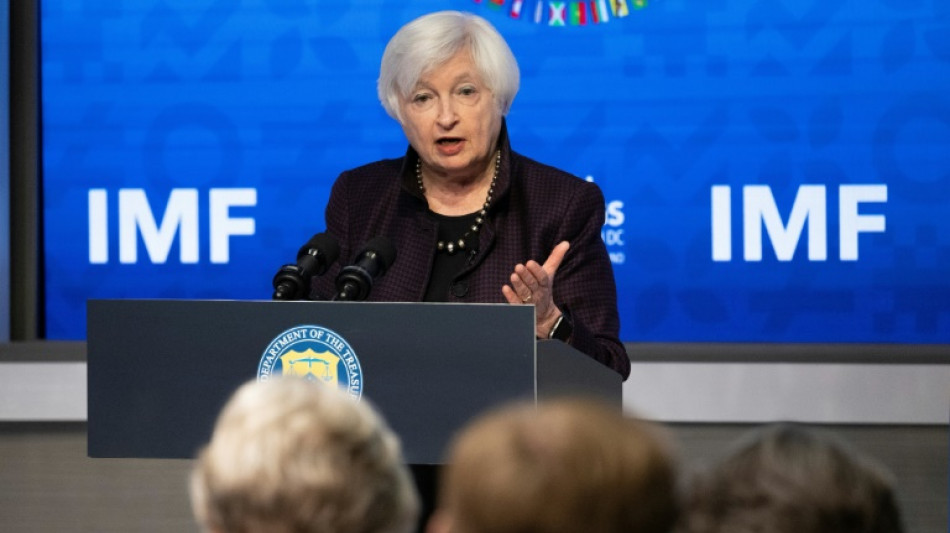
Broader coalition not needed for Russia oil price cap: US / Photo: Jim WATSON - AFP

 TotalEnergies profit hits record on high oil prices

 Afghanistan opium poppy cultivation surges despite Taliban govt ban: UN

 Microsoft beats expectations fueled by Azure cloud business

 Shares in Google owner Alphabet sink on profit miss, ad slowdown

 Pioneering US labor leader Dolores Huerta dies at 96

 US Fed holds interest rates steady despite surging inflation

 US labor leader Dolores Huerta dead: family

 French firm Safran helps build aircraft wings of the future in UK factory

 World Bank warns of worsening food insecurity as commodity prices soar

 Billionaire Ambani's Jio soars in market debut after India's biggest IPO
The G7 is still working on setting a price cap on Russian oil but enrolling more nations to the scheme is not necessary for it to succeed, US Treasury Secretary Janet Yellen said Friday.
Australia recently joined the Group of Seven wealthy democracies and the European Union in backing the move aimed at depriving Moscow of a key source of cash for its war in Ukraine as well as cooling soaring energy prices.
Yellen said a broader coalition was not needed as the cap would be set by requiring Western financial services and insurance firms to abide by a maximum price in contracts for Russian oil shipments.
"We are not trying to sign up additional countries to a coalition," Yellen told a news conference at the IMF's annual meetings in Washington.
The United States has imposed an embargo on Russian oil while the European Union will ban most imports from December.
"None of the coalition countries are buying Russian oil or will buy Russian oil," Yellen said.
"And none of the countries outside the coalition are really important suppliers of any of these financial services," she added.
Those countries will have access to services provided by Western insurance firms "as long as they purchase at the price below the cap," Yellen explained.
"We need them to understand that that's the condition they face for access to those services and that we will be making sure that Western firms abide by that, but we honestly are not asking other governments to do anything."
Moscow has warned that it would cut off oil supplies to countries that impose such a cap.
Oil prices surged to almost $140 per barrel in March following the Russian invasion. The international benchmark, Brent, has since hovered around $90.
Western officials have said that the price for Russian crude would remain above the cost of production so that Moscow would still have an incentive to supply importing countries.
Yellen mentioned a $60 figure this week but she clarified on Friday that such a figure was under consideration.
"No decisions have been made," she said.
Ch.Lefebvre--CPN