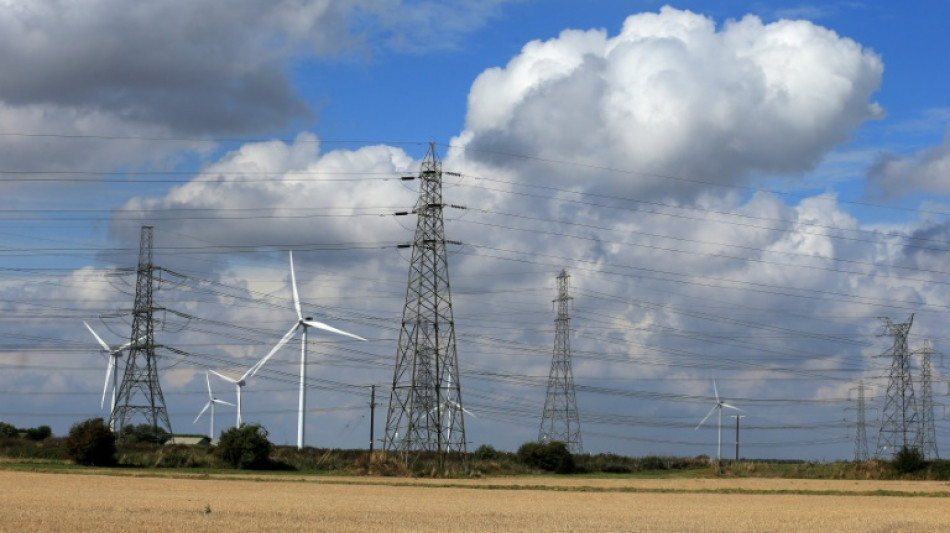
UK to cap renewable energy company revenues / Photo: Lindsey Parnaby - AFP

 TotalEnergies profit hits record on high oil prices

 Afghanistan opium poppy cultivation surges despite Taliban govt ban: UN

 Microsoft beats expectations fueled by Azure cloud business
 Shares in Google owner Alphabet sink on profit miss, ad slowdown
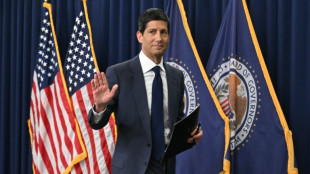
 Pioneering US labor leader Dolores Huerta dies at 96

 US Fed holds interest rates steady despite surging inflation

 US labor leader Dolores Huerta dead: family

 French firm Safran helps build aircraft wings of the future in UK factory

 World Bank warns of worsening food insecurity as commodity prices soar

 Billionaire Ambani's Jio soars in market debut after India's biggest IPO

Britain will introduce a cap on the revenues of companies that produce low-carbon electricity in an attempt to mitigate the impact of soaring energy prices on consumers.
The temporary cap on energy companies that produce electricity from renewables and nuclear is being introduced in England and Wales, the government said in a statement late Tuesday.
The measure "will reduce the impact of unprecedented wholesale prices on consumers and the taxpayer by introducing a revenue limit, curbing the amount generators can make", the government said.
The main opposition Labour party called the measure a "windfall tax", which business minister Jacob Rees-Mogg denied.
He told the BBC that, after intervening on retail energy prices, the British government was now acting on wholesale prices.
"This is simply mischaracterising what's being done, and misunderstands how the market works," he said.
"What this is doing is rationalising the market in a way that energy companies have been in favour," he added.
"It's clearly not a tax. It's nothing to do with the profits these companies are making."
Liz Truss successfully campaigned to become prime minister by saying she was opposed to the idea of a tax on the profits of energy giants.
The previous government of Boris Johnson introduced a one-off tax on the profits of oil and gas companies, but this could largely be offset by investment in hydrocarbon production.
- 'Double standard' -
Before the introduction of recent energy subsidies, "businesses and consumers had been left facing increasing financial turmoil, with energy bills estimated to increase to as high as £6,500 before the government stepped in," the government said.
Truss last month introduced a two-year cap on energy bills for domestic consumers at £2,500 ($2,770) a year per average household.
Businesses will have around half their bills covered for six months.
The UK is particularly reliant on gas for its electricity, the price of which has soared since the Russian invasion of Ukraine began on February 24.
Shell boss Ben van Beurden last week told an energy conference that in light of soaring energy prices and resulting inflation, governments should be imposing more taxes on companies in the sector.
Dhara Vyas, policy director at industry lobbyists Energy UK, warned that the new revenue cap mechanism, the details of which are yet to be worked out, must not "risk the very investment the UK needs to ensure long-term, sustainable economic growth".
Dan McGrail, chief executive of renewable energy organisation RenewableUK, added that the move risked "skewing investment towards the fossil fuels that have caused this energy crisis".
Environmental NGO Greenpeace UK accused the government of a "glaring double standard".
"Was it just a dream or did we all hear the prime minister say, just weeks ago, she was against a windfall tax?," said policy director Doug Parr.
"Now she's going to impose a de facto one after all but only on electricity generators, not a proper one on oil and gas firms. This glaring double standard makes no sense."
M.Anderson--CPN