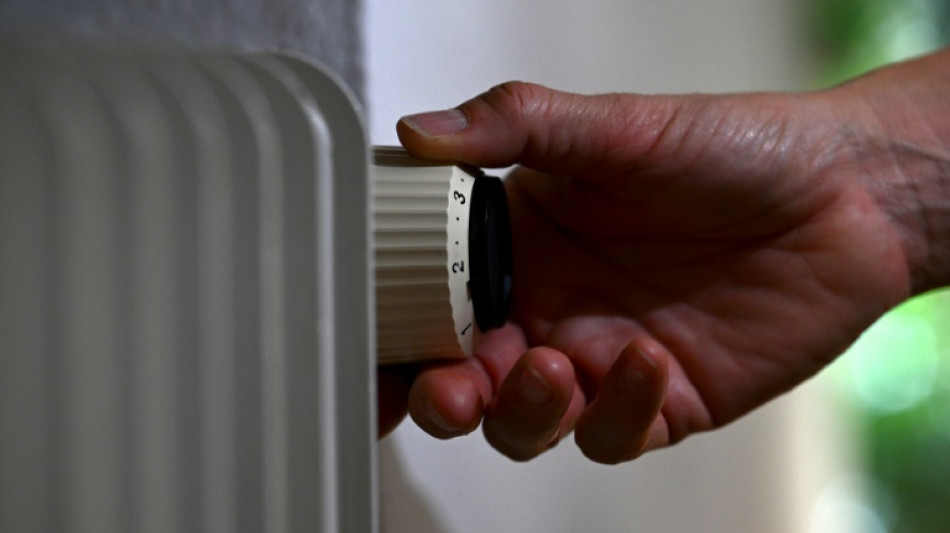
German experts propose energy price cap from next year / Photo: Christof STACHE - AFP/File

 TotalEnergies profit hits record on high oil prices

 Afghanistan opium poppy cultivation surges despite Taliban govt ban: UN

 Microsoft beats expectations fueled by Azure cloud business
 Shares in Google owner Alphabet sink on profit miss, ad slowdown
 Pioneering US labor leader Dolores Huerta dies at 96

 US Fed holds interest rates steady despite surging inflation

 US labor leader Dolores Huerta dead: family

 French firm Safran helps build aircraft wings of the future in UK factory

 World Bank warns of worsening food insecurity as commodity prices soar

 Billionaire Ambani's Jio soars in market debut after India's biggest IPO

A price cap to reduce soaring German energy costs following Russia's invasion of Ukraine should come into force next year with additional help provided beforehand, a government-appointed commission recommended Monday.
Under the plan, households will benefit from the cap covering 80 percent of their usage from March next year to April 2024, said the expert commission.
To bridge the gap until the brake enters force, the government should foot gas and district heating bills for households and small companies in December to tackle high costs over winter, they said.
"We wanted the effects of the relief measures to be fast," Michael Vassiliadis, a member of the commission told a press conference, adding a "first possibility" of lightening the burden for consumers needed to be provided by the end of 2022.
Moscow's move to cut off gas supplies amid the fallout from the Ukraine war has triggered an energy crisis in Europe, with Germany particularly hard hit as it relied heavily on Russian supplies prior to the conflict.
The proposed price cap is part of a controversial 200-billion-euro ($194-billion) fund aimed at shielding Germans from skyrocketing energy costs.
The announcement of the fund last month caused tensions with some fellow European Union members, who are concerned by Berlin's go-it-alone approach and are calling for bloc-wide solutions.
Vassiliadis insisted that Germany's plans were not "against Europe".
He said Germany took European solidarity into account, but was also acting "with regard to our households and people".
For major industrial users, the commission also proposed a price cap of seven cents per kilowatt hour for usage of up to 70 percent of 2021's consumption.
These companies, numbering around 25,000 in Germany, will not benefit from December's payment, but the price cap should kick in already in January to help ease their energy burden, the commission said.
The energy crisis endangered not just individual companies but "the German economic model, and also our prosperity," said commission member Siegfried Russwurm.
Germany is set to sink into a recession in 2023, leading economic institutes said last month, citing the impact of energy prices.
P.Kolisnyk--CPN