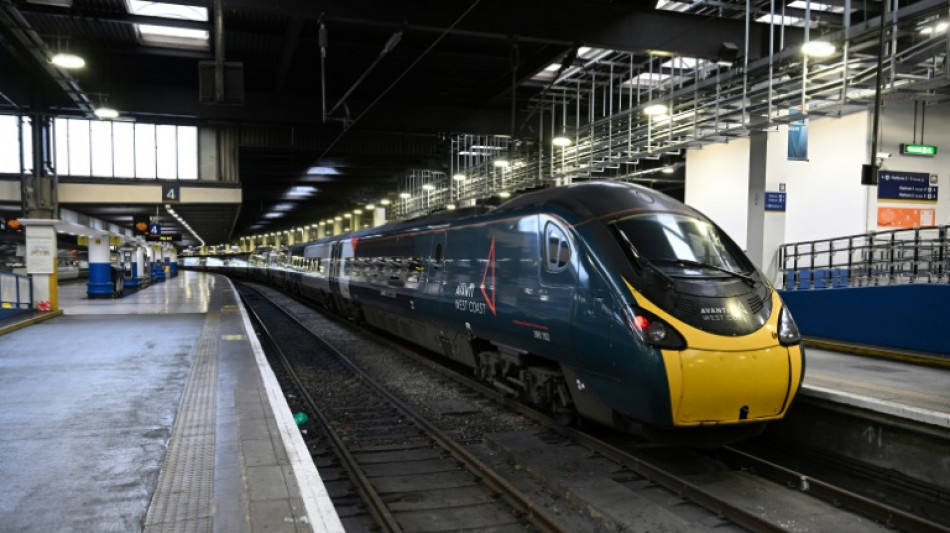
UK train commuters hit by further strikes over pay / Photo: JUSTIN TALLIS - AFP

 TotalEnergies profit hits record on high oil prices

 Afghanistan opium poppy cultivation surges despite Taliban govt ban: UN

 Microsoft beats expectations fueled by Azure cloud business

 Shares in Google owner Alphabet sink on profit miss, ad slowdown
 Pioneering US labor leader Dolores Huerta dies at 96

 US Fed holds interest rates steady despite surging inflation

 US labor leader Dolores Huerta dead: family

 French firm Safran helps build aircraft wings of the future in UK factory

 World Bank warns of worsening food insecurity as commodity prices soar

 Billionaire Ambani's Jio soars in market debut after India's biggest IPO

Train passengers in Britain faced severe disruption on Saturday, with only one in five services running as railway workers staged another walkout over wages.
People were urged to "only travel by train if absolutely necessary on Saturday" as 40,000 members of the Rail, Maritime and Transport (RMT) union at Network Rail and 15 train operating companies took action demanding higher pay and better working conditions.
Those affected include thousands of football fans travelling to support their teams.
Railway workers are demanding wage increases to keep pace with decades-high inflation amid a cost-of-living crisis.
The sector has spearheaded a wave of industrial action in recent months.
Tens of thousands of staff in various industries -- from the postal and legal systems to ports and telecommunications -- have also gone on strike across Britain since the summer.
RMT General Secretary Mick Lynch urged the government to "unshackle" the railway companies and allow them to negotiate a deal with the unions.
"I am also hopeful that a negotiated settlement between the RMT and the employers can be reached," he wrote to the government.
For this to be achieved, the government "must unshackle the train operators who currently take their mandate directly from yourself," he added.
Railway workers staged another walkout on Wednesday and also took strike action last Saturday, resulting in only 11 percent of trains running nationwide.
Some parts of the country were left without any services.
The strikes come as workers face a huge hike in energy prices, rising interest rates and food costs. They have been the sector's biggest stoppages in decades with more expected.
Prime Minister Liz Truss's government on Wednesday vowed to take on "militant unions", characterising them as part of an "anti-growth coalition" holding the country back.
D.Goldberg--CPN