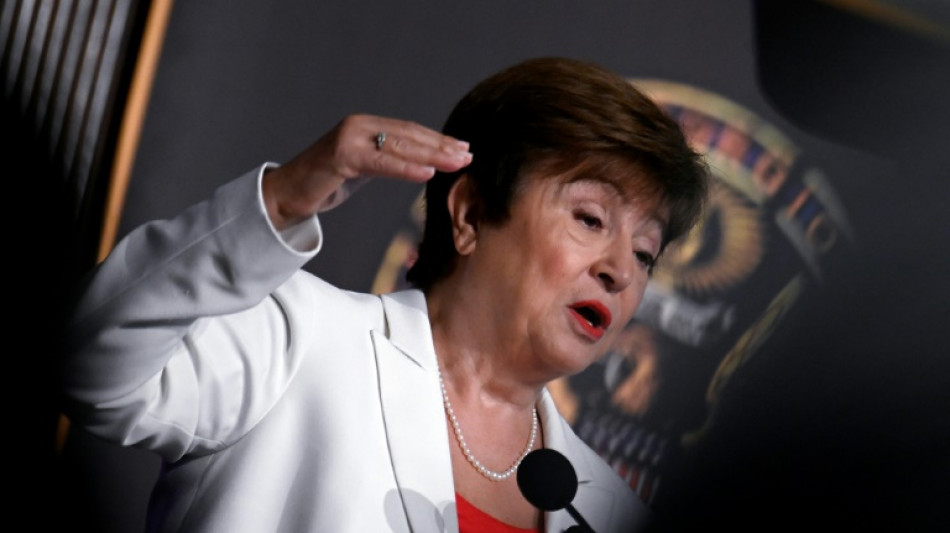
IMF chief says world better prepared for this crisis / Photo: OLIVIER DOULIERY - AFP

 TotalEnergies profit hits record on high oil prices

 Afghanistan opium poppy cultivation surges despite Taliban govt ban: UN

 Microsoft beats expectations fueled by Azure cloud business

 Shares in Google owner Alphabet sink on profit miss, ad slowdown

 Pioneering US labor leader Dolores Huerta dies at 96

 US Fed holds interest rates steady despite surging inflation

 US labor leader Dolores Huerta dead: family

 French firm Safran helps build aircraft wings of the future in UK factory

 World Bank warns of worsening food insecurity as commodity prices soar

 Billionaire Ambani's Jio soars in market debut after India's biggest IPO

The global economy is at a difficult crossroads, buffeted by multiple shocks including soaring inflation, rising interest rates and a growing threat of broad debt crisis, but IMF Managing Director Kristalina Georgieva told AFP that institutions are better prepared to weather this storm.
Below is an excerpt from an interview conducted ahead of the IMF and World Bank annual meetings in Washington next week:
Could the fallout in 2023 be worse than the 2008 global financial crisis?
What we had today is (a) much stronger banking sector than we had then, and that has proven to be a source of resilience for the world economy. We also have something very important: stronger central banks, truly independent with the experience that they have built since the global financial crisis. And that shows in how central banks are reacting to the signs of inflation.
Does the IMF have enough tools and financial resources?
During the last year since Covid, we have extended lending of about $270 billion. We have a lending capacity of $1 trillion. So we have space to continue to support the members. We do see an increase in requests for fund programs, not surprisingly. Just since Russia invaded Ukraine, we have provided financial support to 16 countries of about $90 billion and we are currently looking at some 21 requests... My message to countries: act early. Come to us for precautionary instruments so you can build your position in this very difficult time to sustain your economy against the risks to come.
China is a major creditor, are they doing enough to help with debt relief?
We have got... very substantive engagement with China in the context of the countries that ask for treatment under the Common Framework. And we have made good progress with China stepping up to co-chair the creditors committee for Zambia and to reach an agreement on Zambia, and now we expect the same for Chad. What we need to recognize is that the Chinese institutions are still working their way through debt issues. There are many lenders in China. Only recently the Ministry of Finance and central bank, the People's Bank of China, got the mandate to coordinate, and it takes some time to reach that coordination.
But time is not our friend. And this is what we have conveyed clearly, that we do not want to see individual defaults turning into opening a gateway for a debt crisis. And it is not in China's interest.
P.Petrenko--CPN