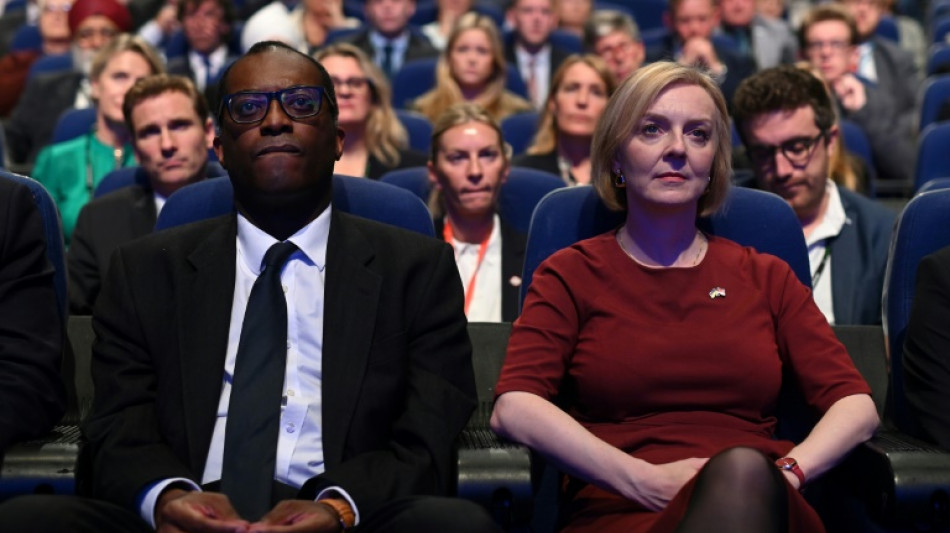
UK economy not out of woods despite tax U-turn / Photo: Oli SCARFF - AFP

 Afghanistan opium poppy cultivation surges despite Taliban govt ban: UN

 Microsoft beats expectations fueled by Azure cloud business

 Shares in Google owner Alphabet sink on profit miss, ad slowdown

 Pioneering US labor leader Dolores Huerta dies at 96

 US Fed holds interest rates steady despite surging inflation

 US labor leader Dolores Huerta dead: family

 French firm Safran helps build aircraft wings of the future in UK factory

 World Bank warns of worsening food insecurity as commodity prices soar

 Billionaire Ambani's Jio soars in market debut after India's biggest IPO

 AI chip giant SK hynix posts seven-fold surge in quarterly operating profit

Britain's debt-fuelled economy remains threatened by recession and the pound mired by trouble despite the government of new Prime Minister Liz Truss performing a swift tax U-turn.
Sterling was up slightly Monday, having recovered in recent days from a record dollar-low that followed the budget seen as benefitting the richest in Britain during a cost-a-living crisis.
London's benchmark FTSE 100 index was down about half a percent, mirroring losses on global equity markets.
UK gilts, or government bonds, remain supported by an emergency Bank of England intervention after yields rocketed following the debt-fuelled budget late last month.
- 'Outlook tweaked' -
"The tax cut reversal gives the pound a bit more room to recover, but since it only really tweaks the fiscal outlook I don't expect the recovery to go on for too long," IG Index analyst Chris Beauchamp told AFP.
"Gilts continue to reflect this nervousness, and until we get a bigger reversal and/or more clarity on the fiscal outlook, they should remain under pressure."
In a dramatic change of plan, Britain's beleaguered finance minister Kwasi Kwarteng said Monday on Twitter that he would no longer be scrapping the 45 percent top rate of income tax levied on the highest earners.
"We get it, and we have listened," said the chancellor of the exchequer.
No other changes were made to the budget, which includes axing a cap on bankers' bonuses, reversing a planned rise on company profits and cutting taxes for all workers.
The intention to pay for the cuts with billions more pounds (dollars) in extra borrowing had a week ago sent sterling to an all-time nadir close to parity with the greenback and put pension funds at risk from soaring bond yields.
"The tax cut reversal... does not do much to boost the government's credibility in the eyes of the market, though it does at least show they are paying attention," noted Neil Wilson at Markets.com.
"Whilst the U-turn did produce a short burst of buying, sterling had pretty well recovered its losses last week -- a tougher line from the Bank of England in terms of rate hikes and its intervention to shore up the gilt market were the key factors."
Wilson said "sentiment remains pretty weak and there could be another lurch lower for the pound", while the BoE's intervention to buy gilts worth up to £65 billion ends next week.
- UK credit warnings -
Analysts have argued that the budget could fuel already sky-high UK inflation, forcing the Bank of England to raise its main interest rate even more aggressively than planned.
Mortgage deals, which are based on the BoE interest rate, have rocketed in the past week, offsetting financial benefit for households from a UK government's cap on energy bills.
Ratings agencies have also voiced concern, with S&P on Friday revising its outlook for the UK from "stable" to "negative" following the markets fallout.
Moody's had already warned that Kwarteng's fiscal strategy was "credit negative" and could "permanently weaken the UK's debt affordability".
On a positive note, Britain is not yet in recession, revised official data showed Friday -- but that could all change in the coming months.
"Confidence is still lacking in this government and there is a cliff edge in a couple of weeks when the Bank of England's emergency bond-buying programme comes to an end," said Philip Dragoumis at Thera Wealth Management.
O.Hansen--CPN