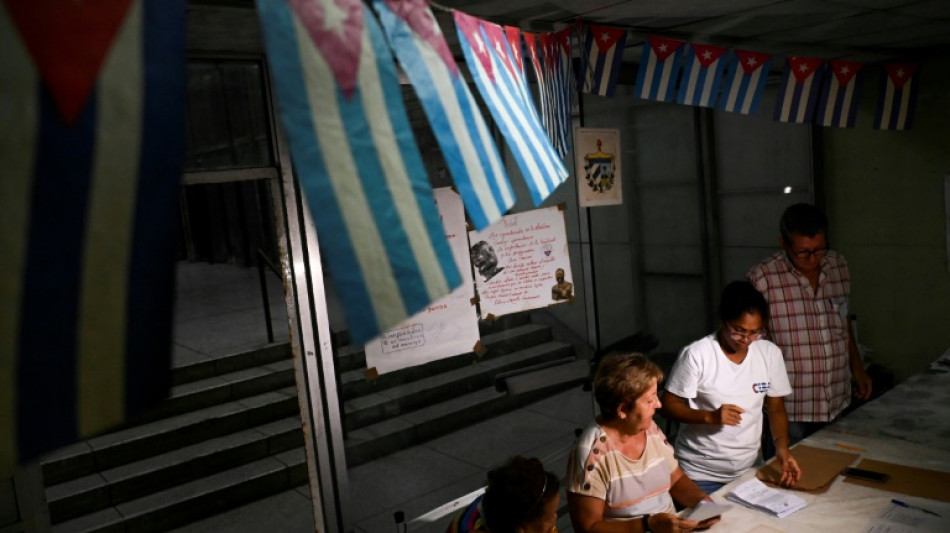
Cuban voters back liberalized family code / Photo: YAMIL LAGE - AFP

 Samsung logs record quarterly profits despite investor AI jitters

 Shares in Google owner Alphabet plummet on profit miss, ad slowdown

 US Fed holds interest rates steady despite 'too high' inflation

 Airbus aims for record deliveries despite disappointing quarter

 Real Madrid, La Liga apology over Mbappe shows power of Chinese market

 'Cruise for life' strands passengers in Cambodia as operator goes bust

 Canada hikes rates to contain oil price surge caused by Iran war

 Nintendo producer 'all nervous' as Zelda classic remake hits shelves

 Three killed by storm in southern India

 Two hundred 'Cruise for life' passengers stranded in Cambodia

 Billionaire Ambani's Jio jumps 21% in market debut after record India IPO
Cubans voted to legalize same-sex marriage and adoption as well as surrogate pregnancies in a referendum over the weekend, the communist country's electoral officials said Monday.
Preliminary results indicate an "irreversible trend," with 66 percent of votes counted so far in favor of the government-backed change, electoral council president Alina Balseiro said on state television.
"The Family Code has been ratified by the people," she said.
The updated code represents a major shift in a country where machismo is strong and where the authorities sent LGBTQ people to militarized labor camps in the 1960s and 1970s.
Official attitudes have since evolved, and the government conducted an intense media campaign in favor of the overhaul, which will replace the country's 1975 Family Code.
The new code permits surrogate pregnancies, as long as no money changes hands, while boosting the rights of children, the elderly and the disabled.
It defines marriage as the union between two people, rather than that of a man and a woman.
According to the National Electoral Council, about 68 percent of Cuba's 8.4 million eligible voters had cast a ballot by 5:00 pm (2100 GMT) Sunday night.
The law required 50 percent voter approval to be adopted.
The referendum came amid the country's worst economic crisis in 30 years and some predicted the vote could provide an opportunity to voice opposition to the government, with dissidents calling on citizens to reject the code or to abstain.
M.Anderson--CPN