-
 Samsung logs record quarterly profits despite investor AI jitters
-
Microsoft beats expectations fueled by Azure cloud business
-
 Shares in Google owner Alphabet plummet on profit miss, ad slowdown
-
Shares in Google owner Alphabet sink on profit miss, ad slowdown
-
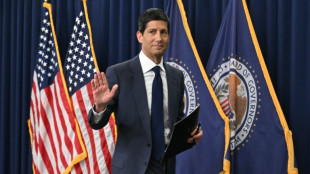 US Fed holds interest rates steady despite 'too high' inflation
-
Pioneering US labor leader Dolores Huerta dies at 96

-
 Airbus aims for record deliveries despite disappointing quarter
-
US Fed holds interest rates steady despite surging inflation

-
 Real Madrid, La Liga apology over Mbappe shows power of Chinese market
-
US labor leader Dolores Huerta dead: family

-
 'Cruise for life' strands passengers in Cambodia as operator goes bust
-
French firm Safran helps build aircraft wings of the future in UK factory

-
 Canada hikes rates to contain oil price surge caused by Iran war
-
World Bank warns of worsening food insecurity as commodity prices soar

-
 Nintendo producer 'all nervous' as Zelda classic remake hits shelves
-
Billionaire Ambani's Jio soars in market debut after India's biggest IPO

-
 Three killed by storm in southern India
-
AI chip giant SK hynix posts seven-fold surge in quarterly operating profit

-
 Two hundred 'Cruise for life' passengers stranded in Cambodia
-
S.African activists push back on data centre rush

-
 Billionaire Ambani's Jio jumps 21% in market debut after record India IPO
US Fed raises key interest rate as recession fears mount
The Federal Reserve raised the key US interest rate again Wednesday and said more hikes are coming as it battles soaring prices -- an aggressive stance that has raised fears of a recession.
It was the third consecutive increase of 0.75 percentage point by the Fed's policy-setting Federal Open Market Committee (FOMC), continuing the forceful action to tamp down inflation that has surged to the highest in 40 years.
The increase takes the policy rate to 3.0-3.25 percent, and the FOMC said it "anticipates that ongoing increases... will be appropriate."
Soaring prices are putting the squeeze on American families and businesses and have become a political liability for President Joe Biden, as he faces midterm congressional elections in early November.
But a contraction of the world's largest economy would be a more damaging blow to Biden, to the Fed's credibility and the world at large.
Federal Reserve Chair Jerome Powell has made it clear that officials will continue to act aggressively to cool the economy and avoid a repeat of the 1970s and early 1980s, the last time US inflation got out of control.
It took tough action -- and a recession -- to finally bring prices down in the 1980s, and the Fed is unwilling to give up its hard-won, inflation-fighting credibility.
The Fed's quarterly forecasts released with the rate decision Wednesday show FOMC members expect a sharp slowdown with US GDP growth of just 0.2 percent this year, but a return to expansion in 2023, with annual growth of 1.2 percent.
Powell's press conference after the meeting will be closely scrutinized for clues on how much more he thinks the Fed will have to do before it declares victory in the inflation fight.
FOMC members see further rate hikes this year and next, with no cuts until 2024.
- Doubts, pressure -
Economist Diane Swonk of KPMG warned the central bank will come under increasing pressure, especially if unemployment begins to rise, and Fed officials "will become political pinatas."
While the FOMC noted continued "robust" job gains in recent months and low unemployment, the forecasts project the jobless rate will rise to 4.4 percent next year and hold around that level through 2025.
Powell and other central bankers have been sending the same message: An economic downturn is better than continued high inflation given the pain that would inflict, especially on those least able to withstand it.
Inflation is a global phenomenon amid the Russian war in Ukraine on top of global supply chain snarls and Covid lockdowns in China, and other major central banks are taking action as well.
Many economists say at least a short period of negative US GDP in the first half of 2023 will be needed before inflation starts coming down.
Despite a welcome drop in gasoline prices at the pump in recent weeks, the disappointing consumer price report for August showed widespread increases.
The FOMC statement said noted the "broader price pressures" beyond food and energy, and stressed that officials are "strongly committed to returning inflation to its 2 percent objective."
The Fed has front-loaded its rate hikes, cranking up the benchmark lending rate four times this year, including two straight three-quarter-point hikes in June and July.
The aim is to raise the cost of borrowing and cool demand, and it is having an impact: The housing market has slowed as mortgage rates have surged.
"The irony here is that just as the Fed is ratcheting-up the anti-inflation rhetoric to fever-pitch, the forces needed to drive down inflation over the next year are now in place," said Ian Shepherdson of Pantheon Macroeconomics.
US stocks turned negative following the announcement.
M.García--CPN