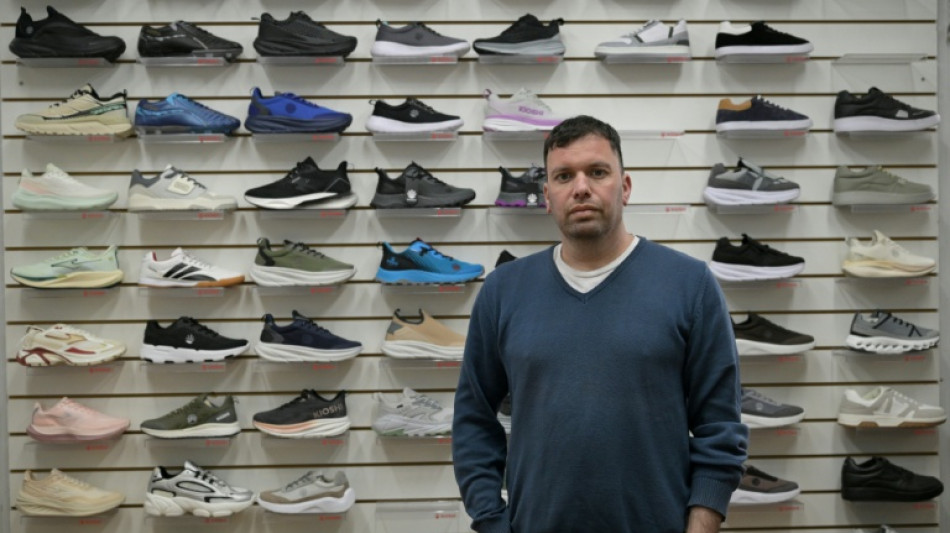
Argentine industry reels from Milei's free-market revolution / Photo: JUAN MABROMATA - AFP

 Zamanat Targets GCC’s $250 Billion SME Financing Gap With Up to $100 Million Tokenized Private Credit Fund

 Stocks drop as oil spike fans inflation and interest rate fears
 Stocks sink as oil rally fans inflation and rate hike fears
 Women quit South Korea's grind for diving tradition
 Bayeux Tapestry 'mania' sweeps UK as sold-out exhibition opens

 Ralph Lauren opens fur-free New York Fashion Week
 US-blockaded Cubans appeal to 'Cachita' for divine intervention

 Evacuations in Malibu after waves open sinkhole at Nicolas Cage's house
 'Gambling with our lives': AI researcher quits Anthropic
 Amboss and Aureo Connect the Lightning Network to Mexico's Banking System

 Meta tests fact-check replacement in Latin America

 Global Multi-Asset Broker FP Markets Secures UAE CMA Category 5 Licence

 IC Markets Australia Wins People's Choice Forex Broker Innovation Award at the 2026 Finder Innovation Awards

 Bangladesh measles crisis kills more than 1,000 children
 Cyberattack ruled out in UK air traffic glitch as more flights axed

 Ekiden Launches Canton Network’s First Order Book-Based Derivatives Exchange

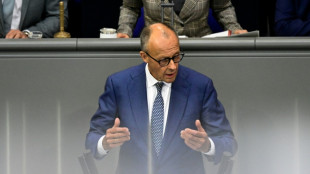 Germany's Merz accuses AfD of promoting 'ethnic cleansing'

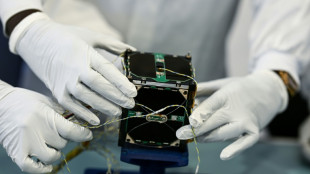 As African space race heats up, Senegal pursues homemade satellites

 Brent breaks $100 on Mideast flare-up, fanning inflation fears

 South Korea video game tycoon to pay record $1.5 bn in divorce
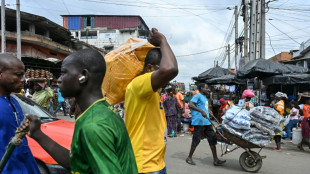 Africa's informal economy: a burden and lifeline

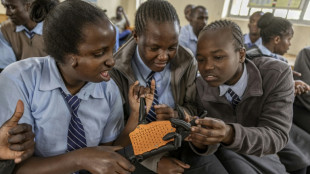 Kenyan start-up makes robotic limbs to sign for deaf kids

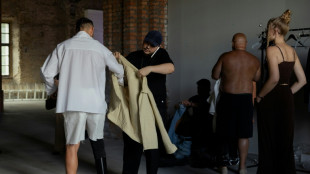 From trenches to catwalk: Ukraine's amputee soldiers hit the runway

 Norway bids farewell to King Harald V, 'grandfather' of the nation

 Canada eyes researchers looking to leave 'hostile' US

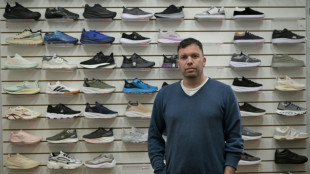
In the gloom of a vast warehouse in Argentina, the machines lying idle next to boxes of unsold merchandise represent the collapse of manufacturing under President Javier Milei.
Just three years ago, Kioshi employed nearly 120 people and produced 40,000 pairs of sneaker and flip-flops a month in the south of Buenos Aires.
Today, there are just 14 workers turning out a quarter of that amount as Milei's decision to throw open Argentina to global competition has left local manufacturing on the ropes.
"The domestic market is dead, there are people who go into debt to buy food so just imagine trying to buy shoes," Kioshi director Emmanuel Fernandez explained.
In 2024, Milei began dismantling the protectionist policies introduced by the left in the name of driving down prices.
The elimination of import quotas, taxes and other trade restrictions has led to an "avalanche" of imports that have been like a body blow to Kioshi, Fernandez said.
"We are industrial people, it's our passion, so when you only hear 10 percent of the machines in operation, it hurts," he added.
In June, around 40 percent of Argentina's industrial capacity lay idle.
Manufacturing output fell 5 percent between June and July, the sharpest drop in 16 months.
The influential Argentine Industrial Union last demanded government action in the face of the loss of some 90,000 industrial jobs and closure of nearly 30,000 companies in the past three years.
- 'Creative destruction' -
Inflation, a major issue when Milei took power and which has plunged drastically since he reduced public spending, has been displaced by unemployment as Argentines' biggest concern, according to recent polling.
The government has dimissed the job losses and decline in output as mere growing pains on the path to what Milei has portrayed as a more prosperous future.
"Companies disappear in the same way they appear, it's a natural phenomenon," he said breezily.
The self-described "anarcho-capitalist" invokes the "creative destruction" theory of US-Austrian economist Joseph Schumpeter to describe how old industries inevitably fold in the face of innovation.
But while waiting for new businesses and jobs to materialize, "what we see is people losing their job and going to work for (delivery) apps," said Fernandez.
Most of the businesses going under are small, like a subsidiary of Swiss chemicals group Clariant, situated around 90 kilometers (55 miles) from Buenos Aires, which closed last year after half a century.
Weeds are now pushing up through cracks in the empty parking lot.
Only two of the 42 staff members have found work in the formal sector, according to Miguel Marquez, a 62-year-old lab technician, who served the company for 20 years.
He and the rest have been left to try eke out a living doing "any kind of work, like an Uber driver," he said, standing outside the factory gates.
- Skewed playing field -
Economy Minister Luis Caputo says his job is "to defend the interests of 48 million Argentines, not those of certain business owners."
"For Argentines to have to pay for lower-quality goods at two, four, ten times their value strikes me as immoral and unfair," he said in defense of opening up national industry to foreign competition.
Industrialists say the playing field is uneven.
They argue that an artificially strong Argentine peso that makes local products less competitive, coupled with high interest rates and taxes, make it impossible to compete with cheap imports.
Job losses and falling purchasing power have added to industry's woes by depressing consumer spending.
Martin Blunt, a small company that manufactures strings for muscial instruments in the northern suburbs of Buenos Aires, has had to shift to a four-day week in the face of falling demand.
Job security is a top of "huge anxiety" among workers, the company's co-director Gloria Aparicio said.
"Everytime we make a staff announcement they panic."
Y.Tengku--CPN