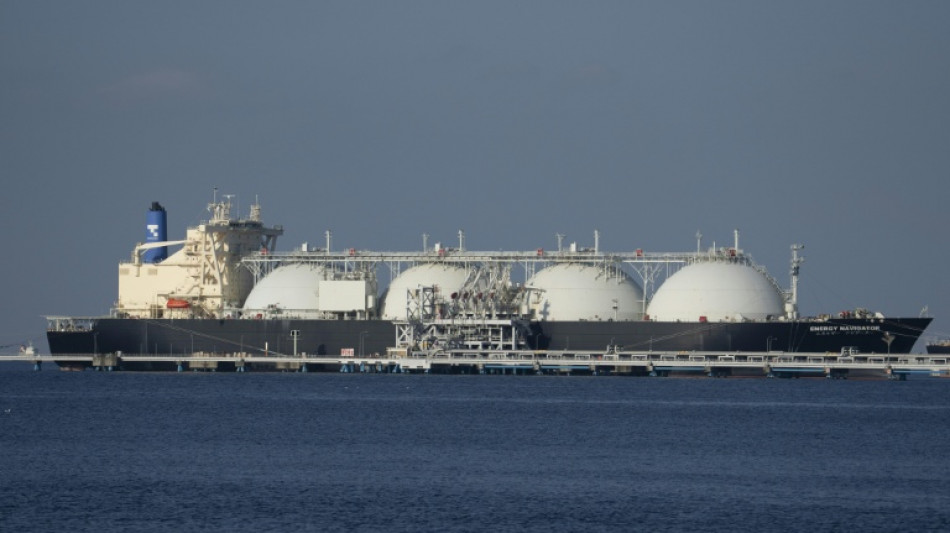
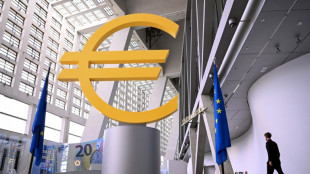
Could gas prices return to 2022 highs on US-Iran war? / Photo: Yuichi YAMAZAKI - AFP/File

 The "Everlasting Battery" Inside Your Joints:UConn Professor's Self-Powered Healing Material just Got Acquired

 Could gas prices return to 2022 highs on US-Iran war?

 Nepal flood death toll rises as rescuers scour tunnels

 Forex Expo Dubai to Take Place as Scheduled on 22–23 September 2026

 Canada's counter-tariffs take effect on various US goods

 China's trade booms as focus turns to expected Trump-Xi summit
 Mongolians wait hours for fuel as reliance on Russia bites
 OMP Asia Conferences to Showcase How Industry Leaders Kraft Heinz, Mars, Medac, And Nestlé Approach AI-Powered Supply Chain Planning At "Decision Velocity"
 Hurricane warning issued for westernmost Hawaiian islands

 CapTLX Launches Institutional Gateway to U.S. Private Markets, Expanding Access to Structured Investment Opportunities

 King Charles classes Harry and Meghan as 'private citizens'
 Z Traders Introduces New Funding Model Designed to Expand Opportunities in Trading

 Tech firms rally, with eyes on US inflation update

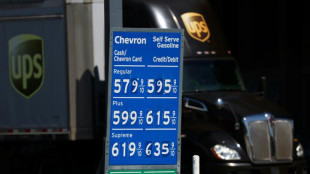 US average diesel price rises to record $5.90 a gallon: AAA

 British family bids to row back against suicide taboo

 Nepal holds day of mourning as families pray missing still alive
 Lonely woman director in Venice sees industry backsliding on gender

 Can dogs sniff cancer? AI joins the hunt in India
 AI data centers are less thirsty now, tech giants say

 UN's Nepal chief makes emotional plea for flood-ravaged country

 Indonesia's main airport suspends operations after volcanic eruption

 Indian Oscar-nominated filmmaker turns camera on his cancer

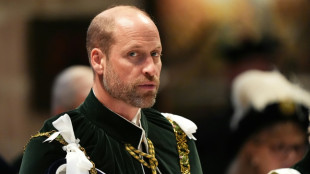 Prince William to represent King Charles III at Norway late King Harald's funeral

 Indonesia rescues second orangutan mother and baby from wildfire
 Bolivia farmers return to streets over diesel price hikes

European gas prices have more than doubled owing to the US-Iran war, just as Europe needs to replenish its reserves ahead of winter.
AFP examines the severity of the current spike, comparing it with energy price shocks in the wake of Russia's invasion of Ukraine.
- Why are reserves a key concern? -
Since the 2022 Russia invasion, the European Union has required member states to fill their gas reserves each year to at least 80 percent capacity by November 1 in order to mitigate the risk of shortages during the coldest months.
With less than two months to go before the deadline, current fill levels stand at an average of 67 percent, well below the 79-percent mark at the same time last year.
Much of the decline is owing to Germany, where stocks in Europe's biggest economy stand at just 53 percent of capacity compared to 71 percent this time last year.
This points to a surge in demand ahead of the current winter. Europe must also compete with Asia to secure liquefied natural gas (LNG) shipments.
"No comparably low storage level has been recorded at this time of year," said industry lobby group INES.
It cautioned that the "window for sufficient refill is closing".
The competition for gas stocks between European and Asian countries risks further driving up prices -- which have more than doubled to approach 75 euros per megawatt-hour owing to the conflict in the Middle East.
The war has effectively blocked the Strait of Hormuz, which before the conflict transported about one fifth of the world's LNG and oil.
- How high could prices go? -
The outlook for gas prices centre primarily on Qatar -- one of the world's largest LNG suppliers and whose exports rely on maritime shipping.
"If disruptions in the Strait of Hormuz persist through the winter, a price range of 100 to 150 euros per megawatt-hour is plausible," Julien Mathonniere at Energy Intelligence told AFP.
Another variable could be the climate, noted Jonathan Schroer, a strategist at UniCredit.
He said the El Nino weather phenomenon over the summer had made temperatures hotter in much of the world.
"This is significant because hotter weather creates more demand for power for cooling systems, driving higher electricity consumption, especially in Asia," which is home to major LNG importers China, India and Japan.
However, analysts consider it unlikely that there is a return to the 2022 price peaks -- when the European benchmark contract TTF briefly exceeded 300 euros per megawatt-hour.
- Why this crisis differs from 2022? -
In 2022, the shock stemmed from an EU policy decision to reduce reliance on Russian gas, which at the time provided 45 percent of the bloc's requirements, according to Schroer.
The sudden loss of these volumes forced European nations to urgently reorganise their supply chains and build new LNG terminals.
Today, the issue is less about a single supplier, rather more about tighter global supplies.
Europe is now more exposed to international competition for LNG cargoes than to a direct supply cutoff.
- Why the electricity sector appears less vulnerable? -
European countries are consuming less gas than in 2022 as they increasingly switch to renewables to generate electricity.
According to the European Commission, renewable energy accounted for nearly half of the EU's electricity generation in 2025.
Analysts believe this shift reduces the risk of a gas price spike translating into electricity bill hikes as severe as those seen in 2022, although costs are still expected to rise.
J.Bondarev--CPN