What property giant Evergrande's sentence means for China's economy / Photo: - - CN-STR/AFP/File

 PrimeXBT Expands Swap-Free Trading to PXTrader 2.0
 'It is tough': Indonesia battles wildfires, bracing for worse to come
 What property giant Evergrande's sentence means for China's economy

 US national debt exceeds $40 trillion for first time

 NASA satellite rescue mission fails

 PSG Ligue 1 opener moved over state of Parc des Princes pitch

 Lake Zurich sees water level hit record low amid drought

 Oldest human brain cells grown in lab 'recorded passage of time'

 Robots sort packages and serve fast food at Beijing showcase
 Europe can't afford to miss AI revolution: ECB chief

 Humanoid-maker Unitree surges more than 600% on Shanghai debut

 Southern African mothers plead for sons lured to Russia's war
 Freedom Holding Marks New Türkiye Milestone as Freedom Yatırım Secures Brokerage License

 Humanoid resources: China's robots search for workforce breakthrough

 China's robots open to opportunities in search of commercial breakthrough

 New Zealand blocks lawsuits against firms over climate harm

 NASA images reveal crater left by SpaceX rocket's Moon crash

 French producer Nicolas Altmayer, Dior PR chief Favier die in car crash

 How only a few tree species drive Amazon forest recovery

 Tribal Partners with ServiceNow to Empower Enterprise Teams to Build and Deploy Apps & Agents

 Fusion Markets Extends Negative Balance Protection to Clients Globally

 Beleaguered FIFA chief Infantino rids himself of critic Lamour

 Crude extends gains, most stocks drop as Mideast hopes dim

 A Viking longship in 'The Odyssey'? It's a case of history meets Hollywood
 Whales spark joy in New York but face threats from boat traffic

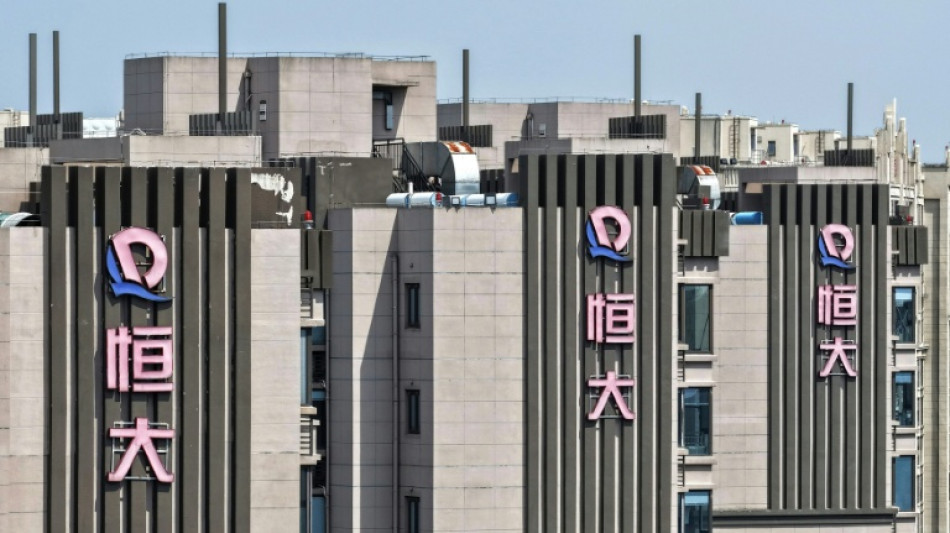
For property giant Evergrande, the face of China's real estate woes, an excruciating saga that has dragged on for years culminated on Thursday with court rulings ordering fines and jail terms.
The court in Shenzhen city said it sentenced founder Xu Jiayin to life in prison and fined Evergrande Group and an affiliate more than $2 billion for fraud and other offences.
While the verdict caps the fallout from Evergrande's collapse, challenges posed by a stubborn slump in the once-booming property sector still loom large for China and its leaders.
AFP breaks down Evergrande's fall and what it means for the world's number-two economy:
- Why did Evergrande collapse? -
Evergrande was once China's leading property developer, propelled by decades of rapid urbanisation and rising living standards across the country.
Listed in Hong Kong in 2009, the firm surged to a peak market value of more than $50 billion under the stewardship of Xu, also known as Hui Ka Yan.
But fortunes reversed in 2020, when new regulations from Beijing seeking to limit excessive borrowing in the real estate sector complicated Evergrande's ability to make payments.
Subsequent years saw a drawn-out struggle across the industry to complete construction projects as shares plunged and cash flows dried up.
Evergrande's 2021 default and the 2024 liquidation order by a Hong Kong court have become emblematic of the broader downturn in China's once-mighty property sector.
In August last year, Evergrande shares were delisted from the Hong Kong Stock Exchange.
Xu pleaded guilty to charges of fraud and bribery in April during a public hearing at which he stood accused of "illegally absorbing public deposits, fundraising fraud, illegally issuing loans (and) illegally using funds", among other crimes, a court statement said at the time.
- What is the impact on China's economy? -
The protracted crisis in China's real estate market -- long a key driver of national growth -- has heavily impacted the country's economy.
"Evergrande helped make the problem more structural... and it showed the weakness of the system," Alicia Garcia-Herrero, Asia-Pacific chief economist at Natixis, told AFP.
The debt struggles of Evergrande and industry peers including Country Garden, Vanke and Kaisa have had a severe impact on consumer confidence, dissuading many would-be homebuyers from making purchases.
Complicating matters further, the slump in sentiment comes just as many economists argue that China must shift towards a growth model powered more by domestic consumption than investment in real estate and infrastructure.
Garcia-Herrero said there are "so many reasons" for a lack of demand in the housing sector, including stagnant disposable income for households and a shrinking population.
In the latest sign of pressures, new-home prices dropped at a faster pace in July than the previous month, official data released this week showed.
- How are leaders responding? -
Beijing is attempting to simultaneously manage deep-set issues in the property sector while minimising turbulence for the domestic economy.
Thursday's court rulings are a "decisive signal that the central government hasn't changed policy course (and) it won't bail out the property sector", Dan Wang, a director on Eurasia Group's China team, told AFP.
They are a signal to companies that they must "be debt-conscious", she added.
China's leaders are seeking to spark new life into an economy that has faced slowing growth for years.
Beijing is targeting GDP expansion this year of between 4.5 and 5.0 percent, its lowest official goal in decades.
After government data showed growth slipping below that range in the second quarter, the data for July showed retail sales declining compared to last year.
The data also showed a pronounced decline in the property sector, with investment in real estate development down by nearly one fifth year-on-year through the end of July.
P.Kolisnyk--CPN