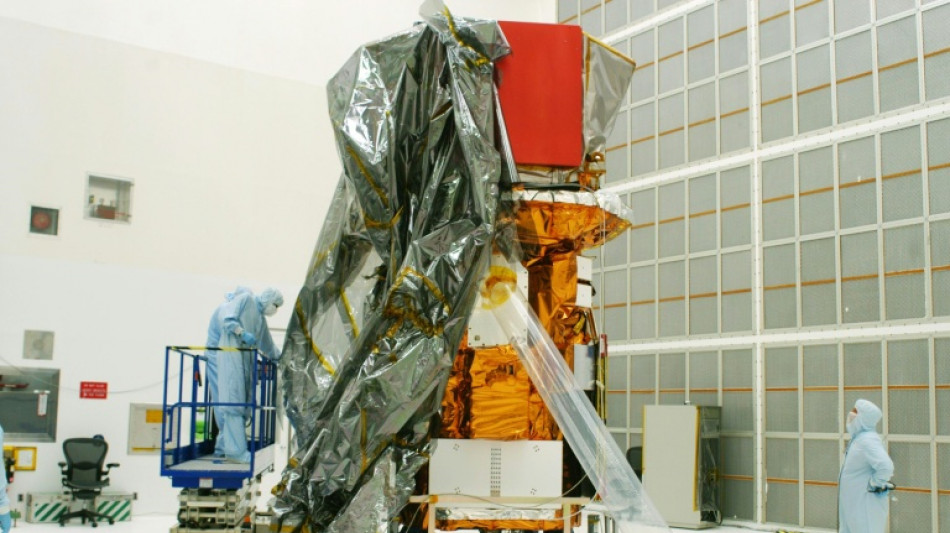
NASA satellite rescue mission fails / Photo: Handout - NASA/AFP

 PrimeXBT Expands Swap-Free Trading to PXTrader 2.0

 'It is tough': Indonesia battles wildfires, bracing for worse to come

 What property giant Evergrande's sentence means for China's economy

 US national debt exceeds $40 trillion for first time

 NASA satellite rescue mission fails

 PSG Ligue 1 opener moved over state of Parc des Princes pitch

 Lake Zurich sees water level hit record low amid drought

 Oldest human brain cells grown in lab 'recorded passage of time'

 Robots sort packages and serve fast food at Beijing showcase

 Europe can't afford to miss AI revolution: ECB chief

 Humanoid-maker Unitree surges more than 600% on Shanghai debut

 Southern African mothers plead for sons lured to Russia's war

 Freedom Holding Marks New Türkiye Milestone as Freedom Yatırım Secures Brokerage License

 Humanoid resources: China's robots search for workforce breakthrough

 China's robots open to opportunities in search of commercial breakthrough

 New Zealand blocks lawsuits against firms over climate harm

 NASA images reveal crater left by SpaceX rocket's Moon crash

 French producer Nicolas Altmayer, Dior PR chief Favier die in car crash

 How only a few tree species drive Amazon forest recovery

 Tribal Partners with ServiceNow to Empower Enterprise Teams to Build and Deploy Apps & Agents

 Fusion Markets Extends Negative Balance Protection to Clients Globally

 Beleaguered FIFA chief Infantino rids himself of critic Lamour

 Crude extends gains, most stocks drop as Mideast hopes dim
 A Viking longship in 'The Odyssey'? It's a case of history meets Hollywood

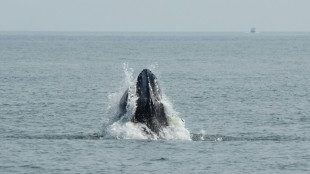 Whales spark joy in New York but face threats from boat traffic

A complicated mission to save a NASA satellite from burning up in the atmosphere has failed, the US space agency said Wednesday, as the rescue spacecraft could not be controlled.
The Swift space telescope, which studies the most powerful explosions in the universe, will now likely plunge back to earth and disintegrate along the way later this year.
The unprecedented $30 million dollar mission attempted to send a robot to grab the telescope and move it farther into orbit.
"This is not the outcome we were working toward, but it does not change why this mission was worth attempting," NASA Administrator Jared Isaacman said.
Planners had hoped the mission would pave the way for giving other satellites a second life.
"The team moved with extraordinary speed to give Swift a chance to carry out more science while advancing capabilities America will need for satellite servicing in the future," Isaacman added.
Developed by American startup Katalyst, the unmanned spacecraft was launched on July 3 by a small rocket named Pegasus, which was itself launched from an airplane.
However, on July 28 the company said the spacecraft had been in an out-of-control spin for 72 hours with multiple problems including a loss of communications.
In announcing the mission failure on Wednesday, Katalyst cited "ongoing attitude control issues" as the reason it and NASA were calling it off.
NASA said that the spacecraft would still attempt to reach the Swift telescope with the hope of giving scientists and engineers lessons for similar future missions.
The agency launched Swift in 2004 to study gamma-ray bursts.
Y.Jeong--CPN