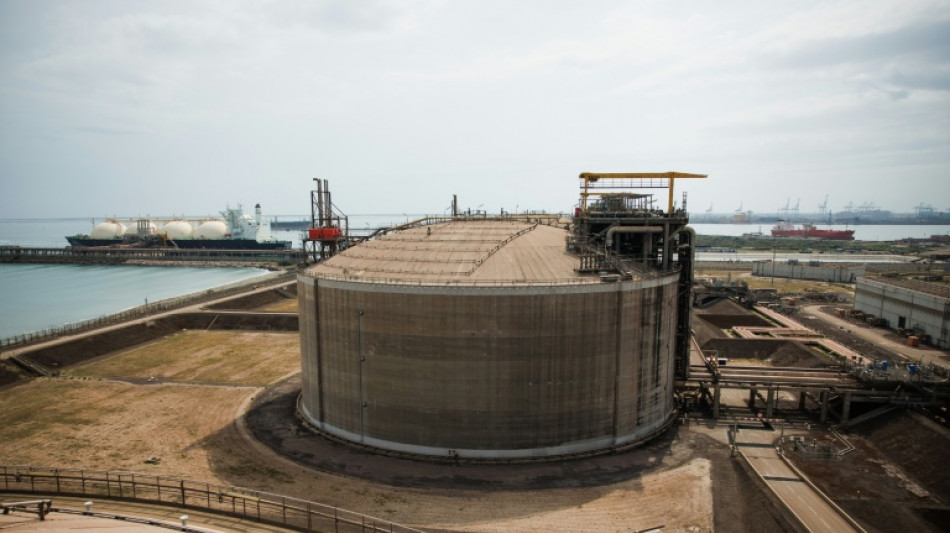
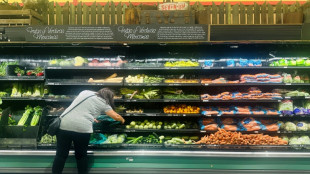
Europe wary as gas stocks languish at lows while winter looms / Photo: CLEMENT MAHOUDEAU - AFP

 Kenya's economy faces climate change risks: World Bank
 Drought forces water restrictions across nearly 70 percent of France

 Europe wary as gas stocks languish at lows while winter looms

 Freedom Holding Corp. Reports 40% Increase in Quarterly Revenue to $732.5 Million
 Massive shake-up of Hungary media after Orban's exit
 MEXC Sponsors Yohani's Colombo Concert, Bridging Sri Lankan Culture and Global Digital Finance
 Base Markets Appoints Nazim Moussaoui as Head of Premium Clients and Partnerships
 SCANDIC TRADE Ultimate 2.6 är färdigutvecklat – SNC SCANDIC ECO-Systemet är nu komplett

 SCANDIC TRADE Ultimate 2.6 jest gotowy – system SNC SCANDIC ECO jest kompletny

 स्कैंडिक ट्रेड अल्टीमेट 2.6 अब पूरा हो गया है – SNC स्कैंडिक इको-सिस्टम अब पूरी तरह से चालू है।

 SCANDIC TRADE Ultimate 2.6이 완성되었습니다 – SNC SCANDIC ECO-시스템이 완성되었습니다

 SCANDIC TRADE Ultimate 2.6 завершено — екосистема SNC SCANDIC стала повноцінною

 SCANDIC TRADE Ultimate 2.6 is now complete – the SNC SCANDIC ECO-System is now fully operational
 Chinese AI drives price competition among US labs
 Typhoon Dolphin weakens but disrupts travel in east China
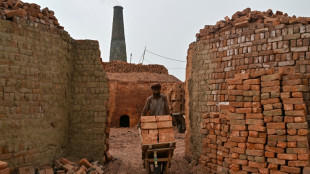 Pakistan brickmakers scorched by sun above and fire below
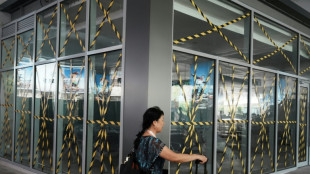 Typhoon Dolphin makes landfall in China after flight cancellations, evacuations
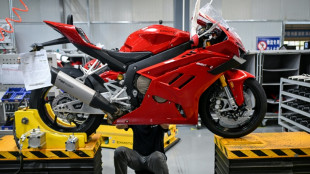 ZXMoto leads China's charge to dominate the global motorbike market
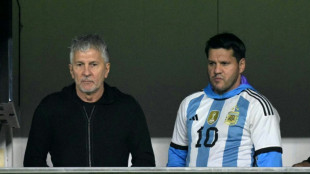 Lionel Messi's father Jorge dies aged 68

 Nocturnal 'coffee frog' discovered in Costa Rica

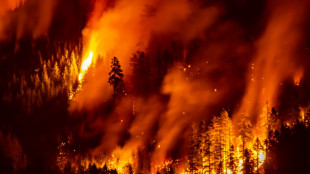 Canada tries to adapt to a future of wildfires

 Maradona's 'Hand of God' ball heads to US auction

 Spain imposes border checks on Italy as migrant showdown grows
 Germany holds security meeting over explosive drone amid Russia protest

 Austrian writer Stefan Zweig, who fled Nazis, honoured in London
Four years after Russia's invasion of Ukraine set off an energy crisis, European countries face new questions about natural gas security as the war in the Middle East drags on.
Surging prices due to Iran's closure of the Straits of Hormuz are keeping liquefied natural gas (LNG) stocks unusually low, with winter just months away.
That raises the spectre of both supply difficulties and prices remaining well above pre-crisis levels, just as colder Continental weather drives up demand.
- Stockpiles slump -
Besides its use in heating and producing electricity, gas also powers many factories across Europe.
Summer is traditionally when energy firms take advantage of lower prices to fill LNG storage tanks, preparing for higher winter demand.
In a typical year, storage sites would be filled to "around 75 to 80 percent", said Anne-Sophie Corbeau, a researcher at the Columbia University's Center on Global Energy Policy.
Currently the level is just 58 percent -- the lowest since 2021 -- according to Gas Infrastructure Europe, an industry association cited by the resources consulting firm Kpler.
- Why? -
"The European Union ended last winter with underground gas storage at only 28 percent, significantly lower than in previous years," said Ronald Pinto, an analyst at Kpler First.
European imports were curtailed by the US and Israeli strikes against Iran, which led Tehran to effectively close the Strait of Hormuz to Gulf tanker traffic.
That halted gas shipments from Qatar, a key European supplier, driving up prices of contracts for future delivery, the main way of buying LNG on global markets.
"Italy, Poland, and Belgium, contracted buyers of Qatari LNG, have borne the direct losses, as they have been unable to import any Qatari LNG volumes since April 2 -- the date on which Italy received its last vessel loaded with Qatari LNG," Pinto said.
- Pricing pain -
European buyers had hoped prices would ease by summer, allowing them to fill storage tanks later for less.
The Dutch TTF contract -- the benchmark for European gas -- for September delivery is currently trading around 55-58 euros per megawatt-hour.
The cost was just 30 euros before the Middle East war, and as low as 15-20 euros before the war in Ukraine.
An EU Commission spokesperson expressed confidence that filling storage tanks to 80 percent of capacity "is sufficient to secure winter supply and it is technically achievable".
Europe has significantly ramped up its import capacity since the war in Ukraine, which prompted it to slash its Russian gas supplies.
Russia still supplies around 12 percent of the bloc's gas imports, according to the European Council, but by the end of 2027 it will ban them completely.
"It is also worth noting that EU gas demand has decreased by 17 percent compared to pre-crisis levels" before 2022, the spokesperson added.
- Austerity in store? -
Analysts are not so sanguine.
"Supply risks to Europe remain elevated amid reduced LNG availability from the Middle East," Rystad Energy analyst Antonia Syn said in a recent market update.
Gas infrastructure routinely experiences breakdowns or technical disruptions that halt flows.
And severe cold in the United States -- now Europe's biggest single supplier -- could divert its supplies to domestic buyers.
Asian countries that usually buy from Gulf suppliers could also turn to US or other sources, driving up prices to painful levels for European buyers.
So the longer Europe waits to fill up storage sites, the bigger the risks.
"We believe this wait-and-see approach has kept TTF prices from reflecting a scenario of extreme gas scarcity during the winter period," said Pinto at Kpler First.
He expects average monthly prices to remain at 55 to 62 euros per MW/h through the rest of the year.
"For now we're seeing LNG go more to Asia than to us, because prices are even higher there," Corbeau said.
"If stocks are down, if the winter is rough and some other problem happens, we'll have to start thinking about conservation measures," she warned, as was the case across Europe in 2022.
A.Mykhailo--CPN