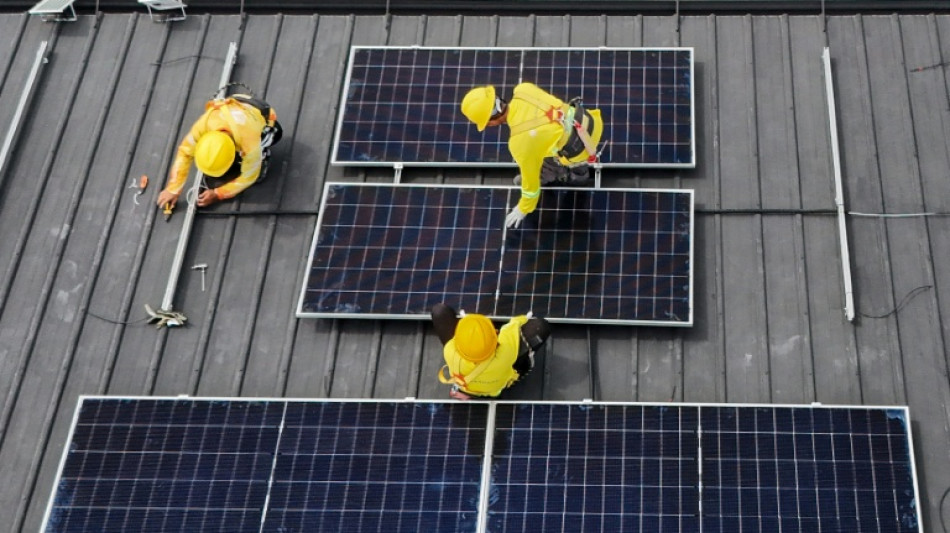
High bills, cheap panels drive a Philippine solar surge / Photo: Jam STA ROSA - AFP

 Kenya's economy faces climate change risks: World Bank
 نوشا أوبيل: هل هي على مستوى التحديات التي تواجهها بوتسدام؟

 Alarm as explosive drone found near Ukrainian plane at German airport

 Alarm at German airport after drone found near Ukrainian plane, mid-air incident

 Cathay Pacific's profit soars 71% despite Iran war driving up fuel costs
 Factories shed workers in Bangladesh garment sector

 Tiny light, big dream: Harvesting power from soil in Japan

 Trump admin to review 'closed' AI models before release: reports
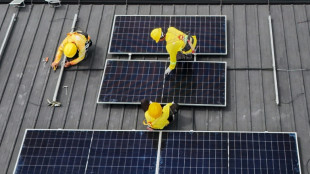 High bills, cheap panels drive a Philippine solar surge

 Paramount CEO says politics fueling Warner Bros. merger battle

 SpaceX rocket stage expected to slam into Moon

 McDonald's reports slower US sales in 2nd quarter

 Oil turns lower, stocks gain on hopes of Hormuz opening

 China draws up safety rules for autonomous vehicles

 Cargo ship hit after Trump insists Iran talks could reopen Hormuz today

 Heatwave divides rich and poor of upmarket Seoul

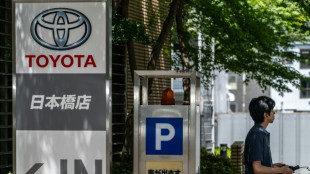 Weak yen helps auto giant Toyota raise forecasts

 TRON DAO Joins Blockchain Application Stanford Summit at the Science of Blockchain Conference as a Sponsor

 Japan sees 'urgent' need to boost military

 WWII shells surface in wildfire-ravaged French village

 Kleen Hy-Dro-Gen Inc. Is Pleased to Announce Dual ISO 9001:2015 and TSSA Certifications, Bolstering Operational Quality and Technical Safety Governance

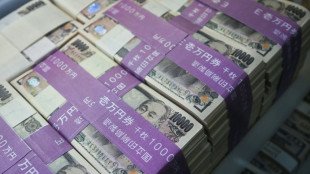 Dow hits fresh record as oil prices tumble

 Iran denies negotiating with US, drawing Trump backlash

 Key dates for the Boeing 737 MAX

 England, Wales had driest July on record: Met Office

Edwin Salas watched as the first of 20 solar panels was installed on the roof of his home, joining a Philippine solar energy boom sent into overdrive by the Middle East war.
The country's eye-watering electric bills -- the highest in the region -- were the primary driver of his decision, he said. Regular brownouts were a factor, too.
"Even if we don't achieve a zero bill, we'll be able to save a lot and have power even during outages," the 46-year-old shuttle bus driver told AFP at his house two hours south of Manila.
While the Philippine government has targeted a mix of 35 percent renewable energy by 2030, industry experts say the solar surge is a bottom-up phenomenon driven by businesses and individual consumers.
"For years, rooftop solar was often framed as an environmental choice... today, it's a practical response to financial pressure," Brenda Valerio, country director for non-profit New Energy Nexus, told AFP.
The Philippines this year became China's number two buyer of solar panels, according to a report from global energy think tank Ember.
The report estimated that rooftop installations had nearly doubled in the archipelago nation of 116 million since early 2025.
Mike de Guzman, CEO of Manila-based Solaric, told AFP the Middle East conflict had made the decision to switch an urgent one for many.
"It's like a war happened and we were a bullet factory," the 49-year-old said, adding that five months of inventory had been "wiped out" within weeks of the conflict's outbreak in late February.
Months later, the firm was still getting 60 calls a day.
- Made in China -
As with most dealers throughout Asia, De Guzman's inventory comes from China.
From January through May, China exported $13.96 billion worth of solar cells and panels, up 26 percent from $11.07 billion during the same period last year, official customs data reviewed by AFP showed.
Southeast Asian countries accounted for much of that growth, with the governments of Malaysia and Thailand pushing solar adoption and Cambodia setting an import record in March.
Indonesia is also buying more panels, though generous energy subsidies and a strict quota system give consumers little incentive to switch.
The report from Ember suggested the boom was just beginning in the Philippines, with far more panels imported than installed.
According to the Manila-based Institute for Climate and Sustainable Cities, which tracks adoption by analysing satellite imagery of rooftops, only half a percent of the country's available roof space is so far equipped for solar.
"The opportunity to scale is immense," it said.
- Plummeting prices -
Using the vast hectares of open space on the roofs of Philippine malls has helped edge those numbers upward.
More than 200,000 panels now provide about 50 percent of the energy mix at SM Group's shopping centres, including its sprawling Mall of Asia, where customers are shaded from the Manila sun under a pergola created with solar panels.
"We've been putting solar panels on our malls just to save on energy," Frederic DyBuncio, president and CEO of SM Investments Corp, told AFP, adding that the country's other conglomerates were doing the same.
"Most of them are looking at rooftop solar because that's the easiest to do."
Competitor Robinsons now touts "28 solar-powered malls", while Ayala has arrays atop 13.
"Solar panels continue to go down in price," DyBuncio added, something he expected the Philippines "to take advantage of".
- Bureaucratic bottlenecks -
While declining panel costs -- and steadily increasing electricity rates -- mean systems pay for themselves faster than ever, the upfront costs remain out of reach for many.
An energy department spokeswoman noted the government was offering a financing programme for civil servants, but fewer options exist for average Filipinos.
"A system for a typical household would range maybe around $3,000 to $5,000," said New Energy Nexus's Valerio, calling it "too much" for a middle-class family without financing.
Meanwhile, approvals for the required metering and grid connection -- theoretically a 10-day process -- can take as long as eight months in some areas, according to Valerio.
"The problem with solar rooftops is red tape," Philippine Senate President Sherwin Gatchalian said in June, calling for a faster, simpler permitting process.
That cannot come soon enough for Jose Rafael Mendoza, president of the Philippine Solar and Storage Energy Alliance.
Like other installers, Mendoza's wish list also includes an end to VAT taxes that are inflating costs for a public he says no longer needs convincing.
"We have so much pent-up demand in the Philippines," he told AFP.
Australia, where one in three homes now has rooftop panels, offered a clear blueprint for the Philippines, he said.
"We believe there's going to be a similar trajectory."
Y.Ibrahim--CPN