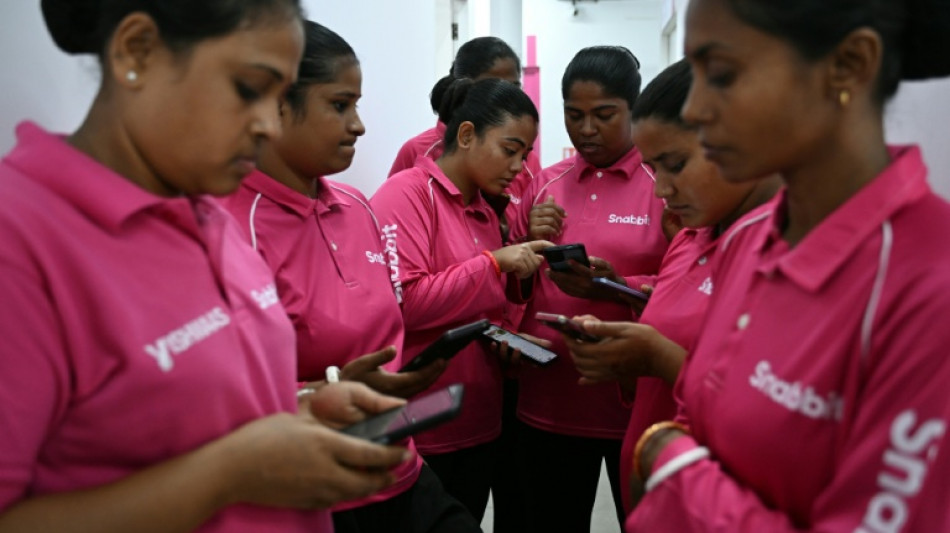
India's domestic workers go online as instant services boom / Photo: Idrees MOHAMMED - AFP

 Dozens arrested in major anti-LGBTQ raids in Turkey

 Poland, Ukraine slam Russian strikes near border as 'escalation'

 iPhone 18預購後出現可疑扣款 四間銀行調查未授權交易

 Galaxy Tab S12系列效果圖曝光 Ultra擬配雙鏡頭及瀏海螢幕

 Altman tells Fortune OpenAI will not go public in 2026

 الأرصاد السعودية تتوقع سيولاً وأمطاراً رعدية في خمس مناطق

 Steven Strogatz weighs AI mathematics advances and their consequences for researchers

 Venezuelans outside Caracas say capital not sharing blackout burden

 Anthropic boss calls for slowing pace of AI development

 BRICS nations urge 'maximum restraint' in Middle East war

 Europe eyes battle over 'pervert' AI glasses

 Children in flood-hit Nepal grapple with loss, cling to hope

 Venice Film Festival: A look back on the highlights

 DR Congo school fire stampede death toll rises to 26: UNICEF

 Dance Fitness Tempe Announces Expansion of Accessible Digital Movement Programs

 Europe saw record summer air traffic despite Mideast war: Eurocontrol

 Relatives of 9/11 victims hit out at Saudi Arabia -- and US leaders

 Relative of 9/11 victim unleashes searing attack on Saudi Arabia

 Czech antitrust office lets Turkey's Pegasus Airlines buy Smartwings

 Investors on edge as energy costs, surging bond yields roil markets

 UK lawmakers to vote again on failed assisted dying bill

 Yemen's Houthis complete takeover of Bab al-Mandab area: govt official to AFP

 Fast-pace dance takes I.Coast's working-class streets by storm

 Fans celebrate Celine Dion's Paris return with giant karaoke

 Appreciation, anger await as Trump heads to Irish golf resort

Racing against a stopwatch, a group of women folds bedsheets as they train to join an Indian startup that offers instant home services, transforming a traditionally word-of-mouth sector and promising better pay.
Households in India have long relied on an informal army of domestic workers to mop floors, wash dishes and cook meals.
A growing crop of tech startups is now attempting to bring structure to the unregulated sector that employs some 30 million people, while allowing both workers and customers more flexibility.
Platforms such as Snabbit, Pronto and Urban Company function much like ride-hailing apps -- workers receive bookings online, travel to assigned homes and clock in on their phones.
Performance is tracked through ratings, with incentives and penalties generated by algorithms.
At one of Snabbit's training hubs in the southern tech hub of Bengaluru, workers rehearse tasks such as chopping vegetables against the clock.
For Heena Bibi, 34, "doing the same work with a company is good", making around 45,000 rupees ($472) a month -- three times what workers typically earn with up to four customers through traditional arrangements.
"I get three-four jobs on a normal day. If there's any festival... more work comes," said the mother of four.
Domestic work in India has long been associated with low wages and concerns over abuse or exploitation.
But with few barriers to entry, the sector still attracts many workers who migrate from rural areas to cities in search of opportunity, often juggling jobs across several households in a day.
- 60,000 jobs a day -
Not everyone is ready to join the app bandwagon just yet.
For Renu Devi, a 38-year-old helper from Uttar Pradesh, the traditional system feels safer.
"I am scared that I might have to go to a house where I don't know if I will be safe," she said. "At the moment, I know the people who I work for and I can trust them."
Labour advocates question whether app-based work meaningfully improves workers' conditions.
Sanjay Gaba, president of the All India Gig and Platform Workers Union, said the system simply replaces one form of exploitation with another.
"The app system is 100 percent unfair," he told AFP. "They don't have any job security. They don't have benefits like pension because they are not permanent employees."
Aayush Agarwal, founder and chief executive of Snabbit, said flexible hours were key to the platform's popularity among workers.
"Today a mother can send her kid off to school, work at Snabbit for four hours and come back before the kid comes back from school," he told AFP.
"It is an opportunity that these women see in a very positive light."
Snabbit operates across 10 cities, including Delhi and Mumbai, with 20,000 registered workers clocking an average of 60,000 jobs daily.
- No 'fixed schedule' -
Homemaker Atiya Khusro, 63, said she preferred booking helps online.
"With regular helps, there is a fixed schedule and I have to adjust my routine around their availability," she told AFP.
"With instant helps there is no such issue."
The model is becoming increasingly common across India's booming gig economy.
Pronto advertises hourly services ranging from window cleaning to "after-party express clean-ups", while Urban Company offers everything from repairs to salon treatments at the touch of a button.
Before joining the platforms, workers undergo background checks, including police verification.
As part of soft skills training, they are taught how to tie their hair neatly and greet customers.
Every customer rating matters.
"If anybody is less than four (out of five), our training team ensures that we call her and understand what is the problem," said Bhoomika Saigal, Snabbit's director of training and quality.
Industry leaders argue that apps are expanding options rather than replacing traditional work.
Snabbit's Agarwal said his goal was to replicate the shift online that the ride-hailing market has gone through.
"Whether it's a Sunday morning... (or) a festival, you should open the app and be able to see a slot and be able to book," he said.
L.K.Baumgartner--CPN