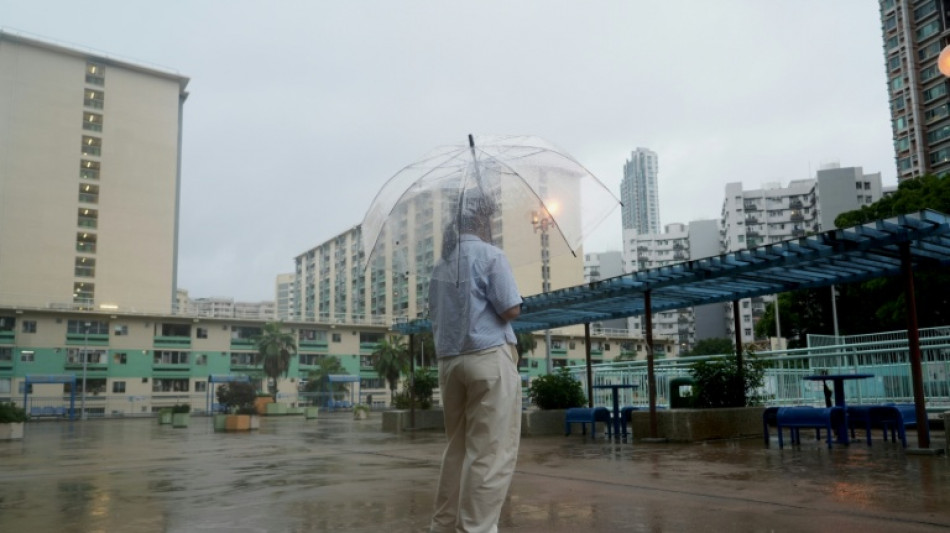
Survivors warn of loopholes in Hong Kong sexual offence reforms / Photo: Catherine LAI - AFP

 Dozens arrested in major anti-LGBTQ raids in Turkey
 Poland, Ukraine slam Russian strikes near border as 'escalation'

 iPhone 18預購後出現可疑扣款 四間銀行調查未授權交易

 Galaxy Tab S12系列效果圖曝光 Ultra擬配雙鏡頭及瀏海螢幕

 Altman tells Fortune OpenAI will not go public in 2026

 الأرصاد السعودية تتوقع سيولاً وأمطاراً رعدية في خمس مناطق

 Steven Strogatz weighs AI mathematics advances and their consequences for researchers

 Venezuelans outside Caracas say capital not sharing blackout burden

 Anthropic boss calls for slowing pace of AI development

 BRICS nations urge 'maximum restraint' in Middle East war

 Europe eyes battle over 'pervert' AI glasses

 Children in flood-hit Nepal grapple with loss, cling to hope

 Venice Film Festival: A look back on the highlights

 DR Congo school fire stampede death toll rises to 26: UNICEF

 Dance Fitness Tempe Announces Expansion of Accessible Digital Movement Programs

 Europe saw record summer air traffic despite Mideast war: Eurocontrol

 Relatives of 9/11 victims hit out at Saudi Arabia -- and US leaders

 Relative of 9/11 victim unleashes searing attack on Saudi Arabia

 Czech antitrust office lets Turkey's Pegasus Airlines buy Smartwings

 Investors on edge as energy costs, surging bond yields roil markets

 UK lawmakers to vote again on failed assisted dying bill

 Yemen's Houthis complete takeover of Bab al-Mandab area: govt official to AFP

 Fast-pace dance takes I.Coast's working-class streets by storm

 Fans celebrate Celine Dion's Paris return with giant karaoke

 Appreciation, anger await as Trump heads to Irish golf resort

Hong Kong NGO worker Jessie recalled freezing in panic when she said she was sexually assaulted by an acquaintance one summer, unable to resist while he proceeded without her consent.
Years later, she testified against him, but rather than feeling empowered, she felt "oppressed and helpless" as she watched the man walk free under decades-old laws Hong Kong is now seeking to overhaul.
"The defence lawyer asked: 'why didn't you fight back at the time, bite or hit him?'" she told AFP, adding that the court failed to consider she had been unable to resist the assault due to fear.
The judge ruled the defendant may have "honestly but mistakenly believed" that she consented. He was acquitted despite never testifying.
"I never realised our laws were so backwards," said Jessie, who is in her 30s.
In many countries, "mistaken belief" and "implied consent" -- whereby permission is not expressly granted through words or writing but implicitly through actions or circumstances -- are not legally valid defences in sexual offence trials.
Hong Kong's decades-old sexual offence laws, however, are not as stringent, opening the door to verdicts like Jessie's.
The Chinese finance hub has sought to overhaul those laws, opening sweeping reforms to public consultation this month.
The long-awaited reforms will introduce stricter penalties for sexual crimes, but Jessie and other survivors say the changes still do not bar the defence of "mistaken belief".
Reforms should "take into account victim-survivors' traumatic reactions", Florence Tsang, a trauma counsellor at the sexual violence crisis centre RainLily, told AFP.
"Those traumatic reactions are very often misunderstood or misinterpreted as consent, or as a failure to express refusal."
- Repeated trauma -
Activists also say the proposed reforms do not go far enough to protect children of long-term sexual abuse, who often find it tough to recall their experience in detail due to repeated trauma.
In Hong Kong, prosecutions only address assault as isolated incidents, which critics argue neglects the severity of long-term abuse.
Mui, speaking under a pseudonym, said she was assaulted by her stepfather more than 100 times over seven years.
She spent months piecing together the details of the abuse from her diary, iPod recordings and memory before bringing charges against him.
During her police interviews, "it was already very difficult to recount the events for the first time", she said.
"They asked me how many times it had happened, but I found it challenging to answer because there were quite a lot of times.
"I broke down in tears every time I recounted. It was intensely distressing."
Prosecutors only proceeded with five of the incidents, and her stepfather was found guilty this year on four counts of rape and "indecent assaults" and sentenced to 13 years in prison.
"The harm I have suffered and the feelings I have experienced cannot be defined by that figure alone," Mui said.
Bobo, who also spoke on condition of anonymity, endured similar abuse as a child,and said she found the current laws "unfair".
"The time he (her abuser) violated me was probably longer than the prison sentence he may receive," she said.
"I've put a lot of effort into trying to live a normal life despite the trauma," Bobo added.
"I've never been happy. Who can give me back my childhood?"
- 'Glaring loophole' -
RainLily's Tsang said that survivors often feel intense shame and self-blame.
"Counselling support is usually measured by years," she said.
Of the nearly 2,000 sexual violence victims -- all women -- whose cases were handled by RainLily between 2019 and 2023, around 40 percent reported their incident to police, in many cases years after the abuse, the NGO said.
Victims are often cross-examined during the lengthy legal proceedings, which frequently deepens their sense of guilt, Tsang noted.
Only around 27 percent of people arrested for sexual offences in Hong Kong were conviction between 2021 and 2025, official data shows.
In cases involving children, the conviction rate is a third of that, at around 9 percent.
Survivors hoped authorities would seize the precious policy window to introduce more comprehensive rules.
Taura Edgar, a victim-turned-advocate at TALK support group, said "the government must urgently close critical gaps" in laws, estimating 16 percent of children in Hong Kong suffer from sexual abuse.
She added "the lack of a discrete offence for 'persistent child sexual abuse' is a glaring loophole".
Jessie still feels "suddenly short of breath" at the thought of her abuser.
Unless clear limits are introduced against "mistaken belief" in consent, victims' efforts may be "rendered futile", she told AFP.
"It takes us so much effort to fight for some simple, basic things," she said.
"When victims choose to pursue (justice) in legal proceedings, could the trial they go through be less traumatic and involve fewer unreasonable questions?
"We're actually simply asking: can't victims' rights be brought a little more in line with those of those accused?"
L.K.Baumgartner--CPN