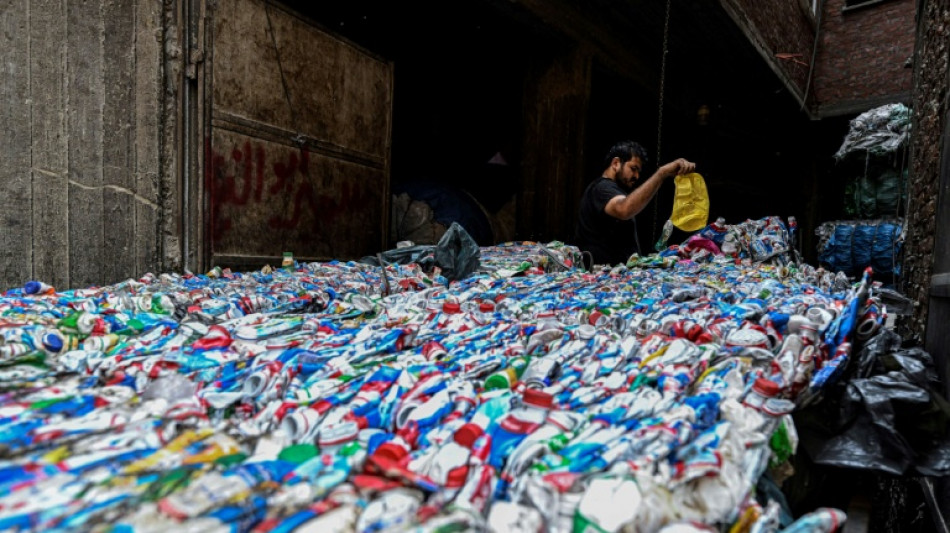
Egypt's 'Garbage City' recyclers reap gains from Iran war plastic squeeze / Photo: Khaled DESOUKI - AFP

 Dozens arrested in major anti-LGBTQ raids in Turkey
 Poland, Ukraine slam Russian strikes near border as 'escalation'
 iPhone 18預購後出現可疑扣款 四間銀行調查未授權交易

 Galaxy Tab S12系列效果圖曝光 Ultra擬配雙鏡頭及瀏海螢幕
 Altman tells Fortune OpenAI will not go public in 2026
 الأرصاد السعودية تتوقع سيولاً وأمطاراً رعدية في خمس مناطق

 Steven Strogatz weighs AI mathematics advances and their consequences for researchers

 Venezuelans outside Caracas say capital not sharing blackout burden

 Anthropic boss calls for slowing pace of AI development

 BRICS nations urge 'maximum restraint' in Middle East war

 Europe eyes battle over 'pervert' AI glasses

 Children in flood-hit Nepal grapple with loss, cling to hope

 Venice Film Festival: A look back on the highlights

 DR Congo school fire stampede death toll rises to 26: UNICEF

 Dance Fitness Tempe Announces Expansion of Accessible Digital Movement Programs

 Europe saw record summer air traffic despite Mideast war: Eurocontrol

 Relatives of 9/11 victims hit out at Saudi Arabia -- and US leaders

 Relative of 9/11 victim unleashes searing attack on Saudi Arabia

 Czech antitrust office lets Turkey's Pegasus Airlines buy Smartwings

 Investors on edge as energy costs, surging bond yields roil markets

 UK lawmakers to vote again on failed assisted dying bill

 Yemen's Houthis complete takeover of Bab al-Mandab area: govt official to AFP

 Fast-pace dance takes I.Coast's working-class streets by storm

 Fans celebrate Celine Dion's Paris return with giant karaoke

 Appreciation, anger await as Trump heads to Irish golf resort

In the labyrinthine alleyways of Cairo's Garbage City, recycling specialist Peter Romany finds himself fielding calls from factories scrambling for plastic to plug supply shortfalls caused by the Iran war.
The 25-year-old is among the hundreds of recyclers and manufacturers across Egypt benefiting from a war-driven surge in demand ever since the United States and Iran choked off the Strait of Hormuz -- a major shipping lane for the raw materials from which plastic is made.
At the heart of the boom is the sprawling eastern Cairo settlement of Manshiyet Nasser, where generations of garbage collectors have built one of the world's most sophisticated informal recycling systems.
"Before the war, we were the ones calling factories, trying to sell our material," Romany told AFP, standing beside towering bales of compressed plastic.
"But after the war broke out, the factories started calling us. They'd ask: How much do you have? Can you deliver today? That never used to happen."
- Built on trash -
Home to more than 115,000 residents, Manshiyet Nasser is a predominantly Coptic Christian neighbourhood nestled beneath the Mokattam hill and facing Cairo's historic Citadel.
The settlement handles more than a third of the capital's waste, according to government figures.
Families live and work under the same roof, often separated from mountains of waste by little more than a staircase or curtain, exposing them to foul odours, plastic fumes and other health risks.
Downstairs, men sort plastics, cardboard, paper, metals and glass into neat piles destined for workshops and factories.
Upstairs, children pore over schoolbooks, mothers prepare lunch and television sets flicker in cramped living rooms, all against the constant background noise of shredders whining and baling presses pounding below.
The smell of rubbish hangs heavy in the air as pickup trucks and handcarts crawl through narrow alleyways, unloading the day's collections while children weave between them chasing footballs.
It's a well-oiled machine, kicked into overdrive by a war more than a thousand kilometres away.
- Cash upfront -
Romany specialises in recycled polyethylene, one of the world's most widely used plastics and a key ingredient in packaging.
According to the pricing agency Independent Commodity Intelligence Services (ICIS), the Middle East is a major global supplier of polyethylene, with around 85 percent of its exports passing through the strait.
Egypt imports around 40 percent of its raw plastic materials, mainly from Gulf countries, Europe, China and South Korea, according to the Chamber of Chemical Industries.
Packaging and plastic prices have more than doubled for some products, three industry sources told AFP, pushing manufacturers towards locally recycled alternatives.
Factories that would normally delay payment started putting down cash upfront "because they were so eager to secure material", said Rizq Yousif, who mainly recycles PET, the plastic widely used in beverage and food packaging.
Yousif told AFP demand had tripled, while prices for some recycled plastics increased by up to 60 percent.
- A temporary boom? -
The disruption has been good for local business all along the value chain.
"We have been in this business for 16 years," said Fayrouz El-Sayed, chief executive of Sadat City Chemical Fibre Factory, which produces polyester fibres from used plastic bottles.
But only since the latest crisis have they managed to crack new markets as far away as Brazil, she said.
Nesma El-Areef, senior marketing and sales manager at Uflex Egypt, which converts plastic waste into new packaging materials, said demand for the company's recycled products rose by up to 40 percent.
"We saw a significant increase in orders, particularly from food and beverage manufacturers, because we offered a more readily available alternative to imported materials," she told AFP.
Despite the gains, industry figures believe the boom could fade once supply routes stabilise.
Yousif said prices and demand began easing shortly after US President Donald Trump announced last month that negotiations with Iran were progressing.
"Just one post dropped the market. After the war, I am not sure this will last," he said.
But this week, Trump said the US was reinstating its blockade of Iranian ports and "taking over" the Strait of Hormuz as fresh fighting between the two countries flared.
Orders have already picked back up, according to both Romany and Yousif.
"We're used to it by now," Yousif said. "Whenever there's trouble there, the customers start calling us."
Y.Jeong--CPN