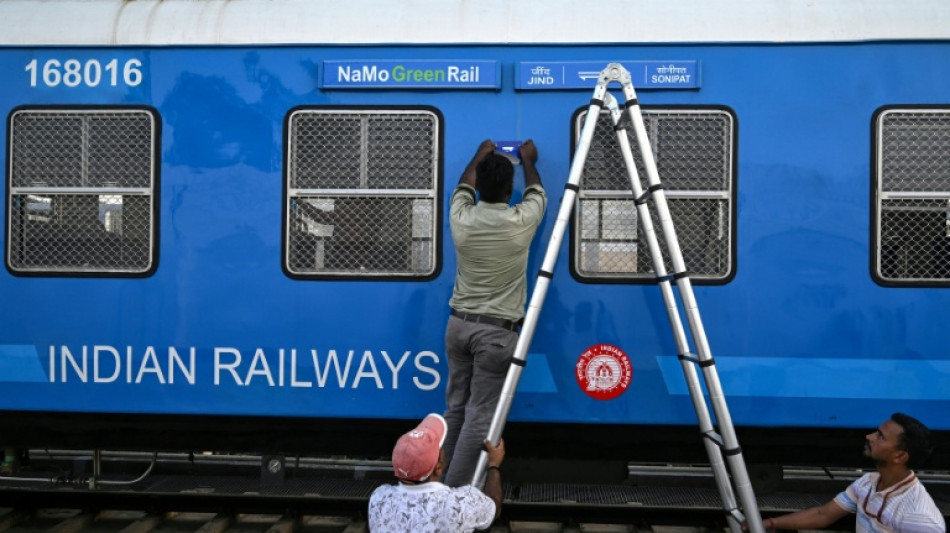
India launches first hydrogen-powered train in clean energy push / Photo: Arun SANKAR - AFP

 Dozens arrested in major anti-LGBTQ raids in Turkey

 Poland, Ukraine slam Russian strikes near border as 'escalation'

 iPhone 18預購後出現可疑扣款 四間銀行調查未授權交易

 Galaxy Tab S12系列效果圖曝光 Ultra擬配雙鏡頭及瀏海螢幕

 Altman tells Fortune OpenAI will not go public in 2026

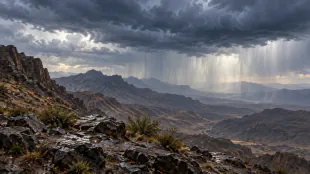 الأرصاد السعودية تتوقع سيولاً وأمطاراً رعدية في خمس مناطق

 Steven Strogatz weighs AI mathematics advances and their consequences for researchers

 Venezuelans outside Caracas say capital not sharing blackout burden

 Anthropic boss calls for slowing pace of AI development

 BRICS nations urge 'maximum restraint' in Middle East war

 Europe eyes battle over 'pervert' AI glasses

 Children in flood-hit Nepal grapple with loss, cling to hope

 Venice Film Festival: A look back on the highlights

 DR Congo school fire stampede death toll rises to 26: UNICEF

 Dance Fitness Tempe Announces Expansion of Accessible Digital Movement Programs

 Europe saw record summer air traffic despite Mideast war: Eurocontrol

 Relatives of 9/11 victims hit out at Saudi Arabia -- and US leaders

 Relative of 9/11 victim unleashes searing attack on Saudi Arabia

 Czech antitrust office lets Turkey's Pegasus Airlines buy Smartwings

 Investors on edge as energy costs, surging bond yields roil markets

 UK lawmakers to vote again on failed assisted dying bill

 Yemen's Houthis complete takeover of Bab al-Mandab area: govt official to AFP

 Fast-pace dance takes I.Coast's working-class streets by storm

 Fans celebrate Celine Dion's Paris return with giant karaoke

 Appreciation, anger await as Trump heads to Irish golf resort

India launched its first hydrogen-powered train Friday, joining a small group of nations testing the technology as part of efforts to decarbonise rail transport and cut dependence on fossil fuels.
The project is part of a broader push to modernise one of the world's largest rail networks while reducing carbon emissions.
The 10-coach train runs along an 89-kilometre (55-mile) route between Jind and Sonipat in India's northern state of Haryana, powered by a 1,200-kilowatt hydrogen fuel cell propulsion system.
Officials described the system as the world's most powerful for a train.
Hydrogen trains use fuel cells to generate electricity by combining hydrogen and oxygen, emitting only water and steam.
"This is a very significant day in the direction of self-reliant India and sustainable development," Prime Minister Narendra Modi, who flagged off the inaugural journey, said in a social media post.
The railway ministry said the train was "developed entirely in India", although senior officials told reporters that some key components, including the fuel cells, were imported.
The ministry also inaugurated what it described as the country's largest railway hydrogen storage and refuelling facility in Jind, with a capacity of some 3,000 kilograms, to "support hydrogen-powered train operations".
The pilot project cost around $12 million, according to a senior railway official who acknowledged it was significantly more expensive than a comparable conventional service.
However, he said costs were expected to fall as the technology matures.
With the launch, India joins countries such as Germany, Japan, China and the United States that are testing or operating hydrogen-powered trains.
India's railways have undergone a major transformation since the first passenger steam train puffed out in 1853 from Mumbai.
In recent years, New Delhi has pumped billions of dollars in investment aimed at upgrading infrastructure, improving safety and expanding capacity.
The vast network carried 7.41 billion passengers and 1.67 billion tonnes of freight last year, official data shows.
India has also introduced its domestically designed Vande Bharat trains, which can reach speeds of up to 180 kilometres (112 miles) per hour.
At the same time, the country is building its first high-speed rail line using Japanese Shinkansen technology.
Officials expect the bullet train, designed to operate at up to 320 kph, to begin service on its first section in 2027.
J.Bondarev--CPN