Tractors out, oxen in for fuel-starved Cuban farms / Photo: Pablo PORCIUNCULA - AFP

 Dozens arrested in major anti-LGBTQ raids in Turkey
 Poland, Ukraine slam Russian strikes near border as 'escalation'
 iPhone 18預購後出現可疑扣款 四間銀行調查未授權交易

 Galaxy Tab S12系列效果圖曝光 Ultra擬配雙鏡頭及瀏海螢幕

 Altman tells Fortune OpenAI will not go public in 2026

 الأرصاد السعودية تتوقع سيولاً وأمطاراً رعدية في خمس مناطق

 Steven Strogatz weighs AI mathematics advances and their consequences for researchers

 Venezuelans outside Caracas say capital not sharing blackout burden

 Anthropic boss calls for slowing pace of AI development

 BRICS nations urge 'maximum restraint' in Middle East war

 Europe eyes battle over 'pervert' AI glasses

 Children in flood-hit Nepal grapple with loss, cling to hope

 Venice Film Festival: A look back on the highlights

 DR Congo school fire stampede death toll rises to 26: UNICEF

 Dance Fitness Tempe Announces Expansion of Accessible Digital Movement Programs

 Europe saw record summer air traffic despite Mideast war: Eurocontrol

 Relatives of 9/11 victims hit out at Saudi Arabia -- and US leaders

 Relative of 9/11 victim unleashes searing attack on Saudi Arabia

 Czech antitrust office lets Turkey's Pegasus Airlines buy Smartwings

 Investors on edge as energy costs, surging bond yields roil markets

 UK lawmakers to vote again on failed assisted dying bill

 Yemen's Houthis complete takeover of Bab al-Mandab area: govt official to AFP

 Fast-pace dance takes I.Coast's working-class streets by storm

 Fans celebrate Celine Dion's Paris return with giant karaoke

 Appreciation, anger await as Trump heads to Irish golf resort

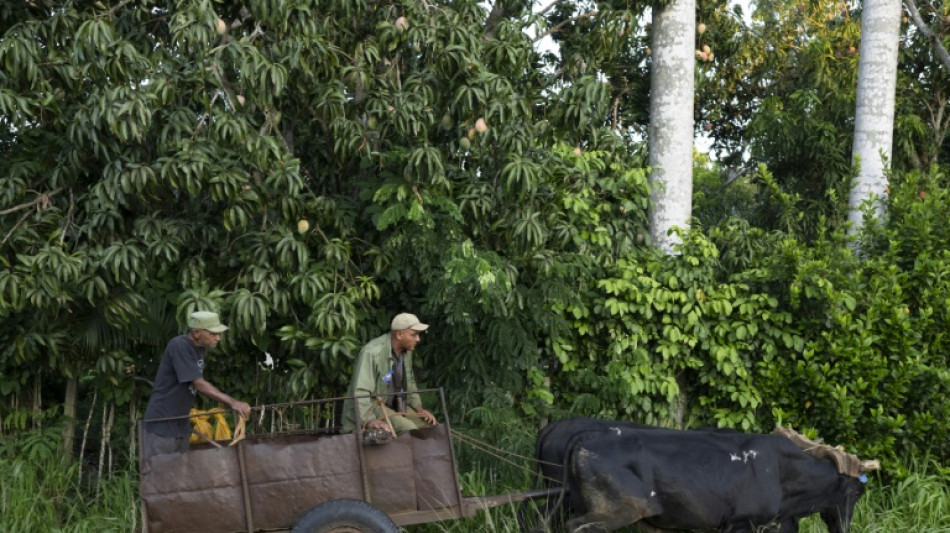
Alexander Quesada was gifted a tractor for turning a Cuban rubbish dump into a model farm, but these days he is using oxen to pull his plow as a severe energy crisis worsened by a US blockade hobbles food production.
The changing fortunes of Quesada's organic farm Finca Burgambilia -- named after the vibrant purple flowers that bedeck the entrance -- follow those of communist Cuba's relations with the United States over the past decade.
Quesada, 52, looks back fondly on what he refers to as the "Obama years" a decade ago, when a historic detente with Washington helped spur a tourist influx.
As visitors began pouring off cruise ships into Havana, restaurant owners began beating a path to Finca Burgambilia, once a local dump, for gourmet greens like salad rocket that were virtually unheard of on the island.
The restaurant revenue acted as a cash cow for the eight-hectare (20-acre) farm, allowing Quesada to expand and invest in new ventures, such as organic honey.
"We would sell a kilo of rocket and with that subsidize maybe 100 kilos of lettuce and therefore maintain a balance and continue developing," said the energetic father of two who buzzes with ideas for how to get ahead.
He pulled up the rocks that studded the farm, used them to make paths, built raised vegetable beds and dug an irrigation channel.
But since US President Donald Trump imposed a fuel blockade in January, which put a nail in the coffin of the already sputtering tourist industry, Quesada has struggled to remain afloat.
- No giving up -
The blockade intensified the worst energy crisis in Cuba's post-revolutionary history, plunging homes and businesses into darkness for up to 70 hours at a time.
With a liter of diesel now costing over $3 -- around half the average monthly public sector wage -- the swanky red tractor Quesada received from the government as a reward for high yields sits idly in the shed.
A pair of oxen now pull the plow.
Gone is the salad rocket, replaced by cheap root vegetables like yuca and sweet potato that locals can afford, but on which Quesada barely breaks even.
"We are at a standstill and rather in decline," he admitted.
Caimito lies just west of Havana in Artemisa province, the capital's breadbasket.
The lush verdant landscape was once carpeted in sugarcane plantations until the 1990s when the Soviet Union, the biggest market for Cuban sugar, imploded.
As sugar revenues dissolved, the government moved to end the island's monoculture by dishing out state land to small farmers to grow food and raise livestock.
On the main highway west from Havana, a billboard featuring a picture of Fidel Castro proclaims: "Here, no-one gives up."
But the slogan rings increasingly hollow as farmers slash their output or stop planting crops altogether for lack of subsidized fertilizer, seeds, fuel and power for their irrigation pumps.
"The Special Period (the Cuban government's euphemism for the 1990s crisis) was hard, but nothing like this," said 52-year-old Raul Castillo Rodriguez, a farm hand at Burgambilia, his round face shaded by a straw hat.
Jose Joaquin Rodriguez, a 29-year-old farmer from Cuba's southwest coast whose family has been working the land for three generations, accused the communist authorities of quashing all initiative.
"To get a piece of land you run into obstacles from the municipality, the province, the nation and even the agriculture ministry," he complained at a fruit-and-vegetable market in Havana, where he came in rubber boots and a sombrero to sell his wares.
- 'Kings of the land' -
Cuba imports nearly all of the food it consumes, even its eggs.
But with the state running out of money to import goods and resell them at heavily subsidized prices, hunger is haunting the island.
With its back against the wall, the Cuban government last month unveiled radical plans to privatize chunks of the economy.
While land will mostly remain public property, farmers will have the right to cultivate much larger areas indefinitely and be allowed to create companies, while cooperatives will have the right to import and export directly and price controls will be lifted.
Farmers, like most Cubans, have broadly welcomed the reforms but see no real relief in sight as long as US sanctions remain.
Cuban economist Ricardo Torres, a research fellow at the American University in Washington, told AFP that the outlook for small farmers was "mixed."
"Those with capital and organizational capacity will benefit; those without face a tougher transition with thinner safety nets," he said.
Rodriguez echoed concerns that private investors with deep pockets would reap the benefits.
"We as ordinary citizens, as poor people...don't have the means to import a container of fertilizer," he said.
"Now anyone can come, import it, and become the kings of the land, our land."
P.Schmidt--CPN