US lawmakers advance China competition bill

 Lights out in Laos as electricity exports surge

 Steven Strogatz weighs AI mathematics advances and their consequences for researchers

 Anthropic boss calls for AI slowdown, Altman and Musk agree

 French IT giant Capgemini sells subsidiary after row over ICE links

 Quebec Brokerage Qubit Insurance Announces New Data on Coverage Shortfalls as Rebuilding Costs Rise

 Lady Gaga welcomes first child with fiance: US media

 Bhutan business bets on hazelnuts for farming future

 'Widow's Bay' and 'The Pitt' are favorites for Emmys night

 Coastal erosion forces cancellation of California music festival

 Argentina's Dirty War rears its head in Venice film

 UK lawmakers throw out bill to legalise assisted dying

 US inflation steady in August, fueling Fed rate hike expectations

 New York marks 25th anniversary of 9/11 attacks

 Nepal flood reconstruction bill to be $4.78 bn: foreign ministry

 JUMO and Standard Bank launch Social Finance Framework to scale inclusive finance in Africa

 Doomsday tech: could AI really kill us all?

 French comedy show 'Call my agent' makes film comeback

 It's all coming back: Celine Dion fans gear up for Paris return

 Researchers eye AI revolution in natural disaster forecasts

 US braces for inflation report that may push Fed to hike rates

 Musk threatens legal action over documentary

 Latin America fact-check group asks Meta not to replace verification practice

 AI Risks to Enter 60–80% of Liability and Cyber Insurance Underwriting by 2028, ScienceSoft Predicts

 Tribal Launches Campfire, Letting Business and Technical Teams Build on Salesforce Together

 Stocks fall as fresh oil surge fans inflation fears

US lawmakers voted Friday to greenlight a multibillion-dollar bill aimed at jumpstarting high-tech research and manufacturing, countering China's growing influence and easing a global shortage of computer chips.
The House Democrats' America Competes bill, their version of the Senate-passed $250-billion US Innovation and Competition Act, was approved in a 222-210 vote in the lower chamber.
The legislative push came after the US Commerce Department warned that companies have an average of less than five days' worth of semiconductor chips on hand, leaving them vulnerable to shutdowns.
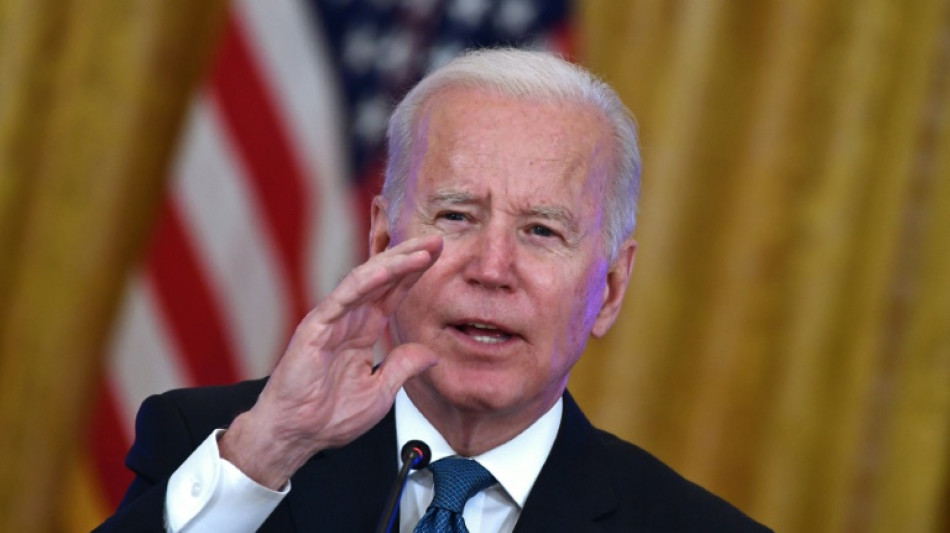
President Joe Biden wants to invest $52 billion in domestic research and production and, after sitting on the bill since it passed the Senate on cross-party vote in June, House Speaker Nancy Pelosi recently listed the $350-billion package as a top priority.
"We're positioning the US interest in values to win on the world stage, holding the People's Republic of China accountable for using slave labor, which is a human rights issue and hurts US workers," Pelosi told reporters.
"More American goods made here at home lowers costs and strengthens supply chains for Americans and ensures that America, not the People's Republic of China, writes the rules of the road for the 21st century."
The package would mark a win that Biden would love to be able to trumpet at his State of the Union address on March 1, although it will now need to be reconciled with the Senate version, which could take several weeks.
- 'Predatory trade' -
The White House sees the initiative as the main legislative tool to combat China's growing prowess.
Senior administration officials, including Commerce Secretary Gina Raimondo, had been pushing the House behind the scenes to move it quickly.
The 2,900-page House version has been controversial, however, as it includes proposals that are unpopular with Republicans and didn't appear in the Senate text. Only one of their members, Adam Kinzinger, voted with the Democrats.
House Republicans complain that much of the legislation was developed behind closed doors, without public hearings or consultations, and with no committee process.
They say it is weak on China, overly focused on unrelated issues like climate change, human rights and social inequality, and stuffed with Democrat-sponsored trade provisions they reject.
"This partisan bill does nothing to hold China accountable for its predatory trade practices, enforce President (Donald) Trump's historic agreement to stop China's cheating on trade, or counter China's trade aggression around the world," Kevin Brady, the top Republican on the House Ways and Means Committee, said in a statement.
He accused Biden of being "content to sit on the sidelines" while foreign countries block US farmers and businesspeople from competing on a level playing field.
- '3,000-page giveaway' -
"Democrats have jammed this nearly 3,000-page giveaway with billions of dollars of new trade assistance welfare and lavish health care subsidies that discourage the jobless from connecting to work," Brady added.
"They hold the world's poorest countries hostage to Green New Deal demands, and make it harder for American manufacturers to qualify for lower tariffs on products needed to compete and win, both here and abroad."
Democrats didn't need House Republican support to pass the bill, but the opposition's emphatic rejection complicates its passage to Biden's desk.
It is destined for a "conference committee" to marry the bills from both chambers, with Senate Republicans especially influential since at least 10 of them will be needed to advance it from the upper chamber.
Republican Todd Young, the senior senator for Indiana, told reporters on Thursday he and his colleagues would send House Republicans "a much better option to vote on in the next couple of months."
"If instead the House had taken an approach using regular order, as we did in the Senate, with fulsome opportunity for bipartisan input, they'd have a better work product and they would have earned a lot of Republican votes," he said.
U.Ndiaye--CPN