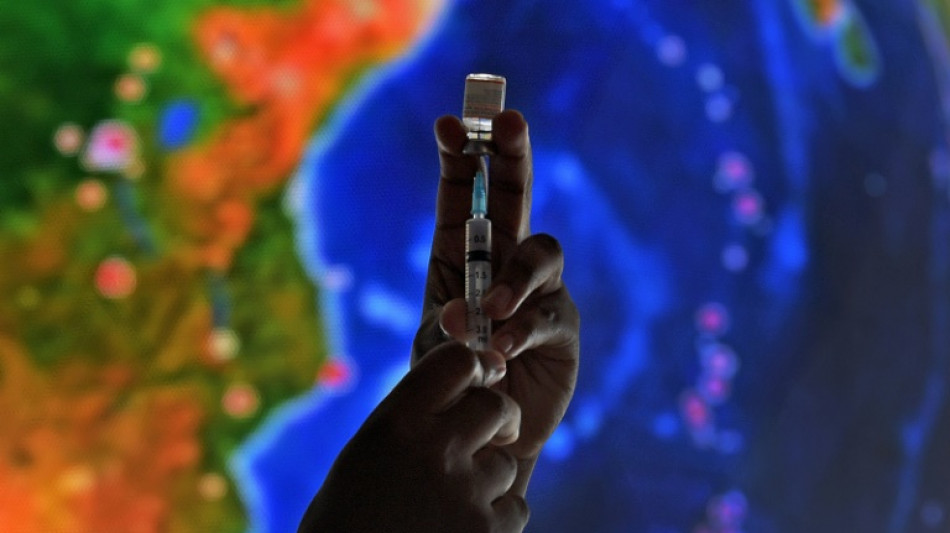
WHO sees pause, even end of pandemic for Europe

 Lights out in Laos as electricity exports surge

 Steven Strogatz weighs AI mathematics advances and their consequences for researchers

 Anthropic boss calls for AI slowdown, Altman and Musk agree

 French IT giant Capgemini sells subsidiary after row over ICE links

 Quebec Brokerage Qubit Insurance Announces New Data on Coverage Shortfalls as Rebuilding Costs Rise

 Lady Gaga welcomes first child with fiance: US media

 Bhutan business bets on hazelnuts for farming future

 'Widow's Bay' and 'The Pitt' are favorites for Emmys night

 Coastal erosion forces cancellation of California music festival

 Argentina's Dirty War rears its head in Venice film

 UK lawmakers throw out bill to legalise assisted dying

 US inflation steady in August, fueling Fed rate hike expectations

 New York marks 25th anniversary of 9/11 attacks

 Nepal flood reconstruction bill to be $4.78 bn: foreign ministry

 JUMO and Standard Bank launch Social Finance Framework to scale inclusive finance in Africa

 Doomsday tech: could AI really kill us all?

 French comedy show 'Call my agent' makes film comeback

 It's all coming back: Celine Dion fans gear up for Paris return

 Researchers eye AI revolution in natural disaster forecasts

 US braces for inflation report that may push Fed to hike rates

 Musk threatens legal action over documentary

 Latin America fact-check group asks Meta not to replace verification practice

 AI Risks to Enter 60–80% of Liability and Cyber Insurance Underwriting by 2028, ScienceSoft Predicts

 Tribal Launches Campfire, Letting Business and Technical Teams Build on Salesforce Together

 Stocks fall as fresh oil surge fans inflation fears

The World Health Organization on Thursday offered Europe hope of a "long period of tranquility" and even "enduring peace" in the war on coronavirus, with a growing list of nations lifting almost all Covid curbs.
WHO Europe director Hans Kluge spoke of "a ceasefire that could bring us enduring peace", with high vaccination rates, the milder Omicron variant and the end of winter in sight.
"This context leaves us with the possibility for a long period of tranquility," he told reporters.
This was "not to say that (the pandemic) is now all over", but "there is a singular opportunity to take control of the transmission", he added.
"Even with a more virulent variant (than Omicron) it is possible to respond to new variants that will inevitably emerge -- without re-installing the kind of disruptive measures we needed before", Kluge said.
He cautioned that the optimistic scenario required countries to pursue vaccination campaigns and surveillance to detect new variants.
Sweden joined the move towards scrapping most coronavirus restrictions, setting February 9 as the date with the pandemic entering a "whole new phase".
Stockholm will end 11:00 pm closing for bars and restaurants, and limits on crowd numbers.
Vaccine passes for indoor events will go and face masks will no longer be recommended on crowded public transport.
"The pandemic is not over, but we are entering a whole new phase," Swedish Prime Minister Magdalena Andersson announced.
Her Health Minister Lena Hallengren said the government would remain "vigilant" about the pandemic's progress.
Sweden made headlines early in the pandemic for choosing to not impose lockdowns.
With over 16,000 fatalities so far, its death toll is in line with the European average, but is far higher than those of neighbouring Norway, Finland and Denmark.
After Britain and Ireland, Copenhagen on Tuesday lifted most domestic Covid-19 restrictions, followed later in the day by Norway.
France on Wednesday loosened several restrictions imposed to curb the latest Covid-19 surge, with authorities hoping a small decline in huge daily case numbers will soon ease pressure on overburdened hospitals.
And New Zealand is to start easing some of the toughest pandemic border restrictions yet seen, but will not fully reopen until October.
"It's time to move again," Prime Minister Jacinda Ardern said Thursday unveiling a five-step plan to reconnect to the rest of the world.
Hotel quarantine requirements for New Zealanders stranded overseas will be lifted this month.
Ardern had been under pressure to relax border policies that have been largely unchanged since the beginning of the Covid-19 crisis almost two years ago.
"Families and friends need to reunite, our businesses need skills to grow, exporters need to travel to make new connections," she said.
But Germany is still grappling with record infection numbers fuelled by Omicron and now recommending a fourth vaccine for at-risk groups, following in the footsteps of Israel and several European nations.
Germany's STIKO vaccine commission said Thursday that data showed "that protection against the currently circulating Omicron variant wanes within a few months of the first booster vaccination".
Israel last month became the first country to roll out fourth Covid-19 shots, initially to the elderly and health care workers, and since to all vulnerable people over 18.
Denmark, Hungary and Spain are also offering fourth jabs to high-risk groups, as are others including Chile and Brazil.
The move has not been universally welcomed, with the WHO repeatedly warning wealthier nations they cannot boost their way out of the pandemic.
Coronavirus has killed at least 5,698,322 million people since the outbreak emerged in China in December 2019, according to an AFP tally from official sources.
A.Leibowitz--CPN