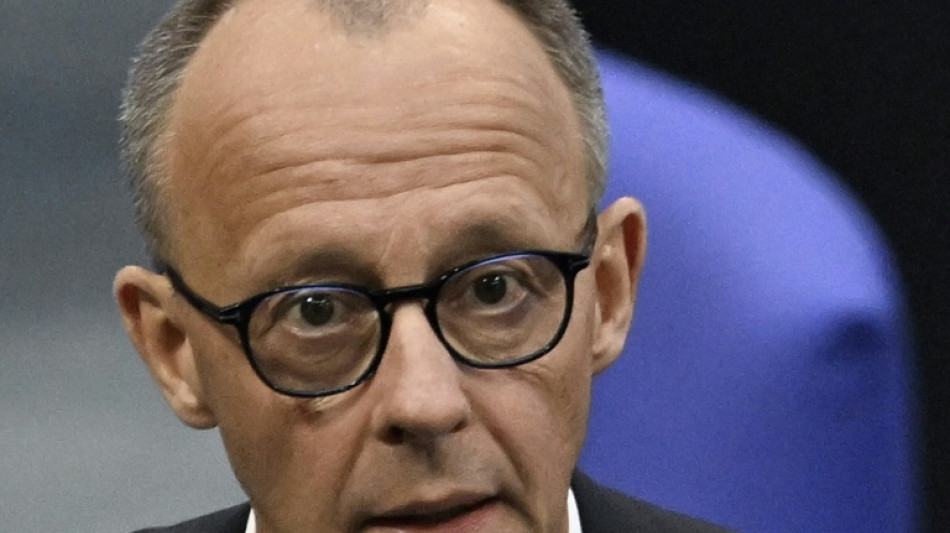
Blow for Germany's Merz as he loses first-round vote for chancellor / Photo: RALF HIRSCHBERGER - AFP

 Kenya's economy faces climate change risks: World Bank

 UK foreign office to review pay-off to Epstein-linked US envoy
 French police arrest five over crypto-linked magistrate kidnapping

 What's at stake for Indian agriculture in Trump's trade deal?

 Neglected killer: kala-azar disease surges in Kenya

 Spain, Portugal face fresh storms, torrential rain

 Crypto firm accidentally sends $40 bn in bitcoin to users

 Danone expands recall of infant formula batches in Europe

 Why bitcoin is losing its luster after stratospheric rise

 Digital euro delay could leave Europe vulnerable, ECB warns
 Stellantis takes massive hit for 'overestimation' of EV shift

 In Dakar fishing village, surfing entices girls back to school

 As Estonia schools phase out Russian, many families struggle

 Bangladesh Islamist leader seeks power in post-uprising vote

 UK royal finances in spotlight after Andrew's downfall

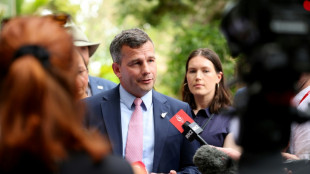 New Zealand deputy PM defends claims colonisation good for Maori

 Deadly storm sparks floods in Spain, raises calls to postpone Portugal vote
 Lower pollution during Covid boosted methane: study
 Record January window for transfers despite drop in spending

 Davos forum opens probe into CEO Brende's Epstein links
 Greece aims to cut queues at ancient sites with new portal
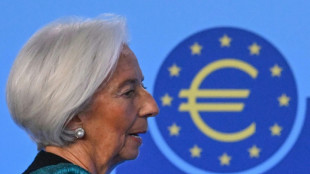
 What does Iran want from talks with the US?

 Bitcoin under $70,000 for first time since Trump's election

 Germany claws back 70 mn euros from Amazon over price controls

 BBVA posts record profit after failed Sabadell takeover

Germany's conservative leader Friedrich Merz suffered a serious blow on Tuesday when he failed to win a parliamentary majority in the first round of voting on him becoming the next chancellor.
The unexpected setback, a first in German post-war history, prolongs the half-year of political paralysis that has prevailed in Berlin since the collapse of the coalition government of Olaf Scholz.
Merz had hoped in the secret ballot to win the required absolute majority of at least 316 of the 630 votes in the lower house of parliament. But he only won the backing of 310 MPs, with 307 voting against him.
There will now be at least one more round of voting in the Bundestag, although it was unclear when, with German media reporting that no further votes were expected on Tuesday.
According to the constitution, MPs have 14 days to hold the second round.
In the third and final round, a simple majority of lawmakers would suffice to see Merz elected.
Tuesday's vote had been widely seen as a formality.
Merz theoretically had the backing of a coalition of his CDU/CSU alliance, which won February's general elections, and the centre-left Social Democrats (SPD) of Scholz, who together have 328 seats.
Of the 630 MPs in the lower house, three lawmakers abstained, nine were absent and there was one invalid ballot paper.
The far-right Alternative for Germany (AfD) -- the largest opposition party, which scored a record result of over 20 percent in the election -- cheered the surprise result.
"Merz should step aside and the way should be cleared for a general election," AfD co-leader Alice Weidel told reporters.
She called the result a "good day for Germany".
The result keeps Scholz in the post of caretaker chancellor for now and has upended the political calendar in Berlin.
President Frank-Walter Steinmeier had been due to swear in the new cabinet and Merz had planned visits to Paris and Warsaw on Wednesday.
Bodo Ramelow of the far-left opposition party Die Linke said he was "angry" that Merz and his designated vice chancellor Lars Klingbeil of the SPD "allowed such a situation" to come about.
If Merz eventually goes on to become chancellor, the 69-year-old head of the CDU/CSU alliance would take over from Scholz, whose three-party coalition government collapsed in November on the day Trump won reelection.
Hoping to become modern Germany's 10th chancellor, Merz has vowed to revive the ailing economy, curb irregular migration and strengthen Berlin's role in Europe as it responds to increasingly turbulent times.
- 'Profound upheaval' -
Germany's political drama has come at a time when Trump has upended long-standing transatlantic security and trade ties and rattled allies by reaching out directly to Russia to end the Ukraine war.
Trump has heaped pressure on European allies, complaining that they spend too little on NATO.
He has also accused them of taking advantage of the United States by running trade surpluses and has imposed tariffs, a move especially painful to export power Germany.
Merz, who boasts a strong business background but has never held a government leadership post, said on Monday: "We live in times of profound change, of profound upheaval... and of great uncertainty.
"And that is why we know that it is our historic obligation to lead this coalition to success," he said.
The alliance of Germany's two big-tent parties has vowed, once in government, to continue to support Ukraine as the United States pushes for a deal to end the war started by Russia's full-scale invasion over three years ago.
Expecting to take power, the coalition has already secured hundreds of billions of euros (dollars) in fiscal firepower under a spending "bazooka" passed by the outgoing parliament.
Their stated aim is to rebuild crumbling infrastructure and the long-underfunded military, while boosting an economy which has shrunk for the past two years.
Merz has also vowed to curb irregular migration and deploy extra police to secure Germany's borders, putting an end to the open-door policy that welcomed millions of asylum seekers under his party rival, ex-chancellor Angela Merkel.
The CDU leader has warned that only such drastic steps will prevent the AfD from potentially coming out on top in elections in four years' time.
The stakes were heightened when Germany's domestic intelligence service on Friday designated the AfD as a "right-wing extremist" party, reviving debate on whether it should be banned.
This sparked a furious response from Trump allies who have supported the far-right, anti-immigration AfD, with US Secretary of State Marco Rubio accusing the German spy agency of "tyranny in disguise".
A.Zimmermann--CPN