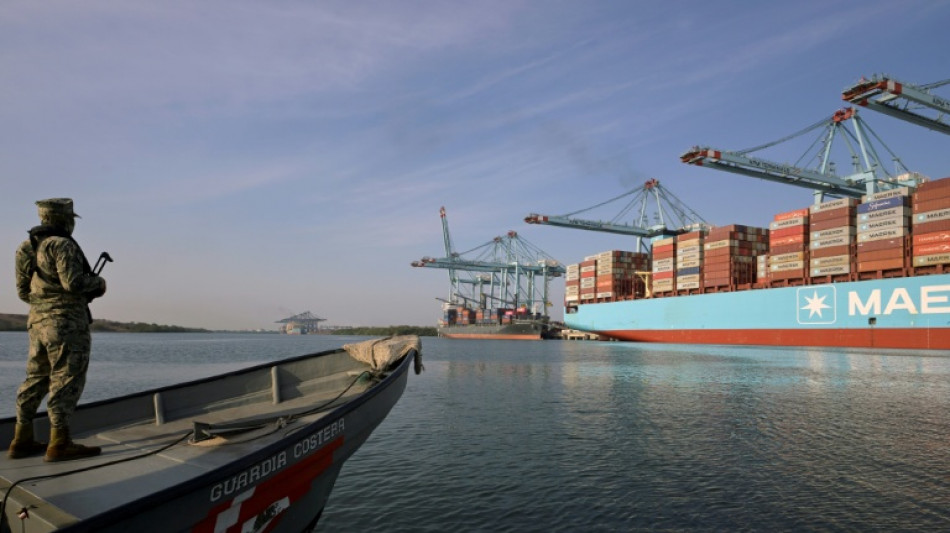
Mexican mega-port confronts Trump's tariff storm / Photo: Alfredo ESTRELLA - AFP

 Kenya's economy faces climate change risks: World Bank
 'Send Help' repeats as N.America box office champ
 UK foreign office to review pay-off to Epstein-linked US envoy
 French police arrest five over crypto-linked magistrate kidnapping
 What's at stake for Indian agriculture in Trump's trade deal?
 Neglected killer: kala-azar disease surges in Kenya
 Spain, Portugal face fresh storms, torrential rain

 Crypto firm accidentally sends $40 bn in bitcoin to users
 Danone expands recall of infant formula batches in Europe
 Why bitcoin is losing its luster after stratospheric rise

 Digital euro delay could leave Europe vulnerable, ECB warns
 Stellantis takes massive hit for 'overestimation' of EV shift

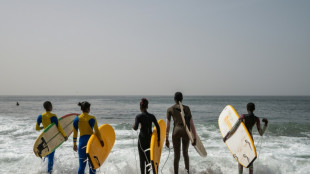 In Dakar fishing village, surfing entices girls back to school

 As Estonia schools phase out Russian, many families struggle

 Bangladesh Islamist leader seeks power in post-uprising vote
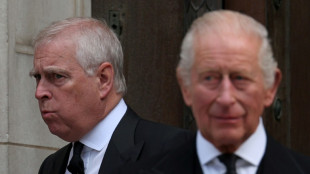 UK royal finances in spotlight after Andrew's downfall
 New Zealand deputy PM defends claims colonisation good for Maori

 Deadly storm sparks floods in Spain, raises calls to postpone Portugal vote
 Lower pollution during Covid boosted methane: study
 Record January window for transfers despite drop in spending
 Davos forum opens probe into CEO Brende's Epstein links
 Greece aims to cut queues at ancient sites with new portal
 What does Iran want from talks with the US?
 Bitcoin under $70,000 for first time since Trump's election

 Germany claws back 70 mn euros from Amazon over price controls

At dawn, container ships from Asia unload at a huge Pacific port in Mexico that so far appears to be weathering the storm unleashed by US President Donald Trump's tariffs.
Members of the navy patrol the waters off Lazaro Cardenas, which for years has also been a gateway for drug flows that Mexico is under pressure from Trump to stop.
The port, which covers an area of water and land the size of several thousand football fields, handles thousands of vehicles and even more auto parts.
Millions of other goods from various industries and countries also arrive at the port.
As well as the logistical challenge, Mexican authorities face mounting pressure from Trump to tackle trafficking of drugs or their precursors hidden in imported goods.
The importance of Lazaro Cardenas -- located in Michoacan, one of Mexico's most violent states -- reflects the country's deep integration with the United States and Canada thanks to decades of free trade agreements.
"It's a strategic logistics point," Joel Mendez, the port's operations manager, told AFP during a tour of the facilities.
The port is connected to a railroad that extends to the United States and Canada, so a container can arrive in Chicago in seven days.
- Expansion planned -
Lazaro Cardenas has become a major competitor to the Port of Long Beach in California, according to local authorities.
So far there is no sign of a slowdown at the Mexican port, its operator says.
Container throughput increased 11 percent between January and March, when Mexico was already in Trump's sights.
There are plans to expand the port's size by 1,100 hectares (2,700 acres) -- around 900 football fields.
It already handles the most vehicle shipments of any Mexican seaport, accounting for 35 percent of the national total.
It also processes inputs for the steel industry, another sector targeted by Trump's tough trade policy.
ArcelorMittal, one of the world's largest steelmakers, has a presence in Lazaro Cardenas.
Though Trump excluded Mexico from his steep "reciprocal tariffs" -- and this week eased auto import duties --- its steel and aluminum exports are subject to a 25 percent tariff.
That is a major challenge for a country that is home to plants operated by major foreign automakers such as Ford, General Motors, Volkswagen, Audi and BMW.
Despite fears of an economic downturn, Mexico's economy avoided a recession in the first quarter of the year, growing 0.2 percent from the previous quarter, a preliminary estimate showed Wednesday.
- Drug searches -
Dozens of soldiers inspected products in a special area of the port, which in 2013 was taken over by the military after it became a destination for chemical precursors used to produce crystal meth.
Trump has linked his tariffs in part to the need for Mexico to do more to tackle trafficking of another synthetic drug, the deadly opioid fentanyl, as well as illegal migration.
A soldier at the port took samples from big sacks of fishmeal, placing them in a machine than can detect illegal substances.
"Cocaine and cannabis are the two substances that have been seized the most in the port," a Mexican navy officer said on condition of anonymity.
In October, the navy announced it had seized more than 8.3 tonnes of drugs in the Pacific southwest of Lazaro Cardenas -- a record for a single operation at sea.
Authorities are focused on chemicals that can be used to produce both legal medications and synthetic drugs.
Port workers are preparing for the industry's peak season, between May and June, when companies export and import millions of products in anticipation of the year-end holidays.
Despite the chill winds from Trump's trade war, "the port will continue to grow," Mendez predicted.
A.Levy--CPN