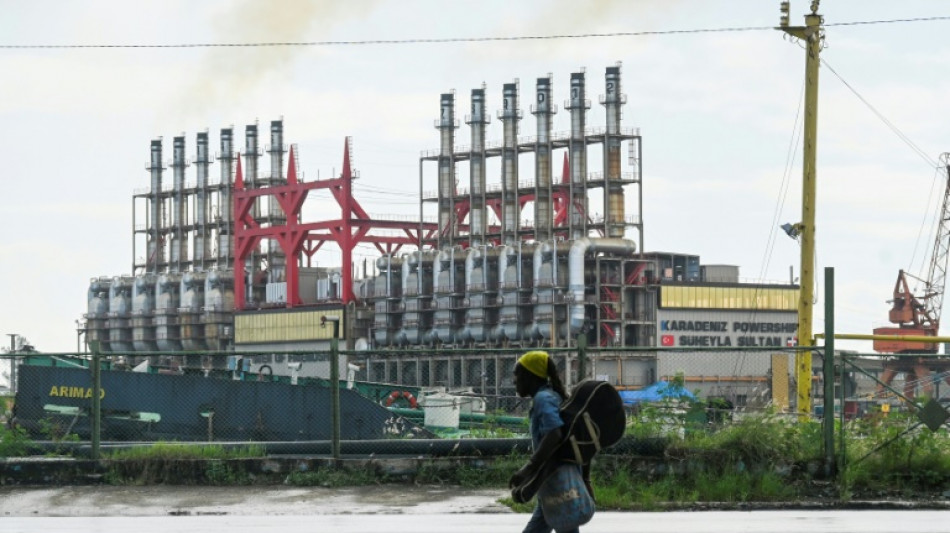
70% of Cuba's population has power back after blackout / Photo: YAMIL LAGE - AFP/File

 Capital-markets shares rally as Motilal Oswal and Angel One lead gains

 Reliance rally puts historical one-year return pattern in focus

 Saudi Aramco quarterly profit climbs 34.6% amid elevated oil prices

 Australia raises benchmark rate to highest level in 18 years

 Asian stocks retreat as AI worries outweigh steep oil-price drop

 Hamad International Airport stages emergency drills during WATAN 2026

 Qatar solar expansion opens scope for technical performance gains
Seventy percent of Cuba's population now has power, four days after a nationwide blackout triggered by the collapse of the island's largest power plant, and as the country recovers from Hurricane Oscar, the government said Tuesday.
"This morning, 70.89 percent of customers in Cuba have power," the energy ministry said on X, formerly Twitter, adding that it was working to restore service to more people.
The lights went out for the Communist-run country's 11 million people on Friday after the collapse of the Antonio Guiteras plant, about 100 kilometers (60 miles) from Havana, which crippled the entire power grid.
The situation was complicated by the passage of Oscar, which struck Cuba on Sunday as a Category 1 storm. At least six people have died as a result of the hurricane, according to President Miguel Diaz-Canel.
Cuba is in the throes of its worst economic crisis since the breakup of key ally the Soviet Union in the early 1990s -- marked by soaring inflation and shortages of basic goods.
The island's electricity is generated by eight aging coal-fired power plants, some of which have broken down or are under maintenance, as well as seven floating plants leased from Turkish companies and a raft of diesel-powered generators.
Authorities tried to restore the grid over the weekend, but it repeatedly failed.
- Instability threat -
Electricity supplies were restored to much of the capital -- home to two million people -- but some residents outside Havana were still waiting.
"Of course I'm happy!" Olga Gomez, a 59-year-old housewife in Havana, said after the lights came back on.
"I have an elderly senile mother of 85 and an autistic son. It's very difficult when there's no power," she told AFP.
With concerns of instability on the rise, Diaz-Canel warned Sunday that his government would not tolerate attempts to "disturb public order."
In July 2021, blackouts sparked an unprecedented outpouring of public anger, with thousands of Cubans taking to the street and chanting slogans including "Freedom!" and "We are hungry."
Diaz-Canel blamed the problems on Cuba's difficulties in acquiring fuel for its power plants, which he attributed to the tightening during Donald Trump's presidency of a six-decade-long US trade embargo.
The government pledged that everyone would have electricity by late Tuesday.
Authorities have suspended classes and many business activities until Wednesday, with only hospitals and essential services remaining operational.
Y.Jeong--CPN
