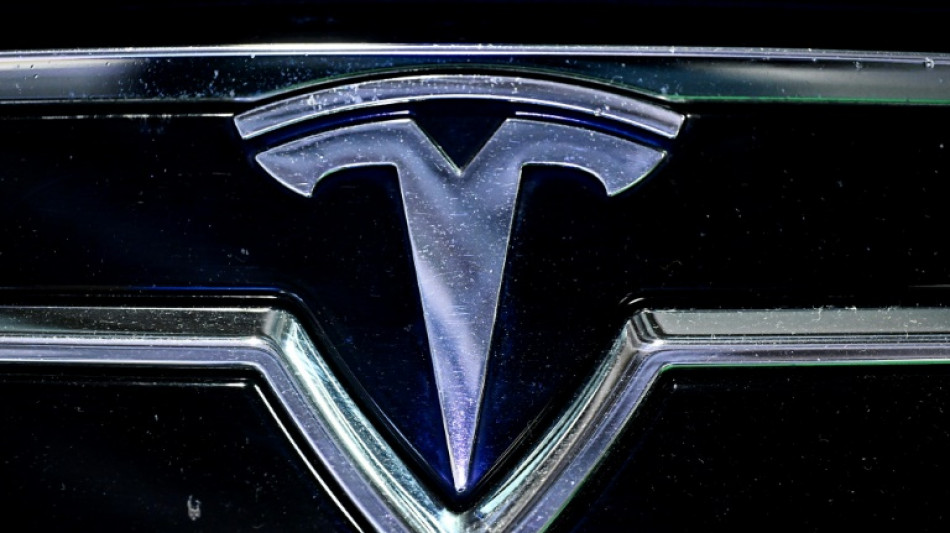
US regulator probes Tesla's self-driving mode after crashes / Photo: JULIEN DE ROSA - AFP

 Capital-markets shares rally as Motilal Oswal and Angel One lead gains

 Reliance rally puts historical one-year return pattern in focus

 Saudi Aramco quarterly profit climbs 34.6% amid elevated oil prices
 Australia raises benchmark rate to highest level in 18 years
 Asian stocks retreat as AI worries outweigh steep oil-price drop
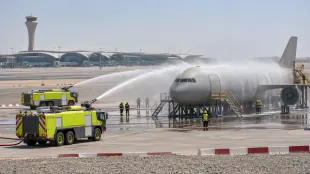 Hamad International Airport stages emergency drills during WATAN 2026
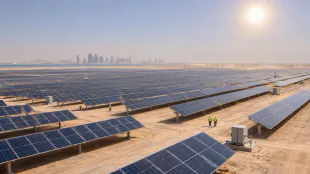 Qatar solar expansion opens scope for technical performance gains
The US auto safety regulator said Friday that it has opened an investigation into Tesla's Full Self-Driving (FSD) software after receiving four reports of crashes, one of which involved a pedestrian being struck and killed.
The crashes all occurred when "a Tesla vehicle traveling with FSD engaged entered an area of reduced roadway visibility conditions (sun glare, fog, dust) and Tesla's FSD continued operating," the statement from the National Highway Traffic Safety Administration (NHTSA) said.
"One of the crashes involved a pedestrian being struck and killed; one crash involved a reported injury," it said.
The investigation will "to examine the system's potential failure to detect and disengage in specific situations where it cannot adequately operate, and the extent to which it can act to reduce risk."
Tesla, owned by billionaire Elon Musk, has spent aggressively on autonomous driving and other technology.
But it has faced repeated criticisms after other crashes involving its self-driving and assisted driving software, and US regulators have long been investigating its programs on a number of fronts.
In April the company settled with the family of an engineer killed when his Model X -- which used Tesla's Autopilot driver assistance software -- crashed in Silicon Valley in 2018.
Last year the company was forced to recall nearly 363,000 cars equipped with FSD Beta technology, and more than two million vehicles over risks associated with the Autopilot software.
Tesla has stood by the safety of its cars, and Musk has touted its driver-assistance programs, which have not progressed as quickly as he said they would.
In 2019, Musk said the company would be able to produce a fully autonomous vehicle within a year -- an outcome that has still not come to pass.
Earlier this month he unveiled what he said was a robotaxi capable of self-driving, predicting it would be available by 2027.
St.Ch.Baker--CPN


