UK economic growth slows in first quarter / Photo: Tolga Akmen - AFP/File

 Nintendo producer 'all nervous' as Zelda classic remake hits shelves

 Three killed by storm in southern India
 Two hundred 'Cruise for life' passengers stranded in Cambodia

 Billionaire Ambani's Jio jumps 21% in market debut after record India IPO

 Sri Lanka's Tamil farmers fight to reclaim land after civil war

 'They don't care about us': Trump food aid cuts leave Americans struggling and angry
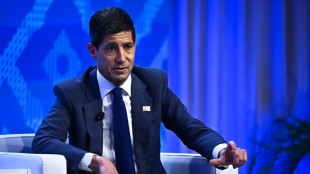
 Palestinian activist Khalil returns to Columbia after US detention
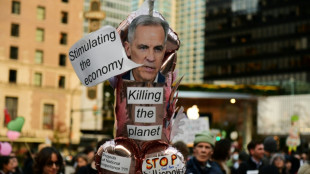 Youths testify about 'despair' in unprecedented Canadian climate trial
 Storied Paris department store seeks bankruptcy protection
 Boeing shares tumble after it releases cautious growth forecast
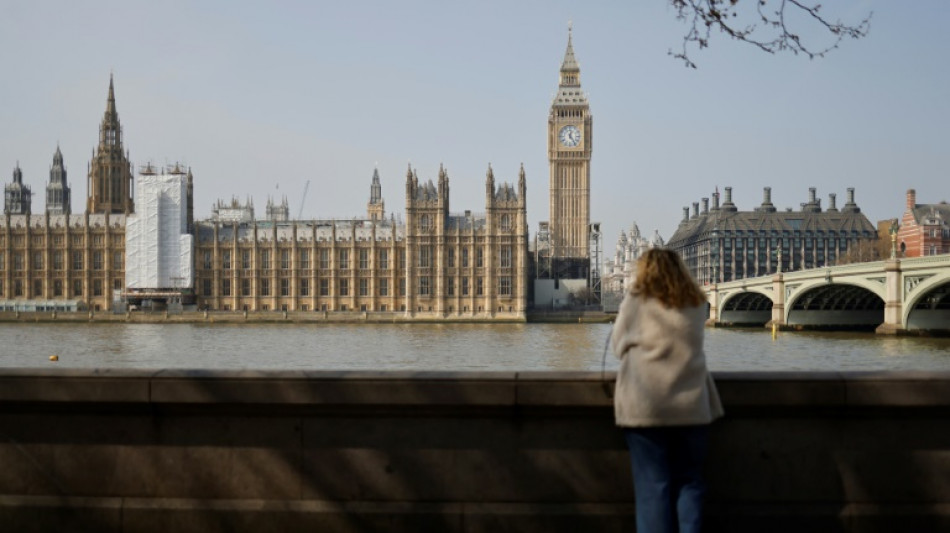
Britain's economy grew at a slower pace in the first quarter compared with the final three months of last year as the country battled soaring inflation, official data showed Thursday.
The economy grew 0.8 percent in the January-March period compared with expansion of 1.3 percent in the fourth quarter of last year, the Office for National Statistics said in a statement.
After solid output in January, the UK economy posted zero growth the following month and contracted by 0.1 percent in March, ONS data showed.
It comes after the Bank of England (BoE) last week warned that Britain risks falling into recession with UK inflation expected to top 10 percent, a four-decade high, by the end of the year.
Consumer prices are surging worldwide on supply strains as economies reopen from pandemic lockdowns -- and in the wake of the Ukraine war that is aggravating already high energy costs.
- 'Russia disruption' -
Responding to Thursday's data, finance minister Rishi Sunak said Britain's economic recovery from the pandemic was "being disrupted by (Russian President Vladimir) Putin's barbaric invasion of Ukraine and other global challenges".
Sunak, however, added in a statement that UK "growth in the first few months of the year was strong, faster than the US, Germany and Italy".
While the UK economy grew for a fourth quarter in a row, and is above pre-pandemic levels, output in the first three months of 2022 was the lowest for a year.
"Our latest monthly estimates show GDP fell a little in March, with drops in both services and in production," said Darren Morgan, director of economic statistics at the ONS.
"Construction, though, saw a strong month, thanks partly to repair work after the February storms."
Growth over the entire first quarter was driven by expansion in a number of service sectors, including hospitality and transport, Morgan added.
However, the contraction in March and slower first-quarter output as a whole "suggest the economy had less momentum than we thought even before the full hit from the cost-of-living crisis has been felt", noted Paul Dales, chief UK economist at Capital Economics.
"The risk of recession has just risen," he said, adding that "strong price pressures will probably mean the BoE will raise interest rates further".
The Bank of England last week raised its main interest rate by a quarter point to one percent to tackle runaway UK inflation.
It was the fourth straight increase by the BoE, while its key rate now stands at the highest level since the global financial crisis in 2009.
That is hiking borrowing costs for consumers and businesses, further impacting spending.
Britain's cost-of-living crisis was blamed in part for British Prime Minister Boris Johnson's Conservative party losing control of key councils in recent local elections.
Y.Tengku--CPN