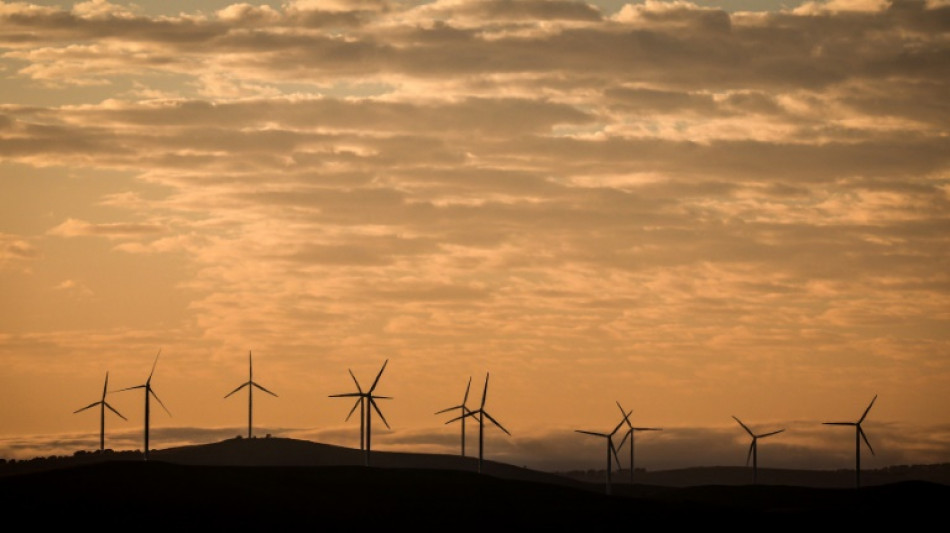
Coal generates less than 50% of Australian electricity for first time / Photo: DAVID GRAY - AFP/File

 Vessel operator seeks witnesses after Vancouver grounding

 Shrini Srivastava joins crew of Varanasi-Delhi Vande Bharat Sleeper service

 Nearly Half of Australian Workers Overqualified, Survey Finds

 RBI eases export-declaration compliance for individual service exporters

 Reliance shares remain in focus after near-12% surge

 Coal India prepares possible $1 billion Mahanadi Coalfields listing

 Capital-markets shares rally as Motilal Oswal and Angel One lead gains

 Reliance rally puts historical one-year return pattern in focus

 Saudi Aramco quarterly profit climbs 34.6% amid elevated oil prices
 Australia raises benchmark rate to highest level in 18 years

 Asian stocks retreat as AI worries outweigh steep oil-price drop

 Hamad International Airport stages emergency drills during WATAN 2026

 Qatar solar expansion opens scope for technical performance gains
Coal generated less than 50 percent of Australia's electricity in the last week of August, dropping to a record low as renewable production surged, data showed Wednesday.
According to market monitor Open-NEM, coal generated 49.1 percent of the country's electricity, while renewables accounted for 48.7 percent as storms boosted wind production.
Australia remains one of the world's leading exporters of coal and gas and has relied heavily on fossil fuels to keep the lights on.
But climate finance expert Tim Buckley said August's record figures were caused by wild weather and a warm start to the spring which had reduced demand on the grid by up to 20 percent.
Winds exceeding 150 kilometres (93.2 miles) per hour in the southeast of the country had also almost doubled the usual wind generation.
"It's a historically low coal share for Australia in the national energy market, but it's also a sign of where we are going," Buckley told AFP.
"It will only be a few years from now that coal is contributing virtually nothing," he added.
In 2022-2023, fossil fuels accounted for 91 percent of the country's energy consumed -- a wider measure than electricity production that includes fuel used in transport and industry.
- Renewables investment -
With most of Australia's 16 coal-fired power stations to close in the coming years, government and industry are racing to invest in the renewable energy sector.
The government unveiled on Wednesday six battery projects to be built across South Australia and Victoria that will provide 1,000 megawatts of storage by 2027.
Energy Minister Chris Bowen said the energy transition was going to happen because "the climate demands it, and economic reality demands it".
"We must be implementing sensible solutions now, not in a decade, or two decades, to be certain that Australia's energy needs will be met."
Buckley said while Australia's investment in the sector was growing, it lagged behind other countries.
"China has overtaken Australia in renewables. It is investing nearly a trillion Australian dollars ($671 million) a year in clean tech and when it comes to renewables," he said.
"China is installing as much new renewable capacity in a week as Australia installs in a year."
Last week, Australia's energy regulator warned ongoing investment in the renewable energy market was needed to avoid blackouts in the coming decades as demand is projected to soar.
P.Kolisnyk--CPN