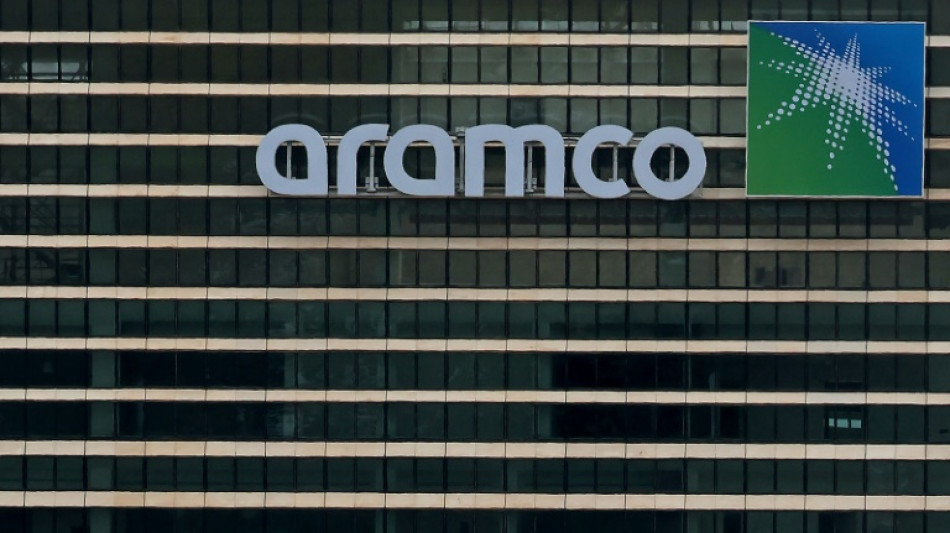
Saudi Aramco quarterly profit dips as output stays low / Photo: Fayez Nureldine - AFP/File

 Vessel operator seeks witnesses after Vancouver grounding

 Shrini Srivastava joins crew of Varanasi-Delhi Vande Bharat Sleeper service

 Nearly Half of Australian Workers Overqualified, Survey Finds

 RBI eases export-declaration compliance for individual service exporters

 Reliance shares remain in focus after near-12% surge

 Coal India prepares possible $1 billion Mahanadi Coalfields listing

 Capital-markets shares rally as Motilal Oswal and Angel One lead gains

 Reliance rally puts historical one-year return pattern in focus

 Saudi Aramco quarterly profit climbs 34.6% amid elevated oil prices

 Australia raises benchmark rate to highest level in 18 years

 Asian stocks retreat as AI worries outweigh steep oil-price drop

 Hamad International Airport stages emergency drills during WATAN 2026

 Qatar solar expansion opens scope for technical performance gains
Saudi oil giant Aramco on Tuesday reported net profit of $29.07 billion in the second quarter, a slight drop from the same period last year as output remained subdued.
The decrease of 3.4 percent "mainly reflects the impact of lower crude oil volumes sold and weakening refining margins", the company said in a statement posted to the Saudi stock exchange.
Saudi Arabia, the world's biggest crude exporter, is currently producing roughly nine million barrels per day (bpd), well below its capacity of 12 million bpd.
Production averaged 8.8 million bpd in June, Riyadh-based firm Jadwa Investment said last week.
The relatively low figure reflects cuts dating back to October 2022, when the OPEC+ bloc of oil producers that Riyadh co-leads with Moscow announced it would reduce output by two million bpd to boost prices.
In April 2023, several OPEC+ members announced they would further slash production by more than one million bpd, and in June 2023, Riyadh announced an additional voluntary cut of one million bpd.
"Output will remain at similar levels until at least October", at which point an OPEC+ agreement announced in June 2024 will allow "for gradual monthly increases", Jadwa said.
Aramco is the jewel of the Saudi economy and the main source of revenue for Crown Prince Mohammed bin Salman's Vision 2030 reform agenda, which aims to set the Gulf kingdom up for a prosperous post-oil future.
The firm's profits help allow Saudi Arabia to finance flagship projects including NEOM, the futuristic mega-city being built in the desert, a giant airport in Riyadh and major tourism and leisure developments.
The IMF said in April that, at current production levels, Saudi Arabia's fiscal break-even oil price would be $96.2 per barrel in 2024.
Brent, the international benchmark, was trading at $76.43 per barrel on Tuesday after Monday's global stock market rout fuelled by US recession fears.
Yet Aramco chief executive Amin Nasser told reporters that Aramco was still "positive about the outlook for global oil demand", pointing to "strong" demand from China.
"The market in my view is overreacting and the fundamentals do not support the drop in prices that we are witnessing today," Nasser said.
"I think the market is reading too much into the short-term responses to the news coming from the US with regards to the number of jobs."
- Steady dividend -
The government's stake in Aramco, one of the world's biggest companies by market capitalisation, is around 81.5 percent.
Aramco's initial public offering in 2019, the biggest flotation in history, raised $29.4 billion, and a secondary offering this year of nearly 1.7 billion shares fetched $12.35 billion.
Aramco announced last year it would start paying a performance-based dividend in addition to its base dividend.
In May, the firm announced base dividend payouts for the first quarter totalling $20.3 billion and a performance-linked dividend distribution of $10.8 billion to be paid in the second quarter.
Those payments will be extended for another quarter and Aramco "expects to declare industry-leading dividends of $124.2 billion in 2024", Tuesday's statement said.
"We have delivered market-leading performance once again, with strong earnings and cash flows in the first half of the year," Nasser said.
"Leveraging those strong earnings, we continued to deliver a base dividend that is sustainable and progressive."
- Cash cow -
Aramco reported record profits in 2022 after Russia's invasion of Ukraine sent oil prices soaring, allowing Saudi Arabia to record its first budget surplus in nearly a decade.
But the cash cow saw its profits drop by a quarter last year because of lower oil prices and production cuts, and profits in the first quarter of this year were down 14.5 percent.
In January, Aramco said it had been instructed to abandon a plan to increase production capacity to 13 million barrels per day, up from its current level of 12 million bpd.
Analysts said the surprise announcement could reflect a lack of confidence in demand, although Energy Minister Prince Abdulaziz bin Salman said it was motivated by the transition to cleaner fuels.
Saudi Arabia has pledged to achieve net zero carbon emissions by 2060, a statement that has drawn intense scepticism from environmental activists.
Aramco has vowed to achieve "operational net-zero" carbon emissions by 2050, which does not include the emissions from customers burning its products.
Nasser told reporters on Tuesday that oil and gas demand "will not peak any time soon given the vital role that hydrocarbons continue to play in the global economy".
A.Levy--CPN