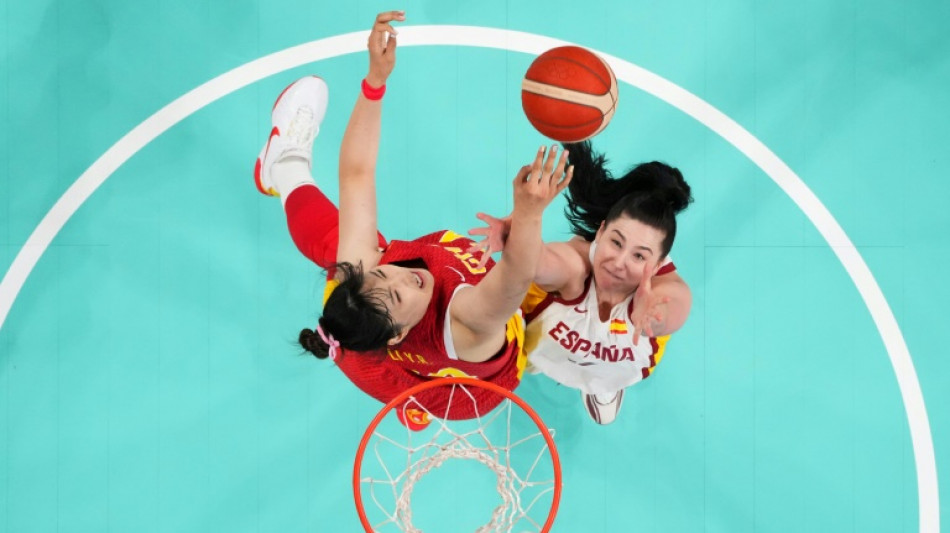
Avoid 'sexist' filming of women, Olympics camera operators told / Photo: - - POOL/AFP

 Vessel operator seeks witnesses after Vancouver grounding

 Shrini Srivastava joins crew of Varanasi-Delhi Vande Bharat Sleeper service

 Nearly Half of Australian Workers Overqualified, Survey Finds

 RBI eases export-declaration compliance for individual service exporters

 Reliance shares remain in focus after near-12% surge

 Coal India prepares possible $1 billion Mahanadi Coalfields listing

 Capital-markets shares rally as Motilal Oswal and Angel One lead gains

 Reliance rally puts historical one-year return pattern in focus

 Saudi Aramco quarterly profit climbs 34.6% amid elevated oil prices

 Australia raises benchmark rate to highest level in 18 years

 Asian stocks retreat as AI worries outweigh steep oil-price drop

 Hamad International Airport stages emergency drills during WATAN 2026
The official Olympics broadcaster has urged camera operators to film men and women athletes in the same way to avoid "stereotypes and sexism" creeping into the coverage, its CEO said Sunday.
The Paris Olympics are the first in the 128-year history of the modern Games to reach gender parity among athletes, with women's sport also given more prime-time broadcast spots to help raise its profile.
With the Games now into full swing, the head of Olympic Broadcasting Services (OBS) said his organisation had updated its guidelines for camera operators, most of whom are men.
OBS is responsible for the TV coverage of the Olympics, with its images shared with rights holders around the world.
"Unfortunately, in some events they (women) are still being filmed in a way that you can identify that stereotypes and sexism remains, even from the way in which some camera operators are framing differently men and women athletes," chief executive Yiannis Exarchos told reporters in Paris.
"Women athletes are not there because they are more attractive or sexy or whatever. They are there because they are elite athletes."
He said the problem was mainly down to "unconscious bias", with camera operators and TV editors tending to show more close-up shots of women than men.
A number of scheduling changes have been made by Olympics organisers in Paris to boost women's sport. The women's marathon is set to be the final event of the Games instead of the men's race.
"The schedules of sporting events have traditionally been biased towards highlighting men's events," Exarchos said.
"Traditionally, in team sports, you have first women's finals, and then the men's final... In strength and combat sports, traditionally you have women's competitions in the morning and men's competitions in the afternoon."
Marie Sallois, director in charge of gender equality at the International Olympic Committee, said the Paris Games were "de facto the world's largest platform to promote gender equality in and through sport".
She pointed to "symbolic moments" in the opening ceremony on Friday which saw almost all delegations have a man and a woman flag carrier, while the artistic show paid tribute to influential women in French history.
When the ancient Greek Olympics concept was revived by French aristocrat Pierre de Coubertin in the late 19th century he saw it as a celebration of gentlemanly athleticism "with female applause as its reward".
In 1924, the last time the Olympics were held in Paris, just four percent of competitors were women and they were restricted to sports considered "suitable" for them, such as swimming, tennis and croquet.
A.Leibowitz--CPN