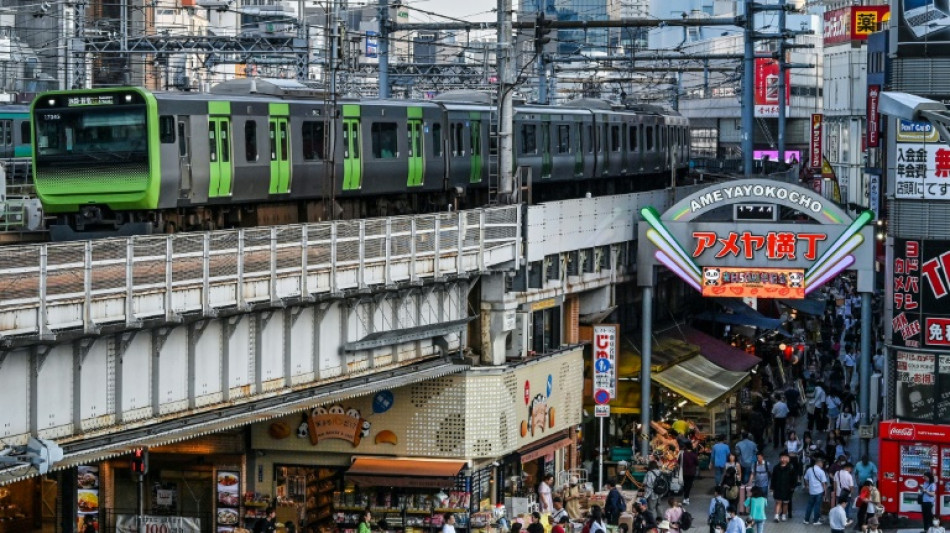
Japan inflation rises slightly to 2.6% in June / Photo: Richard A. Brooks - AFP

 Qatar media bodies discuss support for humanitarian initiatives

 Bezos grant helps Seattle nonprofit move thousands of families toward housing

 US stocks fall before midterm Election Day as technology shares weaken

 BLS Polymers makes strong market debut at ₹248 per share

 Petrol and diesel prices remain broadly steady across major Indian cities

 Derek Tierney Outlines Ten-Year Strategy for National Digital Health System

 BLS Polymers shares open 65.3% above IPO price

 ITC shares rise as analysts anticipate gradual cigarette-business recovery

 The Digital Burden: Why Instant Messaging Feels Like a Full-Time Job
Japanese inflation was slightly higher in June, with prices rising 2.6 percent on-year compared with 2.5 percent in May, internal affairs ministry data showed Friday.
But the core Consumer Price Index (CPI) reading, which excludes volatile fresh food prices, was still softer than market expectations of a 2.7 percent increase.
"Energy prices rose," boosting the overall figure, even though "the pace of increase in electricity and gasoline bills slowed", the ministry said.
The data comes as the Bank of Japan takes gradual steps away from the ultra-loose monetary policies that have sustained the world's fourth-largest economy for over a decade.
Analysts are speculating on when the bank will make its next rate hike after it increased interest rates in March for the first time since 2007.
The BoJ's next policy decision is due on June 31.
Last month, the central bank said it would scale down its huge purchases of government bonds -- the latest attempt to move away from a quantitative easing programme designed to banish stagnation and harmful deflation.
While the United States and other major economies have battled sky-high inflation in recent years, price rises in Japan have been less extreme.
The BoJ wants to see demand-driven inflation of two percent, fuelled by wage increases.
Japanese inflation has been above the target since April 2022, but analysts question to what extent this is caused by temporary factors such as the war in Ukraine.
UBS economists Masamichi Adachi and Go Kurihara said this week that BoJ policymakers would raise rates "once they have greater conviction in their economic and inflation outlook".
"Since April, though, their conviction has probably fallen with weak consumption. Without a recovery in consumption in summer, the conviction will likely not return. The next three months are critical," they said.
The yen has tumbled against the dollar this year, pushing up the price of imported goods in Japan.
Excluding fresh food and energy, Japanese prices rose 2.2 percent in June, following a 2.1 percent rise in May, the internal affairs ministry said.
S.F.Lacroix--CPN
