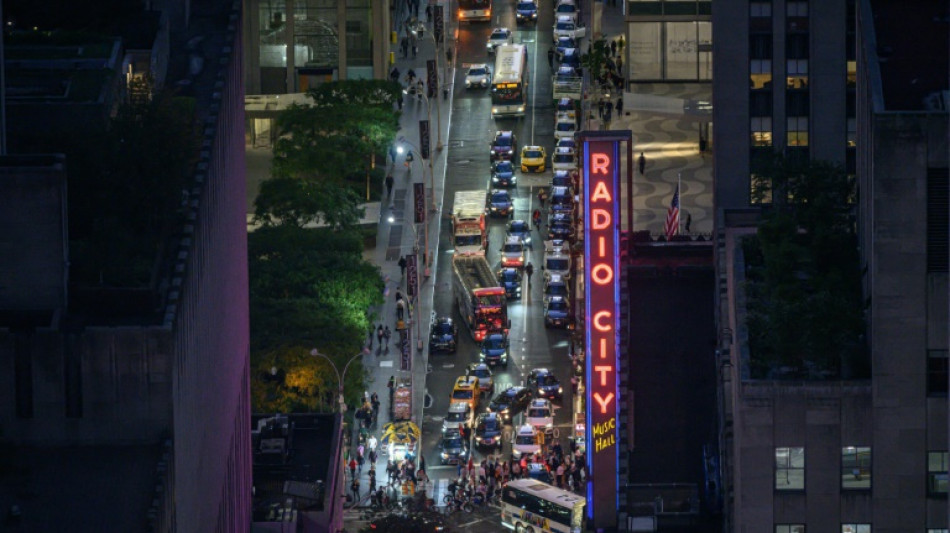
New York halts controversial driver congestion charge / Photo: Ed JONES - AFP

 India seeks threefold increase in coal stocks to prevent summer power shortages

 Indus Towers expands solar-powered network to 50,000 telecom sites

 Equitas Small Finance Bank rebounds after naming interim chief executive

 Titan quarterly profit seen rising as jewellery business drives growth

 Kuwait finance minister holds economic cooperation talks at COMCEC

 Kuwait marks key events and anniversaries from national history

 Qatar media bodies discuss support for humanitarian initiatives

New York dropped a controversial plan Wednesday that would have charged drivers to enter central Manhattan, amid criticism that it would hit businesses and poorer motorists disproportionately.
The plan to charge most cars $15 to enter the busiest parts of Manhattan in daytime was just weeks from starting and was aimed at improving air quality in the Big Apple by unclogging traffic-choked streets.
It was also hoped the system, the first of its kind in the US, would raise much-needed revenue to upgrade a creaking subway system that is used by around four million New Yorkers every day.
"I have come to the difficult decision that implementing the planned congestion pricing system risks too many unintended consequences for New Yorkers at this time," New York Governor Kathy Hochul said in a speech on the cost of living.
"For that reason, I have directed the (state-run transport authority) to indefinitely pause the program."
The scheme, which had been due to come into force on June 30, faced legal challenges, which highlighted the difficulty of levying drivers in a country where the car is king.
The plan would have charged drivers for venturing below 60th Street in Manhattan, an area that encompasses the business districts of Midtown and Wall Street.
Some 700,000 vehicles enter the area every day, with cars traveling just seven miles per hour on average due to gridlock, officials say.
The New York Taxi Workers Alliance, a union representing 21,000 cabbies, had estimated the levy would have seen drivers lose $8,000 a year in income.
There were numerous exemptions as well as a low income discount plan and discounts for drivers entering the tolling zone more than 10 times in a month.
"The toll revenues would amount to only $1 billion a year, which is far less than the $20 billion plus cost of lost productivity, overtime and fuel expenses, environmental and health costs that are the result of excess traffic," said the Partnership for New York City, which represents business leaders and employers.
U.Ndiaye--CPN