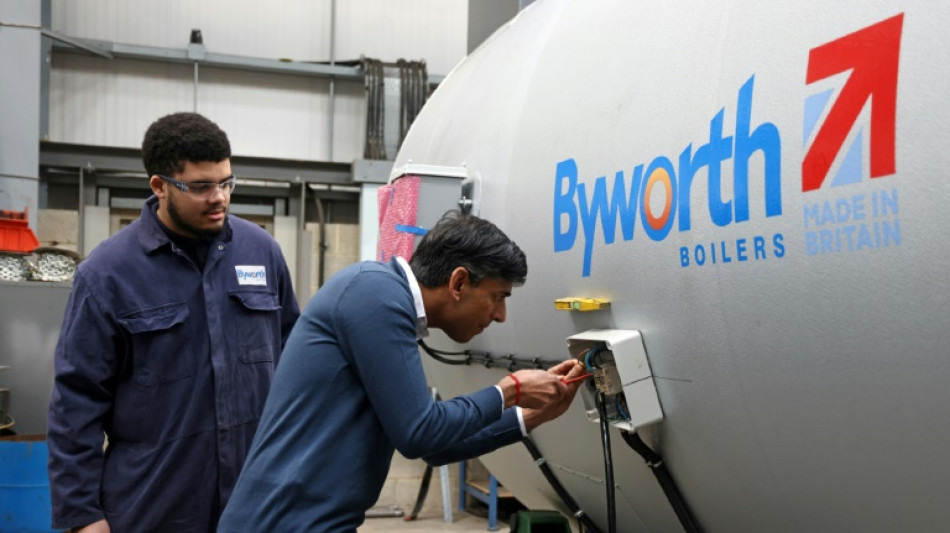
Falling UK energy bills grab election spotlight / Photo: Darren Staples - POOL/AFP/File

 India seeks threefold increase in coal stocks to prevent summer power shortages

 Indus Towers expands solar-powered network to 50,000 telecom sites
 Equitas Small Finance Bank rebounds after naming interim chief executive

 Titan quarterly profit seen rising as jewellery business drives growth
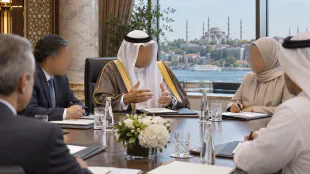 Kuwait finance minister holds economic cooperation talks at COMCEC

 Kuwait marks key events and anniversaries from national history

 Qatar media bodies discuss support for humanitarian initiatives

Britain's energy regulator on Friday announced a fall in household bills from July, catapulting a key cost-of-living issue into the second day of general election campaigning.
The cap on energy bills for most UK households will drop seven percent on sliding wholesale costs, regulator Ofgem revealed, yet it remains well above its pre-Covid peak.
The annual amount suppliers are allowed to charge an average household consuming electricity and gas in England, Scotland and Wales will decline to £1,568 ($1,990) from £1,690 from July 1.
It was already lowered in April.
The announcement comes two days after Prime Minister Rishi Sunak fired the starting gun on a July 4 general election -- with his governing Conservatives far behind the main opposition Labour party in opinion polls.
- 'Welcome news' -
Conservative ministers immediately seized on the price drop, arguing it was further evidence that Sunak was turning around the UK economy, even if critics insist it is more down to market forces than government policy amid on ongoing cost-of-living crunch.
"This is the second biggest big cut that we've seen," said energy minister Claire Coutinho, describing it as "really welcome news".
"Our gas prices are now lower on average than other European countries... I want to see (bills) continue to be lower for people."
The new price cap will be about £500 less than in July 2023 -- but remains more than £400 higher than in 2021 -- before oil and gas prices soared following the invasion of Ukraine by major energy producer Russia.
Should it win power, Labour has pledged to create a publicly-owned clean energy company, Great British Energy, under a plan it claims would further reduce average energy bills.
"Everywhere I go, so many people tell me the cost of living is still bearing down on them," Labour leader Keir Starmer told Sky News on Friday while on the campaign trail in Scotland.
Sunak's premiership has been blighted by decades-high inflation.
While the pace of price rises has cooled considerably, official data this week showed UK annual inflation hotter than expected in April amid the economy's emergence from recession.
In another blow Friday, figures showed UK retail sales slumped 2.3 percent last month as wet weather kept shoppers away from physical stores.
- 'Small comfort' -
"Today's (energy price) news will give small comfort to households still facing cost-of-living pressures," said Clare Moriarty, chief executive of consumer rights group Citizens Advice.
"The fall in the energy price cap reduces bills slightly, but our data tells us millions have fallen into the red or are unable to cover their essential costs every month."
She added that Britons "really struggling to keep the lights on or cook a hot meal" needed "targeted energy bill support" from the government.
T.Morelli--CPN