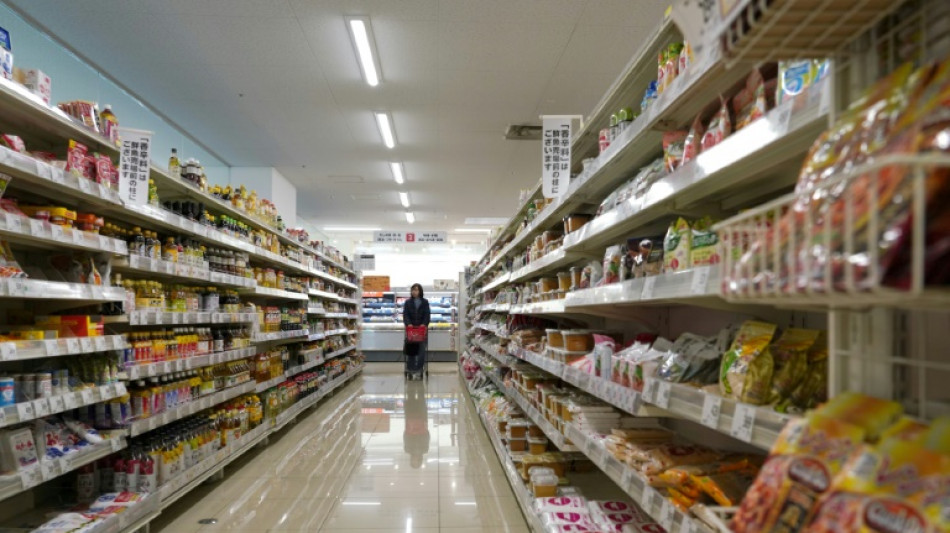
Japan inflation slows to 2.2% in April / Photo: Kazuhiro NOGI - AFP

 India seeks threefold increase in coal stocks to prevent summer power shortages

 Indus Towers expands solar-powered network to 50,000 telecom sites

 Equitas Small Finance Bank rebounds after naming interim chief executive

 Titan quarterly profit seen rising as jewellery business drives growth

 Kuwait finance minister holds economic cooperation talks at COMCEC

 Kuwait marks key events and anniversaries from national history

 Qatar media bodies discuss support for humanitarian initiatives

The pace of Japanese inflation slowed in April to 2.2 percent as gas bills fell, government data showed Friday, with the figure remaining above the Bank of Japan's two percent target.
The Consumer Price Index (CPI) excluding volatile fresh food prices eased from a 2.6 percent year-on-year rise in prices logged in March by the internal affairs ministry.
Friday's figure was in line with market expectations and comes as the weak yen continues to inflate prices for imported goods in Japan.
While the United States and other major economies have battled sky-high inflation in recent years, price rises in Japan have been less extreme.
The Bank of Japan (BoJ) has continued its ultra-loose monetary stimulus policies -- designed to banish stagnation and deflation from the world's number four economy, and targeting sustainable inflation of two percent.
In March, in part thanks to meeting this inflation target, the BoJ hiked borrowing cost rates for the first time since 2007 and scrapped the world's last negative interest rate.
Other major central banks including the Federal Reserve in the United States have much higher interest rates, and the wide differential has added pressure on the yen.
Stripping out both fresh food and energy, prices rose 2.4 percent in April, also matching the market consensus, down from 2.9 percent in March.
The Japanese currency has hit three-decade lows against the dollar in recent weeks.
A weaker yen is good for Japanese exporters and foreign visitors, but it makes imports and foreign travel for outbound tourists more expensive.
A.Zimmermann--CPN
