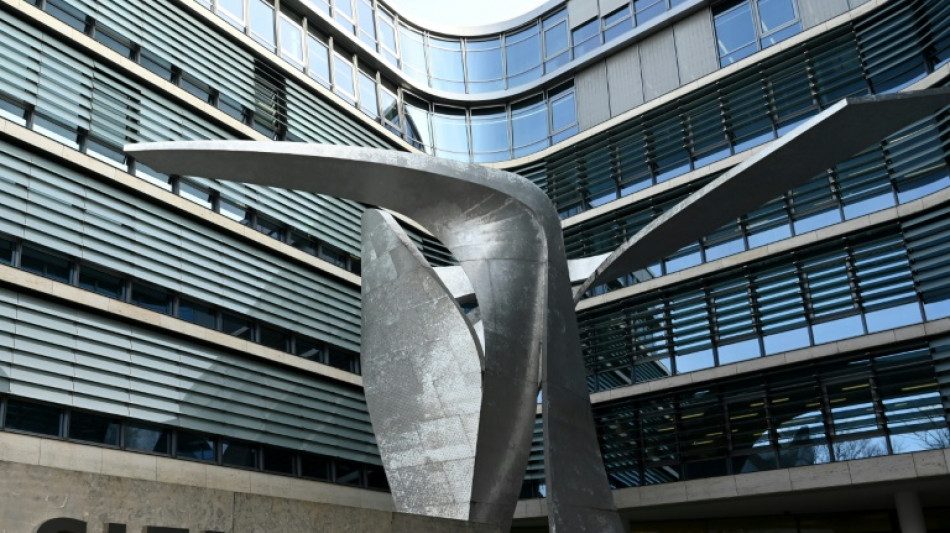
Siemens to sell electrical motors business to KPS / Photo: Christof STACHE - AFP/File

 India seeks threefold increase in coal stocks to prevent summer power shortages

 Indus Towers expands solar-powered network to 50,000 telecom sites

 Equitas Small Finance Bank rebounds after naming interim chief executive

 Titan quarterly profit seen rising as jewellery business drives growth

 Kuwait finance minister holds economic cooperation talks at COMCEC

 Kuwait marks key events and anniversaries from national history

 Qatar media bodies discuss support for humanitarian initiatives

German industrial giant Siemens said Thursday it will sell its electrical motors business Innomotics to private US equity firm KPS Capital Partners for 3.5 billion euros ($3.8 billion).
Innomotics, a subsidiary whose motors and other systems are used in a variety of industries including chemicals, oil, utilities and automotive, employs around 15,000 people.
The group said the sale was approved by its managing and supervisory boards, with the transaction expected to close in the first half of fiscal year 2025.
"By selling Innomotics to KPS, I am pleased that we have made further significant progress in optimising our portfolio," said Siemens chief financial officer Ralf Thomas.
Innomotics was launched in 2023 as a separate, wholly owned subsidiary of Siemens.
Siemens had announced late last year that it was planning a public listing of Innomotics, but it has dropped those plans by selling it to KPS.
The news of the sale came as Siemens, whose products range from trains to factory equipment, announced a 38 percent fall in second-quarter net profit year-on-year, to 2.2 billion euros.
From January to March, revenues slipped one percent on-year while orders were down 13 percent. The company runs its fiscal year from October to September.
Siemens has suffered in recent months due to customers "destocking" goods, after they had built up excess stocks.
Business in key market China fared particularly poorly, with a 25 percent fall in orders and a 20 percent drop in revenues in the second quarter.
The "digital industries" unit -- which supplies technologies for factory automation and had previously been a key growth driver -- saw a 13 percent fall in sales.
The "smart infrastructure" division, which deals with areas like data centres, however saw sales increase slightly.
The "mobility" unit, which produces trains, recorded a six-percent rise in revenues but a 49 percent fall in orders.
The Munich-based group had long been a producer of heavy industrial equipment but has in recent years sought to shift its focus towards digital technology and factory automation.
P.Gonzales--CPN
