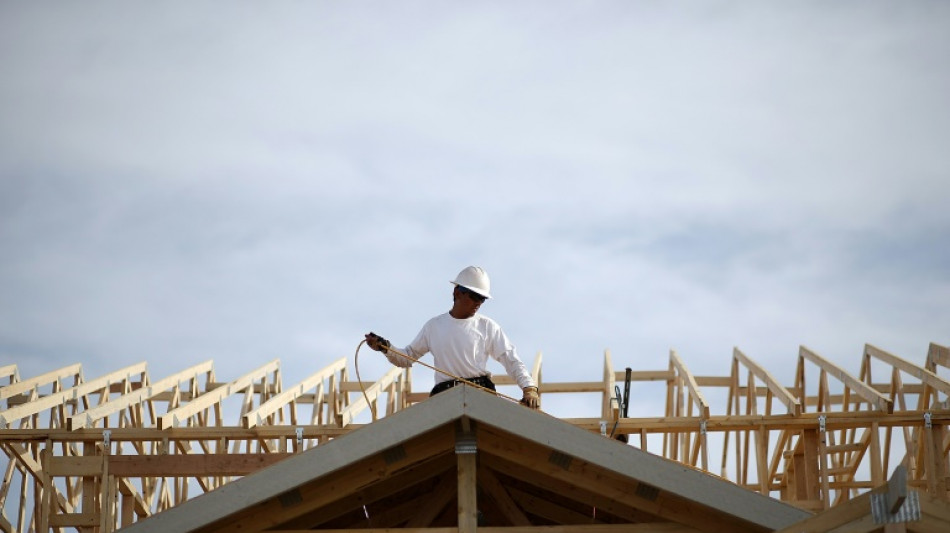
New US home sales pick up in March / Photo: JUSTIN SULLIVAN - GETTY IMAGES NORTH AMERICA/AFP

 India seeks threefold increase in coal stocks to prevent summer power shortages

 Indus Towers expands solar-powered network to 50,000 telecom sites

 Equitas Small Finance Bank rebounds after naming interim chief executive

 Titan quarterly profit seen rising as jewellery business drives growth

 Kuwait finance minister holds economic cooperation talks at COMCEC

 Kuwait marks key events and anniversaries from national history

 Qatar media bodies discuss support for humanitarian initiatives

Sales of new homes across the United States increased sharply last month, according to fresh government data published Tuesday, though February's numbers were revised lower.
There were 693,000 new single-family houses sold last month, the Commerce Department said in a statement, 8.8 percent above the revised February rate of 637,000.
The March data were well above market expectations of 670,000 new homes, according to Briefing.com.
Meanwhile, the median sales price of new homes sold in March was $430,700, while the average sales price was $524,800.
"Home sales surprised to the upside in March," High Frequency Economics chief US economist Rubeela Farooqi wrote in a note to clients, adding: "The data can be volatile month-to-month and subject to revision."
The Federal Reserve's fight against inflation through interest rate hikes has pushed up the cost of mortgages for millions of Americans, reducing the incentive for existing homeowners to sell their property and take on new mortgages at higher rates.
That's because US mortgages are typically given for 15 or 30 years -- far longer than in many European countries -- so people with existing fixed mortgages are likely paying much less than new entrants to the market, reducing their incentive to sell.
That has put the squeeze on sales of existing homes, increasing the demand for the new properties that do come to market.
T.Morelli--CPN


