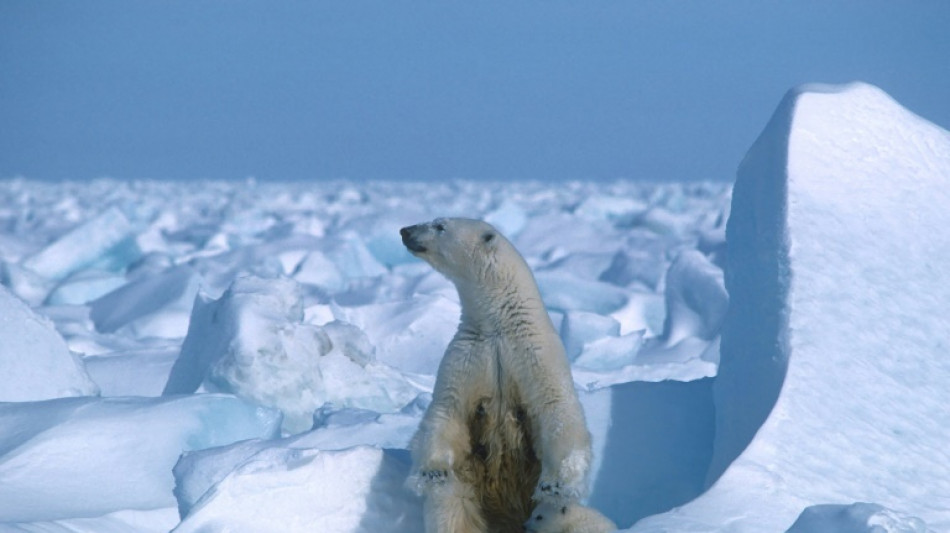
Oil, gas drilling blocked in Alaska wilds as Biden seeks green cred / Photo: Steven C. AMSTRUP - POLAR BEARS INTERNATIONAL/AFP

 Mutual fund returns show shifting leaders across market-cap categories

 IndiGo holds talks with Embraer over potential order for 100 aircraft

 Indian companies report mixed second-quarter results on November 4

 KKR secures Indian regulator approval for Gentari Renewables investment

 Bharti Airtel revenue expected to grow at double-digit pace in second quarter

 Indian crude-sensitive shares gain after 13% oil-price decline

 Stocks and dollar fall as Democratic election gains reshape markets

 Qatar Tourism joins Pacific Asia Travel Association at London travel market

The United States on Friday blocked oil, gas and mining operations across tracts of unspoiled wilderness in Alaska, winning praise from environmentalists for safeguarding habitat for polar bears, caribou and other Arctic species.
More than 13 million acres (5.2 million hectares) in the Western Arctic will come under new federal protection, while a permit to build a major road to access a valuable copper deposit was denied -- angering some locals.
"Alaska's majestic and rugged lands and waters are among the most remarkable and healthy landscapes in the world," President Joe Biden said. "These natural wonders demand our protection."
Alaska's state government had campaigned hard for the 200-mile (320-kilometer) Ambler road, which Governor Mike Dunleavy has said will provide for US energy needs and create jobs for Alaskans for decades.
Ahead of the US presidential election in November, Biden is seeking to shore up his green credentials, which were damaged by a decision last year to green-light a project by US energy giant ConocoPhillips in Alaska.
The Willow project, estimated to cost between $8-10 billion, was authorized under former president Donald Trump and later backed by Biden, triggering national protests by activists.
- Permafrost degrading -
The Interior Department on Friday said the latest moves would help tackle the effects of global warming that is degrading the Alaskan permafrost and altering habitats for native wildlife and migratory birds.
"As the climate crisis imperils communities across the country, more must be done," Biden pledged, adding that the new regulations would also protect the subsistence economy and customs of Alaska Native people.
Friday's announcement finalizes measures unveiled in September that will affect the National Petroleum Reserve in Alaska (NPR-A), an ecologically important region for grizzly and polar bears, caribou and hundreds of thousands of migratory birds.
The state's two Republican senators have accused Biden of undermining US energy security with the plan, while its Democratic congressional representative has said Washington was not listening to local views.
Some Alaskan Native communities have also opposed the protections.
But advocacy groups like Evergreen Action welcomed the announcement.
The Arctic is warming faster than the rest of the planet -- "but that hasn't deterred Big Oil from threatening delicate ecosystems and accelerating the climate crisis further by drilling for oil and gas," said Evergreen's Mattea Mrkusic.
"We appreciate the Biden administration's necessary step to strengthen protection."
The actions announced Friday, ahead of Earth Day on Monday, follow a recent ban on drilling in 2.8 million acres of the Beaufort Sea, ensuring all of US Arctic Ocean waters are now off limits to new oil and gas leasing.
Biden and his Republican challenger Trump are in a close race for the White House, with a victory for Trump likely to see a sharp reversal in environmental policies.
As president, one of Trump's first acts was to withdraw the United States from the 2015 Paris climate agreement, and he has vowed, if reelected, to vigorously promote the production of fossil fuels.
H.Cho--CPN