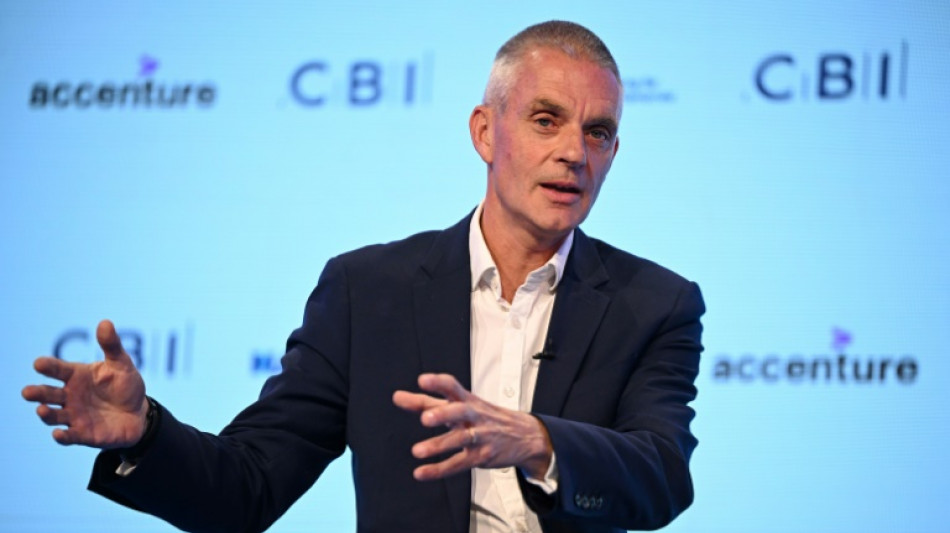
BBC eyes funding reform as further cuts loom / Photo: Oli SCARFF - AFP

 Mutual fund returns show shifting leaders across market-cap categories

 IndiGo holds talks with Embraer over potential order for 100 aircraft

 Indian companies report mixed second-quarter results on November 4

 KKR secures Indian regulator approval for Gentari Renewables investment

 Bharti Airtel revenue expected to grow at double-digit pace in second quarter

 Indian crude-sensitive shares gain after 13% oil-price decline

 Stocks and dollar fall as Democratic election gains reshape markets

 Qatar Tourism joins Pacific Asia Travel Association at London travel market

The BBC is looking at reforming its main source of funding in the light of a government freeze and inflationary pressures, director-general Tim Davie said on Tuesday.
The annual licence fee, paid by every household with a television set, has been frozen at £159 ($201) for two years and will go up to £169.50 from April.
But the public broadcaster, criticised by commercial rivals who have to rely on advertising revenue, has warned that the increase is not enough to stave off further cuts in jobs and services.
Davie said in a speech that high inflation and increased costs, plus the latest below-inflation licence fee settlement, had "chipped away" at the BBC's income in recent years.
"Significant pressure" had been put on its finances, leading to more than 1,800 job losses in the last three years, and cuts to more than 1,000 hours of content, he added.
At the same time, wider changes in media consumption such as streaming and on-demand services were reshaping the broadcasting market, he told a Royal Television Society event in London.
"This is particularly problematic as a strong balance sheet and the ability to deploy capital strategically is essential if we are to navigate digital transition," he said.
"To strip money from the BBC during this period has been particularly short-sighted."
To help bolster the corporation, which was set up in 1922, the BBC is planning to "proactively research" how to reform the licence fee before its charter is renewed in 2028, Davie revealed.
Meanwhile, he said the BBC was casting a wider net to attract more investment, including using commercial partners in areas such as programming and technology, and redeploying money internally.
A recent deal with Disney for the long-running sci-fi show "Doctor Who" showed how third-party funding could be used to increase income, he added.
"Given the rapid changes we have seen in audience behaviour and in the media market, it is right that we look at how we are funded in the future," Davie said.
"We will need to work more strategically with the best tech companies to cocreate solutions and form business partnerships that save money, inject capital and create better products," Davie said.
An alternative long-term funding solution for the BBC World Service was required because of cuts to UK domestic services, he added.
BBC World Service, which operates in 42 languages including English, is mostly funded from the licence fee, and also receives a foreign office grant.
"Not properly funding one of the UK's most valuable soft power assets makes no sense economically or culturally," Davie said.
A.Zimmermann--CPN