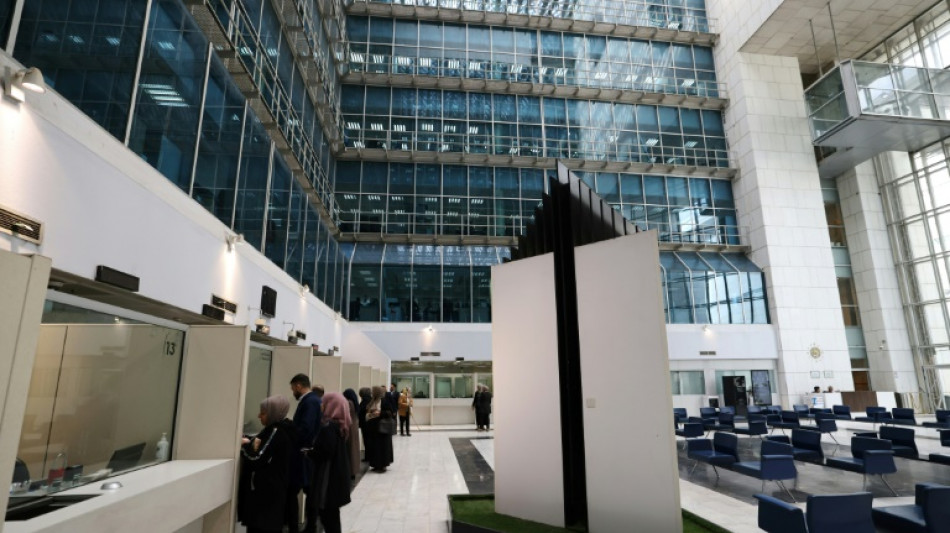
Iraq Central Bank says regulated dollar transactions rising / Photo: AHMAD AL-RUBAYE - AFP

 Mutual fund returns show shifting leaders across market-cap categories

 IndiGo holds talks with Embraer over potential order for 100 aircraft

 Indian companies report mixed second-quarter results on November 4

 KKR secures Indian regulator approval for Gentari Renewables investment

 Bharti Airtel revenue expected to grow at double-digit pace in second quarter

 Indian crude-sensitive shares gain after 13% oil-price decline

 Stocks and dollar fall as Democratic election gains reshape markets

 Qatar Tourism joins Pacific Asia Travel Association at London travel market

Iraq, fighting a booming currency black market, has considerably increased overseas dollar transactions through the official global SWIFT system, the Central Bank vice governor said on Monday.
With dollars dominating the country's economy, Baghdad has imposed a series of restrictions on the use of American greenbacks domestically.
At the end of 2022 the country's bankings sector also adopted the international financial messaging system known as SWIFT as part of the reforms, to help tackle money laundering and ensure respect for international sanctions.
Oil-rich Iraq has no shortage of dollars, with foreign currency reserves of more than $100 billion (92 billion euros). But experts say tax evasion, the black market and dollar smuggling to countries and entities facing United States sanctions, mainly neighbouring Iran, have increased demand for foreign currencies.
Transactions through the Central Bank electronic platform -- which ensures compliance with SWIFT -- have considerably increased, the bank's vice governor Ammar Khalaf told AFP.
Many "foreign trade transactions are now being conducted via the platform," he said.
"At the beginning of 2023, transactions were at $50 million per day. Now, we have around $200 million, which is consistent with the size of Iraq's economy," he added.
Iraqi banks wanting to access dollar reserves held in the United States must make transfers through the electronic system. The US Federal Reserve will then examine the requests and block them if it finds them suspicious.
"We noticed that rejections have decreased recently because the banks understood international requirements" and traders know better what is needed to transfer their money, Khalaf said.
But the black market is still thriving.
The official exchange rate is fixed by the government at 1,320 dinars to the dollar. On unofficial markets the dinar has been trading at 1,470 per dollar.
Iraq has close commercial ties with Iran, which also wields considerable political influence in Baghdad where its Iraqi allies dominate parliament and back the current government.
Prime Minister Mohamed Shia al-Sudani acknowledged last year that sanctions preventing dollar transfers to Iranian banks had driven Iraqi traders to the black market.
In late November, the government announced steps to encourage importers of goods like cigarettes, cars, gold and mobile phones to use official channels to obtain dollars.
Iraqi authorities have banned more than 20 Iraqi banks from conducting dollar transactions in accordance with US regulations regarding sanctions and against money laundering.
"We are in constant contact with the American Treasury in an attempt to lift the ban," Khalaf said, hoping that talks "will yield good and positive results."
The banned banks are restricted from dealing in dollars, but they are allowed to operate local transactions.
Ng.A.Adebayo--CPN