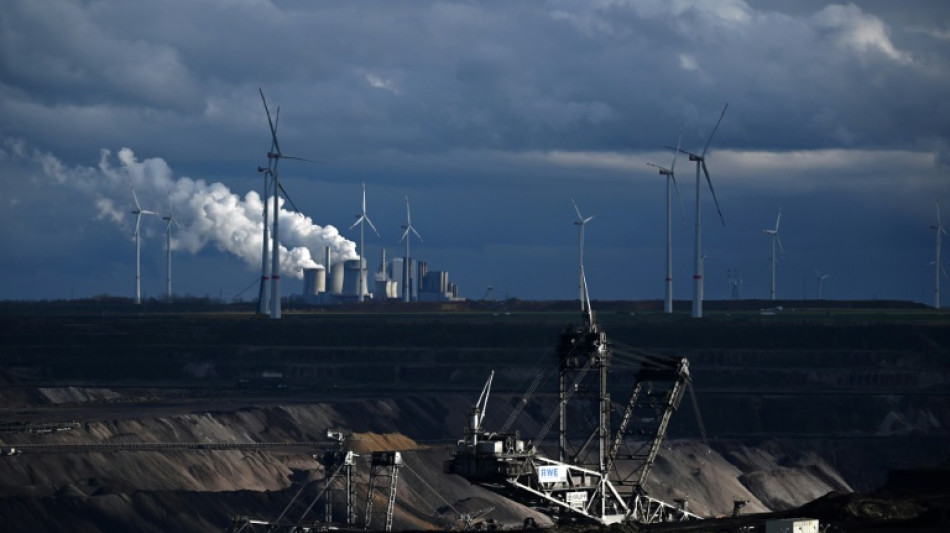
Energy-related CO2 emissions hit record levels in 2023: IEA / Photo: INA FASSBENDER - AFP/File

 Mutual fund returns show shifting leaders across market-cap categories

 IndiGo holds talks with Embraer over potential order for 100 aircraft

 Indian companies report mixed second-quarter results on November 4

 KKR secures Indian regulator approval for Gentari Renewables investment

 Bharti Airtel revenue expected to grow at double-digit pace in second quarter

 Indian crude-sensitive shares gain after 13% oil-price decline

 Stocks and dollar fall as Democratic election gains reshape markets

 Qatar Tourism joins Pacific Asia Travel Association at London travel market

Energy-related carbon dioxide emissions rose to a record level in 2023, but the growth slowed from previous years thanks to continued expansion of clean technologies, the International Energy Agency said Friday.
CO2 emissions from energy rose by 1.1 percent in 2023, increasing by 410 million tonnes to a record 37.4 billion tonnes, slowing down from a gain of 490 million tonnes in 2022, the IEA said in its annual update on emissions.
The IEA said that without technologies such as solar panels, wind turbines, nuclear power and electric cars, the global increase in energy-related CO2 emissions over the last five years would have been three times larger the 900 million tonnes registered.
Over 40 percent of last year's increase in carbon emissions from energy resulted from severe droughts in China, the United States, India and elsewhere which cut hydro-electric output and forced utilities to resort to fossil fuels.
Without the water shortfalls, global carbon emissions from power generation alone would have fallen last year.
Energy carbon emissions rose in China and India in 2023, while advanced economies saw a record fall even as their economies grew. Their emissions dropped to a 50-year low as coal demand fell back to levels not seen since the early 1900s.
For the first time last year, at least half the power generated in advanced economies came from low-emissions sources like renewables and nuclear.
Even as China's emissions grew, it added as much solar PV capacity in 2023 as the entire world did in 2022.
"The clean energy transition has undergone a series of stress tests in the last five years -– and it has demonstrated its resilience," said IEA Executive Director Fatih Birol.
"A pandemic, an energy crisis and geopolitical instability all had the potential to derail efforts to build cleaner and more secure energy systems. Instead, we’ve seen the opposite in many economies."
T.Morelli--CPN