Is Picasso being cancelled?

 Billionaire Ambani's Jio soars in market debut after India's biggest IPO

 AI chip giant SK hynix posts seven-fold surge in quarterly operating profit

 S.African activists push back on data centre rush

 Billionaire Ambani's Jio to debut after record India IPO

 UK set for cautious budget as borrowing costs climb

 US Fed expected to hold rates steady ahead of key midterm elections

 AI chip giant SK hynix says quarterly operating profit soars 630%

 Charles tackles thorny legacy of slavery on Caribbean trip

 UN nuclear watchdog chief urges Iran to grant access

 Boeing releases cautious growth plan as shares fall sharply

 Tech firms gain on Anthropic IPO optimism; HSBC slumps in London

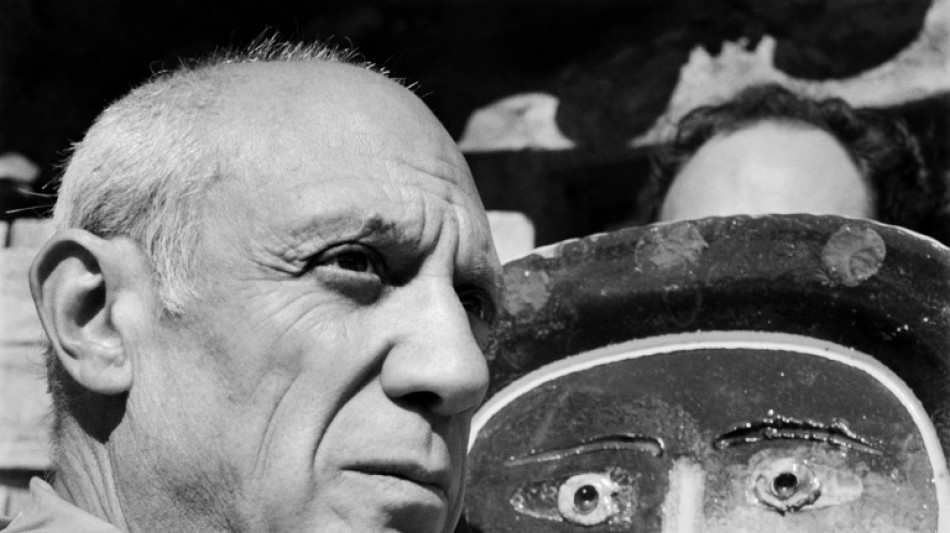
Pablo Picasso's track-record with women certainly would not make him a feminist pin-up today.
There were two wives, at least six mistresses and countless lovers -- with a tendency to abandon women when they became ill, a voracious appetite for prostitutes, and some eye-popping age differences (his second wife was 27 when he married her at 79).
Some of the quotes attributed to him would probably cause Twitter's servers to combust if he said them now ("For me there are only two kinds of women: goddesses and doormats").
None of this is new -- it has been recycled through books and articles from (sometimes traumatised) family members since soon after his death in 1973.
But in a post-MeToo world, it poses a challenge for those who manage his legacy.
"Obviously MeToo tarnished the artist," said Cecile Debray, director of the Picasso Museum in Paris.
But she added: "The attacks are undoubtedly all the more violent because Picasso is the most famous and popular figure in modern art -- an idol that must be destroyed."
- 'Perverse, destructive' -
Not that the issue is being brushed under the carpet.
The Paris museum has recently invited women artists to respond to the debate, including "Weeping Women Are Angry" by French painter Orlan (a reference to one of his most famous portraits, "The Weeping Woman").
The sister museum in Barcelona is holding workshops and talks this May with art historians and sociologists to unpack the issue.
The experts are, however, critical of some recent hit-jobs on their beloved master.
An award-winning French podcast on the topic has reignited the debate, leaning heavily on a 2017 book by journalist Sophie Chauveau, "Picasso, the Minotaur", for whom the artist was "violent... jealous... perverse... destructive".
Debray said some of their claims were "anachronistic" and given to "conjecture and assertions without historical references".
But she still welcomed the challenge, saying: "The history of art is nourished by the questions of our time and new generations."
- 'Animal sexuality' -
Nor is it simple to separate the artist from the art.
Of her grandfather's women, Marina Picasso once wrote: "He submitted them to his animal sexuality, tamed them, bewitched them, ingested them, and crushed them onto his canvas."
But, says another grandchild Olivier Picasso, depicting Picasso as a monster risks removing the agency of the women who loved him.
Some, like Marie-Therese Walter, were young and vulnerable muses who felt discarded (she later killed herself), he told AFP.
But others, like Francoise Gilot, knew exactly what they were getting with Picasso and had no problem walking away when they had had enough.
"Some came out of it well, but for others it went badly," he said. "It's all very complicated -- these women don't resemble each other."
The paintings themselves show some of that complexity.
"There are violent works, others that are very tender, very soft... Each time, after exhausting his inspiration, he moves on to something else," he said.
"Women were necessary to his creations and without them, there would have been something missing."
Y.Jeong--CPN