Clock ticking on Swiss watches' raw materials from Russia

 Kenya's economy faces climate change risks: World Bank

 Mixed US auto sales in Q2 amid high gas prices
 'Gus' the T. rex presented in New York ahead of auction

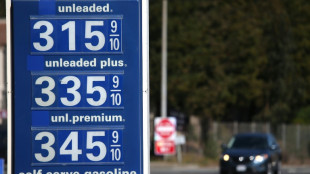 Mixed US auto sales in 2nd quarter amid high gas prices
 Record heat broils US east coast amid World Cup, July Fourth events
 Portugal braces for high temperatures in new heatwave
 Planned 1.7 million satellites 'devastating' for astronomy: study
 Canada to join Eurovision Song Contest

 Chinese firm sells hyper-real, 'always loyal' humanoid robots
 Trump earned over $1 bn from crypto ventures in 2025
 The Afghan women farmers keeping their village alive
 After 250 years, the 'American dream' is tarnished but alive
 No corn dogs? Trump's 'Great American State Fair' threatens to be a flop
 CIA boss compares cutting-edge AI to nuclear weapons
 Taps run dry in Hungarian village as heatwave bites

 Inflation slows in top eurozone economies as ECB ponders next move
 Data centres emitting more CO2 than thought: study

 Thousands march to demand illegal migrants leave South Africa

 Stocks climb, yen stays near 40-year low against dollar
 Over 1 million migrants apply for Spain's mass regularisation: PM

 NASA robot mission aiming to rescue space telescope

 Affiliate of Pacific Avenue Capital Partners Completes Acquisition of ESE World from Amcor

 Extreme heat warning issued for World Cup host Kansas City
 Tech rebound lifts Dow to record, yen hits 40-year low against dollar
 Europe's deadly heatwave scorches east, Slovakia hits record

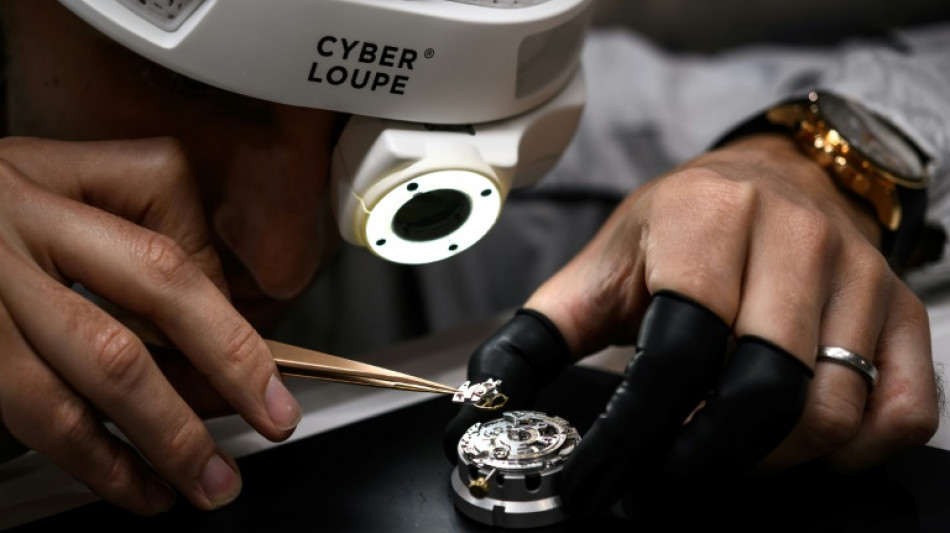
Diamonds shine brightly at this year's Geneva watch fair but the sanctions slapped on Russia could soon force the Swiss watch industry to produce more subdued designs.
Russia is a major supplier of diamonds, gold and other precious metals to the luxury watchmakers exhibiting at Watches and Wonders, one of the world's top salons for the prestige industry.
The Russian group Alrosa -- the world's largest diamond mining company -- was hit by US sanctions within hours of the Kremlin-ordered invasion of Ukraine on February 24.
According to US Treasury figures, it accounts for 90 percent of Russia's diamond mining capacity, and 28 percent globally.
And while trade between Switzerland and Russia is modest, gold is the chief import, ahead of precious metals such as platinum followed by diamonds not mounted or set, according to the Swiss customs office.
Compared to other sectors of the Swiss economy, "watchmaking was a branch that was less affected than others by supply problems in 2021", Jean-Daniel Pasche, president of the Federation of the Swiss Watch Industry, told AFP.
But that may no longer be the case, he acknowledged, adding that it was hard to assess the repercussions for the watch industry at this stage.
"There are obviously reserves. Afterwards, we will have to see, depending on how long the conflict lasts," Pasche said.
- Recycled gold and palladium -
The Swiss luxury giant Richemont owns the Cartier and Van Cleef & Arpels jewellery firms, plus eight prestigious watch brands, including Piaget and IWC.
The group took the lead on Wednesday, saying all its brands have stopped sourcing diamonds from Russia.
The move will create a lot of work on the supply chain to find responsibly-sourced, quality diamonds from elsewhere, Richemont chief executive Jerome Lambert told a press conference.
Gold supply is of less concern. For a decade or so, Richemont has been sourcing recycled gold for watchmaking, bought from industry and the electronics sector.
For palladium, used for instance for wedding and engagement rings, the group decided "ahead of the sanctions" to switch to suppliers specialising in recycled palladium, Lambert said.
- Draining the stocks -
At Patek Philippe, one of the most prestigious Swiss brands, the firm's president is counting on his stockpile to ride out the storm.
"Luckily I produce in small quantities," said Thierry Stern, who represents the fourth generation of his family at the company helm.
"So I don't feel any difference yet," he told AFP. For 2022, Patek Philippe plans to manufacture 66,000 timepieces.
"And if I can't find certain stones, I can always do engraving," said the head of the brand, which relies on a wide range of disciplines including ceramics, marquetry and enamel.
H. Moser, a niche brand producing 2,000 watches a year for wealthy collectors, struck much the same tone.
"Purchases are made in advance. For example, for the casings that I want to make in 2023, I have already bought all the gold I need," said boss Edouard Meylan.
"But maybe in six months' time some of our suppliers will call to push back the deadlines because they haven't received the materials," he admitted.
Concerns over raw materials "will drive up prices, of course", said Jon Cox, an industry analyst with the Kepler Cheuvreux financial services company.
However, compared to other sectors, luxury firms have more leeway to pass on costs to customers, he added.
However, given the war and its repercussions, "I imagine product development will move to more subdued luxury goods", Cox said.
T.Morelli--CPN