Young Sami return to reindeer herding despite climate fears

 Kenya's economy faces climate change risks: World Bank

 Mixed US auto sales in Q2 amid high gas prices

 'Gus' the T. rex presented in New York ahead of auction
 Mixed US auto sales in 2nd quarter amid high gas prices
 Record heat broils US east coast amid World Cup, July Fourth events

 Portugal braces for high temperatures in new heatwave
 Planned 1.7 million satellites 'devastating' for astronomy: study

 Canada to join Eurovision Song Contest

 Chinese firm sells hyper-real, 'always loyal' humanoid robots

 Trump earned over $1 bn from crypto ventures in 2025

 The Afghan women farmers keeping their village alive

 After 250 years, the 'American dream' is tarnished but alive

 No corn dogs? Trump's 'Great American State Fair' threatens to be a flop

 CIA boss compares cutting-edge AI to nuclear weapons

 Taps run dry in Hungarian village as heatwave bites
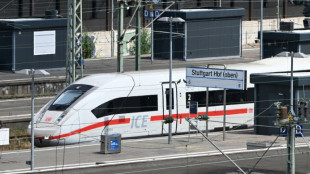
 Inflation slows in top eurozone economies as ECB ponders next move

 Data centres emitting more CO2 than thought: study

 Thousands march to demand illegal migrants leave South Africa

 Stocks climb, yen stays near 40-year low against dollar
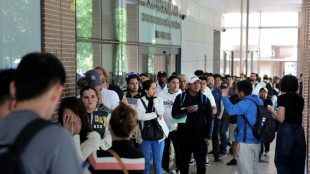 Over 1 million migrants apply for Spain's mass regularisation: PM

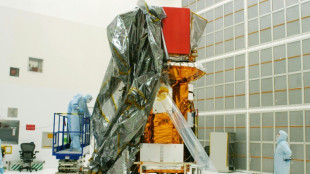 NASA robot mission aiming to rescue space telescope
 Affiliate of Pacific Avenue Capital Partners Completes Acquisition of ESE World from Amcor

 Extreme heat warning issued for World Cup host Kansas City
 Tech rebound lifts Dow to record, yen hits 40-year low against dollar

 Europe's deadly heatwave scorches east, Slovakia hits record
In the snowy Arctic darkness Suvi Kustula throws bundles of lichen to her excitable herd of reindeer, their antlers lit up by her van's headlights.
"I was just a few months old when I fed my first reindeer," the 24-year-old laughed, saying she "pretty much always knew" she would follow her father and grandfather into herding.
"I managed one and a half weeks living in a city before I switched to reindeer herding college," Kustula told AFP.
"It's a way of life. Reindeer before everything."
Twenty years ago the ancient tradition of herding reindeer for meat and fur appeared to be in decline in Lapland, the vast area of forest and tundra which spans northern Finland, Sweden, Norway and Russia's Kola Peninsula.
Young people felt they had to move south "to make a good life", said Anne Ollila, head of Finland's Reindeer Herders' Association.
But nowadays nearly a quarter of Finland's 4,000 herders are under 25, as more young people choose to stay or return home to Lapland.
The number of women entering the traditionally male-dominated profession is also at its highest ever.
"People have learned to better appreciate freedom and nature and tradition," Ollila said. "Even if you can't make big money."
Instead herders get to live an outdoor life, dictated by the seasons and the weather in the often stunningly beautiful Arctic wilderness.
But the new generation faces an array of emerging challenges, including a warming climate and pressure from industries keen to exploit Lapland's resource-rich landscape.
- Indigenous culture revival -
A herder needs intimate knowledge of the landscape and how their animals behave to keep tabs on their reindeer, which roam freely across the plains and forests.
And asking how many animals a herder has is a big no-no.
"It's a bit like if I asked you how much you have in your bank account," Kustula laughed.
Most young herders are either born in or have married into a reindeer herding family, Ollila said.
Many belong to the indigenous Sami community, who have herded reindeer across northern Lapland for centuries.
Oppressed for years by Nordic governments, many Sami have in recent decades begun reclaiming their traditional culture and language.
"Some earlier generations were ashamed of being Sami," Ollila says. "But I think the young people choosing reindeer herding are very proud of it."
- Long periods away -
Herding has been passed down through generations of the Lansman family, who live on Finland's northern border with Norway.
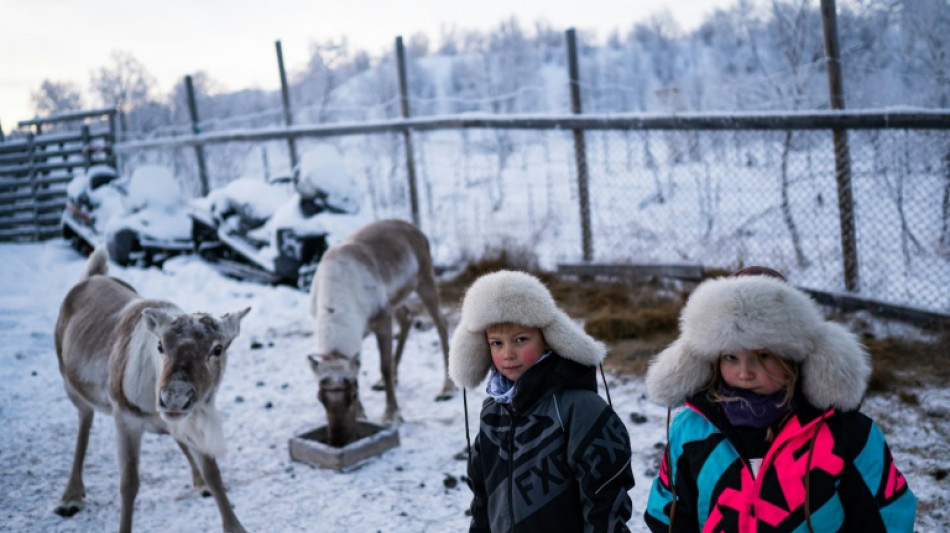
In late November, with the sun setting at 1 pm -- not to rise again for seven weeks -- Anna Nakkalajarvi-Lansman and her two children climbed onto their snowmobile and drove to the enclosure where their children's two reindeer live.
"The lighter one's mine, called Golden Horn," said six-year-old Antti Iisko, as he and his sister scatter lichen for the animals to eat.
He wants to be a herder when he grows up, while Anni-Sivia, eight, would like to be a vet.
"I'll be able to give the reindeer their vaccinations," Anni-Sivia told AFP.
"Our daily routine depends on the season and whether we're helping out with the herding," explained their mother Anna Nakkalajarvi-Lansman, a Sami musician.
pad
Two hours' drive away, father Asko Lansman had just spent a fortnight at a meat-packaging plant.
Demand is soaring, Lansman told AFP, standing in front of piles of boxes of vacuum-packed reindeer meat ready to be delivered across Finland.
"It's my greatest hope that the kids continue the work, just like it was my father's hope when I was young," he said.
- New challenges -
The job has changed a lot, Lansman said, with quad bikes, helicopters and now drones making gathering the reindeer much easier.
But with temperatures in the Arctic warming three times faster than the rest of the planet, climate change is bringing new challenges.
The shorter winters can turn snow into ice "and cause the reindeers' drinking holes to freeze over", Lansman said, as well as making their food inaccessible.
Numerous proposed mining and energy projects across Lapland also threaten the animals' pasture lands, herders warn.
"The more the land use changes, the less space we'll have for reindeer," Kustula said.
"I am hopeful about the future, she insisted, "but the government should listen to us more."
A.Levy--CPN