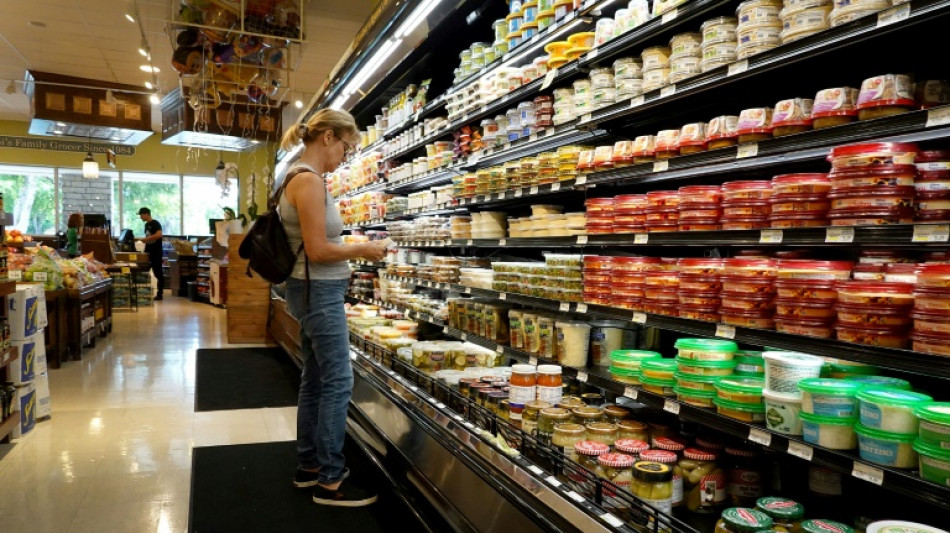
US consumer inflation jumps more than expected to 3.4% / Photo: JOE RAEDLE - GETTY IMAGES NORTH AMERICA/AFP/File

 Qatar media bodies discuss support for humanitarian initiatives

 Bezos grant helps Seattle nonprofit move thousands of families toward housing

 US stocks fall before midterm Election Day as technology shares weaken

 BLS Polymers makes strong market debut at ₹248 per share

 Petrol and diesel prices remain broadly steady across major Indian cities

 Derek Tierney Outlines Ten-Year Strategy for National Digital Health System

 BLS Polymers shares open 65.3% above IPO price

 ITC shares rise as analysts anticipate gradual cigarette-business recovery

 The Digital Burden: Why Instant Messaging Feels Like a Full-Time Job
Consumer inflation in the United States rose more than anticipated in December, government data showed Thursday, underscoring the bumpy road to cooling price increases as the presidential election looms.
The Department of Labor's consumer price index (CPI), a key measure of inflation, was up 3.4 percent from a year ago and higher than November's figure.
But underlying pressures still appear to be ebbing, as a "core" metric that strips out volatile food and energy prices cooled to 3.9 percent in the last month of 2023.
While analysts do not expect Federal Reserve officials to base their rate-setting off of one month's data, accelerating inflation could add pressure on the central bank.
A rising inflation figure also complicates the picture for President Joe Biden, who heads into his reelection campaign facing persistent negative perceptions about the economy.
US policymakers rapidly lifted interest rates beginning in early 2022 and have held them at a high level, seeking to ease demand and sustainably lower inflation.
The aim is to ease demand by making it more appealing to save rather than spend.
- Underlying pressures -
Despite the CPI uptick in December, inflation has come down significantly from the 9.1 percent peak in June 2022, while consumer spending and the jobs market remained resilient.
This has fueled hopes of a so-called "soft landing" for the world's biggest economy, where inflation cools without a damaging recession.
From November to December, CPI rose 0.3 percent, up from the prior month's figure as well.
"The index for shelter continued to rise in December," the Labor Department said in its report.
The energy index jumped 0.4 percent over the month, on the back of increases in electricity and gasoline, while the food index held steady.
"Fed officials will likely look through any upturn in headline CPI inflation, especially if it comes from the more volatile components," said financial market economist Oren Klachkin of Nationwide.
But an upturn in core inflation "would get their attention, especially if it continues into January," he told AFP.
"While there's been some encouraging progress, strong core CPI inflation continues to be the main worry," Klachkin said.
For now, on a monthly or six-month basis, "inflation is trending lower and is now close to the Fed's two percent target," noted Michael Pearce, lead US economist at Oxford Economics.
M.P.Jacobs--CPN