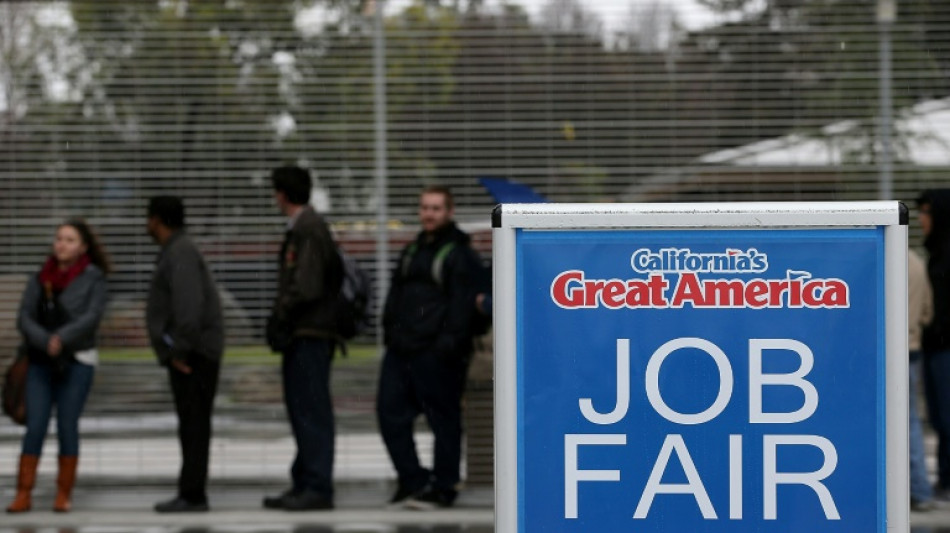
Global unemployment set to worsen in 2024: UN / Photo: JUSTIN SULLIVAN - GETTY IMAGES NORTH AMERICA/AFP/File

 Qatar media bodies discuss support for humanitarian initiatives

 Bezos grant helps Seattle nonprofit move thousands of families toward housing

 US stocks fall before midterm Election Day as technology shares weaken

 BLS Polymers makes strong market debut at ₹248 per share

 Petrol and diesel prices remain broadly steady across major Indian cities

 Derek Tierney Outlines Ten-Year Strategy for National Digital Health System

 BLS Polymers shares open 65.3% above IPO price

 ITC shares rise as analysts anticipate gradual cigarette-business recovery

 The Digital Burden: Why Instant Messaging Feels Like a Full-Time Job
The global unemployment rate will increase slightly in 2024, the United Nations said Wednesday as it raised concerns about stagnant productivity, worsening inequalities and inflation biting into disposable income.
The UN's labour agency said the economic recovery from the Covid-19 pandemic has slowed down, with ongoing geopolitical tensions and persistent inflation triggering aggressive moves by central banks.
That said, global growth in 2023 was modestly higher than anticipated, and labour markets showed surprising resilience, the International Labour Organization said.
However, real wages declined in most of the G20 countries as wage increases failed to keep pace with inflation, said the ILO.
The 2022 global unemployment rate stood at 5.3 percent and made a modest improvement last year to 5.1 percent.
However, in 2024 an extra two million workers are expected to be looking for jobs, raising the global unemployment rate to 5.2 percent.
Disposable incomes have declined in the majority of G20 nations and, generally, the erosion of living standards resulting from inflation is "unlikely to be compensated quickly", the ILO said.
Widening inequalities and stagnant productivity are causes for concern, the ILO said in its World Employment and Social Outlook Trends report for 2024.
The study assesses the latest labour market trends, including unemployment, job creation, labour force participation and hours worked -- then links those to their social outcomes.
The report found that some of the data, notably on growth and unemployment, are "encouraging", ILO chief Gilbert Houngbo said.
But a "deeper analysis reveals that labour market imbalances are growing and that, in the context of multiple and interacting global crises, this is eroding progress towards greater social justice", Houngbo added.
The report found that only China, Russia and Mexico "enjoyed positive real wage growth in 2023".
Real wages fell in other G20 countries, with Brazil (6.9 percent), Italy (five percent) and Indonesia (3.5 percent) experiencing the sharpest declines.
"Falling living standards and weak productivity combined with persistent inflation create the conditions for greater inequality and undermine efforts to achieve social justice," said Houngbo.
"And without greater social justice we will never have a sustainable recovery."
Y.Ponomarenko--CPN