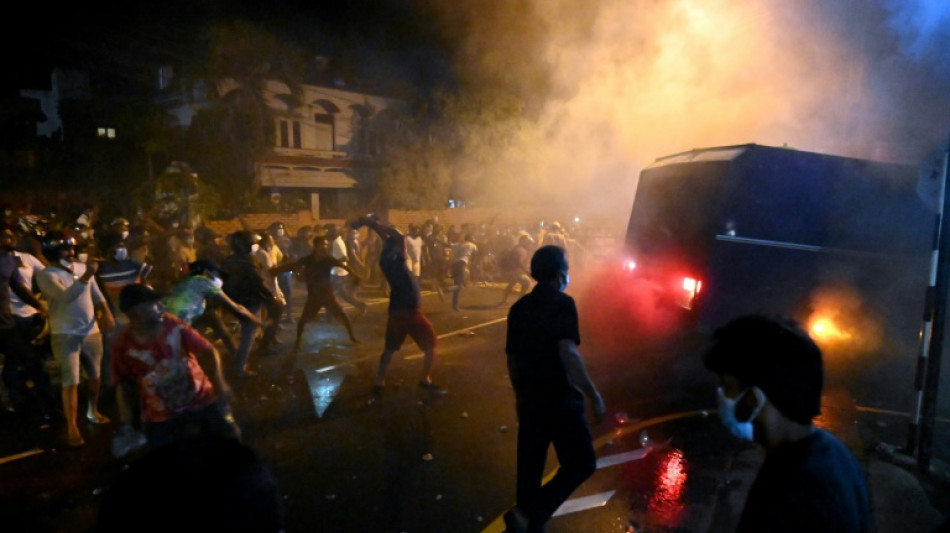
One wounded as protest at Sri Lanka leader's home turns violent

 Kenya's economy faces climate change risks: World Bank

 Mixed US auto sales in Q2 amid high gas prices
 'Gus' the T. rex presented in New York ahead of auction
 Mixed US auto sales in 2nd quarter amid high gas prices
 Record heat broils US east coast amid World Cup, July Fourth events
 Portugal braces for high temperatures in new heatwave
 Planned 1.7 million satellites 'devastating' for astronomy: study
 Canada to join Eurovision Song Contest

 Chinese firm sells hyper-real, 'always loyal' humanoid robots
 Trump earned over $1 bn from crypto ventures in 2025
 The Afghan women farmers keeping their village alive
 After 250 years, the 'American dream' is tarnished but alive
 No corn dogs? Trump's 'Great American State Fair' threatens to be a flop
 CIA boss compares cutting-edge AI to nuclear weapons
 Taps run dry in Hungarian village as heatwave bites
 Inflation slows in top eurozone economies as ECB ponders next move
 Data centres emitting more CO2 than thought: study

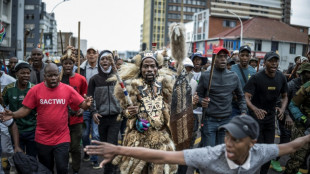 Thousands march to demand illegal migrants leave South Africa

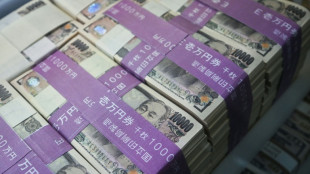 Stocks climb, yen stays near 40-year low against dollar
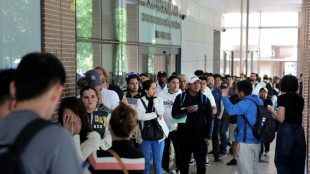 Over 1 million migrants apply for Spain's mass regularisation: PM
 NASA robot mission aiming to rescue space telescope
 Affiliate of Pacific Avenue Capital Partners Completes Acquisition of ESE World from Amcor

 Extreme heat warning issued for World Cup host Kansas City
 Tech rebound lifts Dow to record, yen hits 40-year low against dollar
 Europe's deadly heatwave scorches east, Slovakia hits record
A protest by hundreds of people trying to storm the home of Sri Lankan President Gotabaya Rajapaksa turned violent Thursday, with at least one man critically wounded, as residents slammed the government's handling of the country's crippling economic crisis.
Security forces fired into the crowd -- it was not immediately clear if they used live rounds or rubber bullets -- and used tear gas and water cannon to disperse the demonstrators, who were demanding Rajapaksa's resignation.
Protesters set fire to an army bus parked across the lane leading to Rajapaksa's home in Colombo's Mirihana residential quarter, as well as a police vehicle. They also toppled a neighbour's wall and used bricks to attack officers and troops.
Official sources told AFP that Rajapaksa was not at home during the melee, but top military officials went into a huddle to discuss the crisis.
The capital was placed under indefinite curfew in the wake of the violence.
Four hours into the protest, the area remained blocked for vehicles.
"I am unable to go home because our area is barricaded," one resident told AFP. "People are shouting for the president and his family to step down."
The South Asian nation of 22 million people is in the grips of its worst downturn since independence, sparked by an acute lack of foreign currency to pay for even the most essential imports.
Diesel -- the main fuel for buses and commercial vehicles -- was unavailable at stations across the island on Thursday, according to officials and media reports -- crippling public transport.
The rally had been called by social media activists who were not immediately identified, but their ire was directed at Rajapaksa and his family.
A live broadcast of the demonstration by a private television network abruptly stopped after what journalists said was pressure from the government.
However, videos shared on social media showed men and women shouting "lunatic, lunatic go home" and demanding that all members of the powerful Rajapaksa family step down.
The president's elder brother Mahinda serves as prime minister while the youngest -- Basil -- holds the finance portfolio. The eldest brother Chamal is agriculture minister while nephew Namal holds the cabinet post for sports.
- Buses stopped -
Diesel shortages had sparked outrage across Sri Lanka in recent days, but the protests had so far been in towns and not aimed at any top leader, before Thursday's events.
"We are siphoning off fuel from buses that are in the garage for repairs and using that diesel to operate serviceable vehicles," Transport Minister Dilum Amunugama said.
Owners of private buses -- which account for two-thirds of the country's fleet -- said they were already out of oil and that even skeleton services might not be possible after Friday.
"We are still using old stocks of diesel, but if we don't get supplies by this evening, we will not be able to operate," the chairman of the private bus operators' association, Gemunu Wijeratne, told AFP.
The state electricity monopoly said it had enforced a 13-hour power cut from Thursday -- the longest ever -- because they did not have diesel for generators.
Reservoirs, which provide more than a third of electricity demand via hydro power plants, were also at dangerously low levels.
The electricity rationing also hit mobile phone base stations and affected the quality of calls, operators said, adding that their stand-by generators were also without diesel.
Several state-run hospitals have stopped conducting surgeries as they have run out of essential life-saving medicines.
Colombo imposed a broad import ban in March 2020 in a bid to save foreign currency needed to service its $51 billion in foreign debt.
The government has said it is seeking a bailout from the International Monetary Fund while asking for more loans from India and China.
Sri Lanka's predicament was exacerbated by the Covid-19 pandemic, which torpedoed tourism and remittances.
Many economists also blame government mismanagement including tax cuts and years of budget deficits.
St.Ch.Baker--CPN