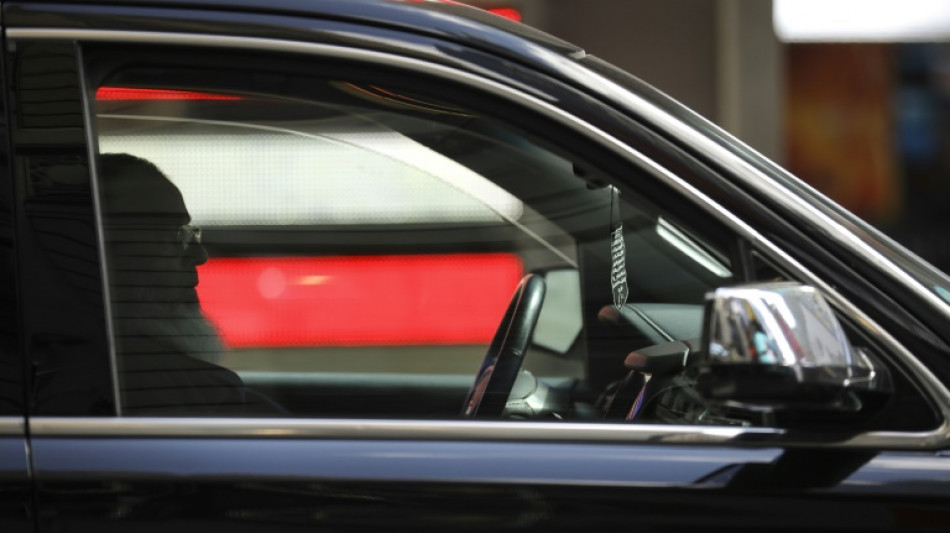
New US labor rule may help gig workers qualify as employees / Photo: Drew Angerer - GETTY IMAGES NORTH AMERICA/AFP/File

 Qatar media bodies discuss support for humanitarian initiatives

 Bezos grant helps Seattle nonprofit move thousands of families toward housing

 US stocks fall before midterm Election Day as technology shares weaken

 BLS Polymers makes strong market debut at ₹248 per share

 Petrol and diesel prices remain broadly steady across major Indian cities

 Derek Tierney Outlines Ten-Year Strategy for National Digital Health System

 BLS Polymers shares open 65.3% above IPO price

 ITC shares rise as analysts anticipate gradual cigarette-business recovery

 The Digital Burden: Why Instant Messaging Feels Like a Full-Time Job
A rule issued Tuesday by the US Labor Department making it tougher for companies to classify workers as "independent contractors" could take a toll on the gig economy -- and is likely to face challenges.
The Biden administration rule rescinds requirements under former president Donald Trump which made it easier to consider workers contractors rather than employees.
This includes drivers of ride-hailing services such as Uber and Lyft, or delivery workers for companies like DoorDash.
But the Department of Labor said Tuesday that it believes the Trump-era rule is not in line with US law and judicial precedent.
Its latest rule "seeks to combat employee misclassification," which impacts workers' rights and "facilitates wage theft," the department added.
Employees generally cost more to companies, given their right to minimum wage and overtime pay, among other benefits and protections.
"Misclassifying employees as independent contractors is a serious issue that deprives workers of basic rights and protections," said Acting Secretary of Labor Julie Su.
The new requirement restores a "multifactor analysis" used to determine a worker's ties with a company.
These consider six factors such as chances for profit or loss, the financial stake and nature of resources invested by a worker, and the degree of permanence of the work relationship.
This is expected to take effect on March 11.
The 2021 rule placed more weight on the amount of control workers had over their work, and their opportunity for profit or loss.
Lyft said Tuesday that it does not see "immediate or direct impact" on its business for now, while Uber said that this "will not impact the classification" of Americans driving for Uber.
Industry group Flex, which represents several US gig platforms, said the guidance "could generate significant uncertainty."
"We will seek to ensure implementation of this rule does not target workers who overwhelmingly turn to app-based platforms to earn supplemental income on their own terms," Flex added.
D.Avraham--CPN